I’d like to introduce you to a dear and horny friend of mine. It’s shiny, sexy, complicated as hell and smoother than a television evangelist wooing a soap opera starlet at a Napa County winescapade. Sometimes it’s punk, sometimes it’s on a yacht. There are times when it’s jazzy and spacy—and then it can veer off into different directions, smelling like dank NYC basement and starch-addled suits. My friend can travel further along the evolutionary road and add color, ambiance and sophistication to a house music atmosphere. I’ve been in a sticky, tempestuous relationship with this particular friend for as long as I can remember.
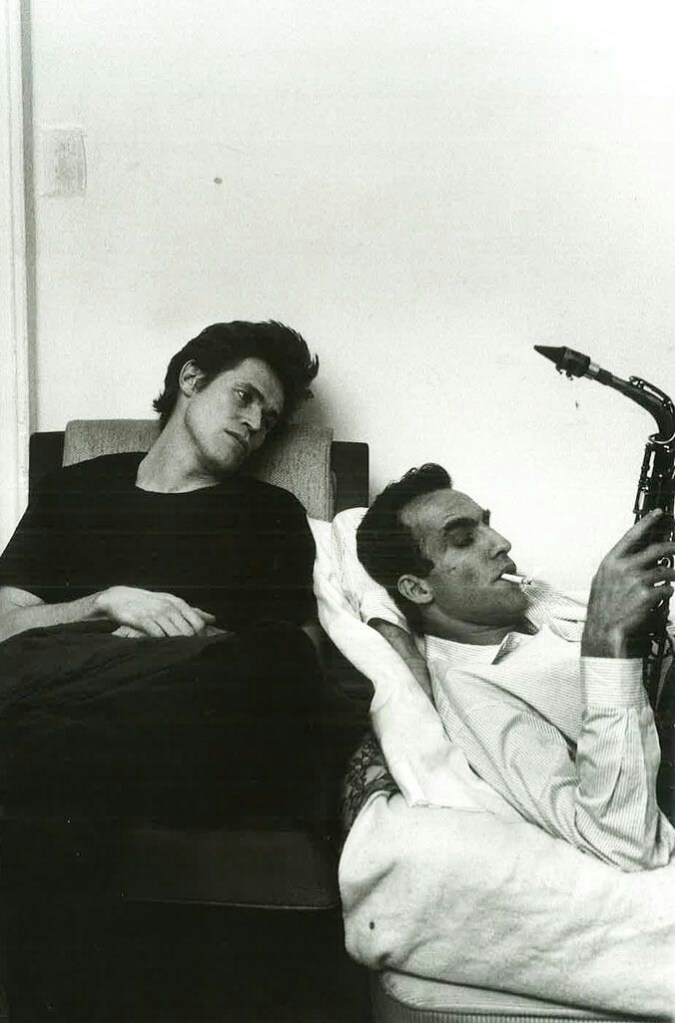
Despite its imperfect legacy, my best musical friend will forever be the saxophone. Here in 2021, a lot of people tend to think of stupid hats, gyrating Moldovans and cloying, coked-out sentimentality when picturing the storied woodwind instrument. In other words, they don’t take it seriously. And they don’t know what they’re missing. Now, I’m not gonna deny that listening to the sounds of the saxophone comes with its share of sleazy, schmaltzy imagery—that’s a central part of its rakish charm. But the simple fact remains that what is commonly known as ‘the devil’s horn’ plants a horn-emblazoned flag in our innermost human desires. That’s why it rears its shiny head all over the musical spectrum from basic, shitty beer jazz to genre-expanding, intergenerational experimentation. It’s why Kenny G and Sun Ra are united in their common humanity over this one vital thing that defies the reductive, compartmentalizing ‘takes’ of the internet age. In simpler terms, the saxophone transcends all that impermanent bullshit. There’s a certain timelessness embedded in its fluctuating tonality. An eternally relevant, distinct, yet elusive energy—a time-traveling, mood-altering tonic filled with uncontainable passion and yearning that I think you might just dig in 2120.
I would even go so far as to say that in a billion years when all is said and done, when our civilization fades into view and the Earth is restored to its natural equilibrium––that’s when the aliens come to visit the now untouched planet without a name and the most fitting monument to humanity with its infinite capacity for lust, love, pain, imagination, porn addiction and half-baked conspiracy theories would be: a blaring saxophone encased in a giant monolith made of indestructible silicone. A tad melodramatic, you say? This is a saxophone playlist.
Listen to Absolute Sæxophone, a playlist lovingly compiled by me. Music about fucking and fighting made for you.
Here’s one for the history books. Maybe the year 2020 is part of the curriculum in your schools and educational institutions? I’m wondering if you’ve been reading my letters thinking: ‘When is he getting to the global pandemic? I bet that’s gonna be something else.’ If that sort of vicarious thrill-seeking floats your fusion-powered hydro-vessel, you’ll be interested to know that coronavirus is upon us, and that it’s toying mercilessly with our tiny minds.
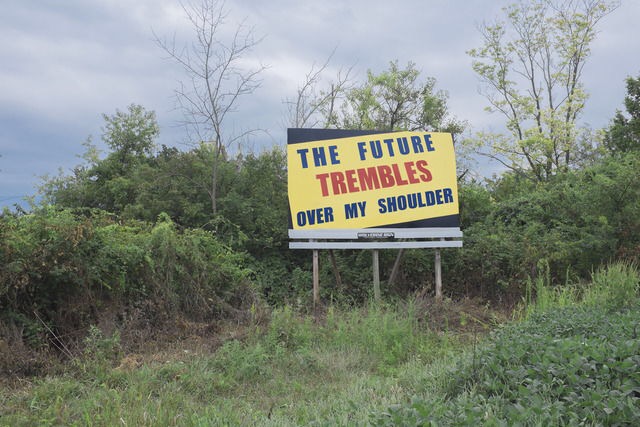
A photo from 2020 taken in Toronto, Canada.
It’s the strangest thing. A virus that predominantly preys on the vulnerable and the elderly. The rationalistic part of me is reluctant to admit this, but it’s hard to shake the feeling that we’re being tested. Tried on our moral convictions and collective ability to adapt and find common ground in the face of a rapidly proliferating challenge. Maybe the overlords running the simulation have unleashed a black swan event to see how we measure up with new upheavals thrust upon us. Or maybe this was bound to happen in one way or another as an inevitable by-product of our failure to engage with the world in a meaningful and sustainable way. It’s the latter, of course. Quarantine has made me go off on a slightly unhinged, quasi-spiritual nerd tangent. I guess that entertaining the fantastical sci-fi fantasy makes it less real and scary for a split-second or two. It’s been very real and pretty scary.
Whenever coronavirus hits a new country, the onslaught consistently induces the same behavioral pattern: indifference; followed by jokey comparisons with the common flu; and then, when it finally lands that this unstoppable viral phenomenon has the very real potential to upend living as you know it, shock and varying degrees of panic begin to set in.
As of April 8, 2020, 82.000 people have died amid nationwide lockdowns, far-reaching restrictions on social interaction and a global economy brought to its quivering knees. Here in Denmark, a generation with little to no experience in collective hardship or adversity are holed up in their homes, frightened and #alonetogether, moods swinging like brittle chandeliers on the Titanic, with dubious, personal information-stealing media as their primary source of connection. In the midst of fear-inducing pandemonium arriving on our doorstep and proceeding to seep into our sheltered home like a highly contagious, invisible ghost, It feels as if reality itself is in some sort of flux. We’ve been shoved out of our comfort zones without a moment’s notice into an eerie precarious existence that grief expert David Kessler calls ‘anticipatory grief.’
‘The loss of normalcy; the fear of economic toll; the loss of connection is hitting us and we’re grieving. Collectively. We are not used to this kind of collective grief in the air.’
As a learned friend of mine rightfully pointed out, that shitty feeling of uncertainty is the rule and not the exception for two-thirds of the world’s population. The unfairly balanced distribution of wealth and resources means that some of us have gotten free passes up until now. To a certain extent, we’ve been living in a wilfully oblivious fantasy world. An old-world reality, which is now coming to an abrupt, unceremonious end. Some people are calling it the end of globalization. We’ll see. In any event, I hope that doctors and medical experts don’t stop sharing new findings and knowledge across borders. If that positive side-effect of globalization ceases, we’re truly done for. It’s the neoliberalist part of globalization that needs to die, not the part where we collectively get more intelligent.
The deficit of hindsight
We should have seen it coming. Many ominous articles have been written on the dangers of multi-resistant bacteria. Countless warnings have been issued by people we should have listened to. It’s possible that we’ve been too busy lamenting our spiritual poverty in flights of self-absorbed navel-gazing. One thing is clear, however; the world has changed overnight. It’s a fairly unsettling thing to watch.
Distancing existences
Certain forms of distancing are required in this virulent, new reality. Social distancing, the preferred protective measure of the world’s governing bodies sounds fancy and academic, but it really just means staying at home to avoid spreading or contracting the virus. Then there’s emotional distancing, the act of removing yourself from reality because it sometimes becomes too heavy and too much to bear. People are dying in droves. Your parents are categorized as being in the ‘at-risk’ group. Jobs are being cut on a massive scale and you can’t be completely sure if you have one in a month or two because the future has never looked more uncertain. You need to keep reality at bay to keep your head above water.
Apparently, this disengagement from the real world means embracing eco-fascist ideas for some people:
Wow… Earth is recovering
– Air pollution is slowing down – Water pollution is clearing up – Natural wildlife returning home
In my book, widening inequality, the handful of corporations killing the planet, and the military-industrial complex are the culprits here, not humanity. We all have our coping mechanisms, I guess.
It’s also been suggested that Mother Earth has sent us to our rooms to think about what we’ve done. To me, it feels more paralyzing. More vindictive and severe. More like a mean-spirited, older sibling kneeling on your chest and writing ‘dickhead’ on your forehead with a permanent marker – and then proceeding to shove you into your room, quickly maneuvering to hold the door shut while you bang on the other side filled with impotent rage and despair.
Grounds for optimism
Still, it’s not all bad. There are actually positive stories to be found beneath the mounting rubble of this world-toppling crisis. Glimpses of what the world might be like if we finally decided to get our act together. C02 emissions have taken a drastic downturn, pollution levels are plummeting and the sky is literally clearer for it.
Maps show drastic drop in air pollution after COVID-19.
The Himalayas are visible for the first time in 30 years as pollution levels in India plummet.
The word ‘solidarity’ has been mainstreamed within the space of a week or two. Collectivism seems to be growing stronger as people are robbed of social contact and realize how much they depend on one another, and prominent voices from across the political spectrum are calling for unified action on climate change.
Don’t fuck it up
This feels like one of those pivotal moments. With the global population being jolted out of their daily routines and comfort zones, comes fear and anxiety, but it also produces a range of opportunities. The chance to change our common mindset and with it the collective trajectory, which is currently set for unimaginable hardship if business as usual continues. The course we’re on has been altered for a moment in time and we’re all scratching our heads in collective reflection and wonderment. New things – things that seemed far-fetched to most people a month ago – are suddenly viable options. And so, what we do next will have significant implications on how we live in the future. As Indian activist and author Arundhati Roy writes in the Financial Times (of all places):
‘Whatever it is, coronavirus has made the mighty kneel and brought the world to a halt like nothing else could. Our minds are still racing back and forth, longing for a return to “normality”, trying to stitch our future to our past and refusing to acknowledge the rupture. But the rupture exists. And in the midst of this terrible despair, it offers us a chance to rethink the doomsday machine we have built for ourselves. Nothing could be worse than a return to normality.’
As an optimist by choice, I have to believe that this historical event, challenging and grief-riddled as it undoubtedly is, can steer us in a direction that recalibrates our systemics, repurposes the way we organize ourselves, and reimagines how we engage with our natural surroundings. But that’s for you to know and me to find out, I suppose. For now, I guess I’ll just keep going a little cray in the quar. While we’re on that topic, I, for one, hope that the unpredictable whims of the benevolent Simulation Overlords don’t take us too far over the edge.
What’s good, is everything okay? To be honest, I’m starting to get a little worried. Things are looking fairly dire here at the beginning of 2020 with the oceans heating up, Australia still being on fire, and the recent announcement that we just came out of the hottest decade on record. At this moment in time, the future we’re creating looks increasingly Hadean as the global newsfeed recovers from the imagery of flourishing Antipodean ecosystems transformed into morbid fiery hellscapes. There are times when I wonder if we took a wrong turn somewhere and ended up in a shitty alternative universe.
This is not a drill
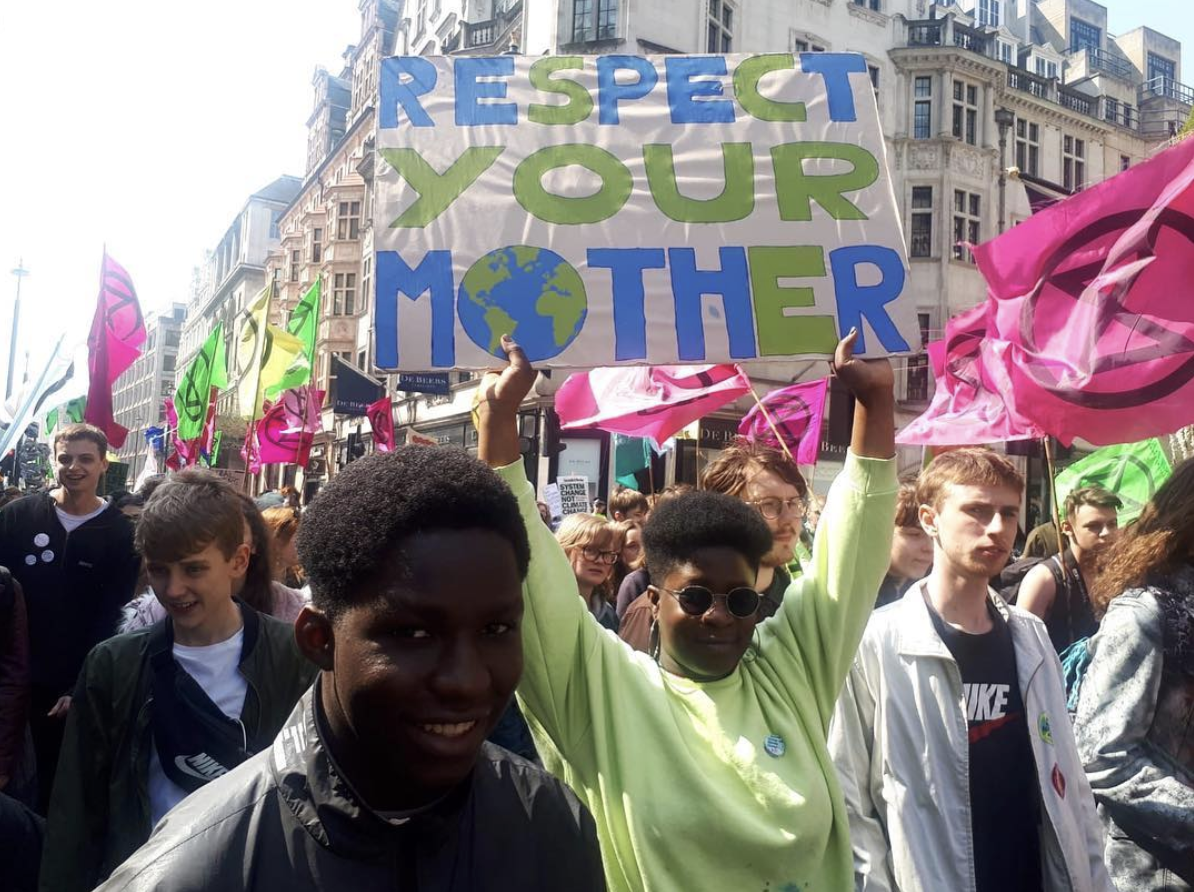
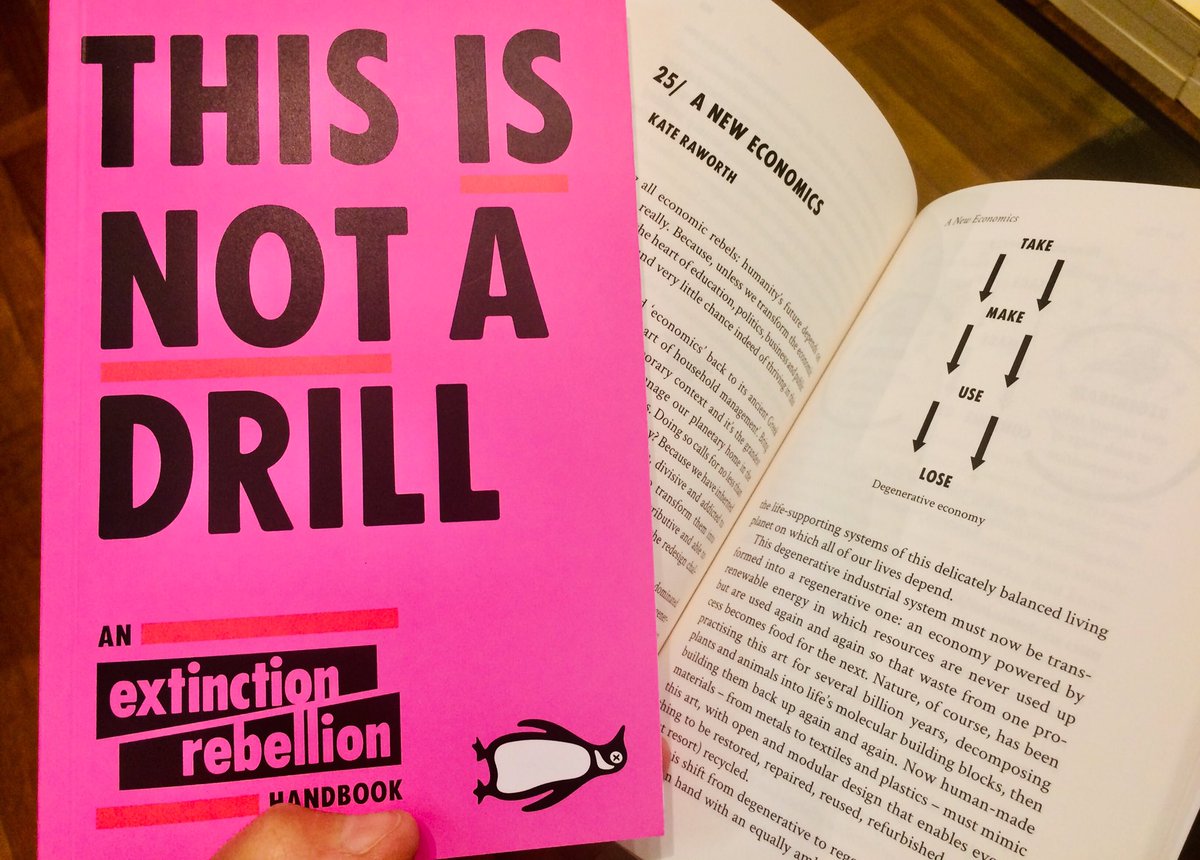
That being said, It looks like we’ve finally woken up to the alarming prospects of climate breakdown. People are out in the streets protesting, fuelled by righteous rage. More specifically, they’re getting themselves arrested in the world’s major cities, guided by the bright neon placards and uncompromisingly punchy rhetoric of a group of decentralized eco-activists who call themselves Extinction Rebellion. I bought their book ‘This is not a drill – An Extinction Rebellion Handbook’, and I thought you’d like to hear what this era-defining organization has to say about the escalating predicament we find ourselves sinking deeper and deeper into as the days go by. Unsurprisingly, it makes for very intense reading.
Courageous constipation
Featuring essays by climate scientists, firefighters, ex- drugs cops, conscientious lawyers, former admen, righteous arrestees, humanistic advisors to tech-billionaires, and a range of other agreeing, occasionally dissenting voices, ‘This is Not a Drill’ is a visceral literary slap in the face that leaves you reeling with feeling. In other words, it really messes with your head. Needless to say, reading about human extinction scenarios – written by people who actually did legit research on the topic – will never be a comfortable undertaking. Then again, the aims of Extinction Rebellion are anything but leisurely. They’re here to shock a failing system into action, and onto a regenerative, sustainable path. Judging by recent efforts, that strategy is working. Using ‘direct, non-violent action’ as their central tool against political inaction, the organization blocks the traffic flow of cities all over the world to get their message heard by politicians, the public and the media while making mass-mobilizing headlines and pissing of willfully ignorant pundits in the process. There’s no getting around the fact that Extinction Rebellion is an idealistic, tree-hugging force to be reckoned with. An unrelenting, courageous constipation in the digestive system of the exploitative, extractive capitalism, which is fast-tracking us towards ecocide and civilizational collapse. They’ve got some great slogans, too:
Tell the Truth and Act Now
The book is divided into two main parts: ‘Tell the Truth’ and ‘Act Now.’ The foreword is written by Extinction Rebellion-academic, Vandana Shiva, and the co-editor of the book, Sam Knights, with the latter chronicling ‘the story so far’, including the humble beginnings in ‘a small English town.’ The introductory segment also provides details of how the founding principles and current organizational structure came to be by drawing on the successes of the big civil rights movements in our immediate past. With passionate essays than run the gamut from despair-inducing to enlightening, ‘Part 1:Tell the Truth’ takes Al Gore´s ‘An Inconvenient Truth’ and raises the stakes by several dying coral reefs to offer a new and different kind of truth with implications far gorier than anything the stocky, waspy millionaire has ever been able to muster: Indigenous people tell us that the mountains are melting. Douglas Rushkoff describes how Silicon Valley billionaires are mainly concerned with keeping the guards to their swanky survivalist bunkers from rebelling against them after the end of the world has happened (yes, really). Former undercover drugs cops draw insightful, forward-thinking parallels between drug addiction and fossil fuel dependency, laying out a plan for harm-reduction on a macroscale. At the most downcast and depressing end of the spectrum, a harrowing doomsday prophesy, subscribing to the Jonathan Franzian view that we might as well just come to terms with an imminent Armageddon, leaps from the page like little, soul-sucking apocalypse goblins, and make you feel like running for the green, temperate hills.
Time to rebel
If part 1 is the rude awakening that hits the gravity of the situation home with the rhetorical equivalent of a spiked baseball bat, part 2 is about the steps we can take, locally and globally, to prevent a planet-wide catastrophe. Kicking things off with the apt Frederick Douglas quote: ‘Power concedes nothing without a demand and it never will’, the second part of ‘This Is Not A Drill – An Extinction Rebellion Handbook’ gets down to the nitty-gritty of activism with hands-on practical instructions as you how you become an Extinction Rebellion rebel. Thrown into the idealistic mix are tips on the best way to get arrested; Extinction Rebellion-founder Roger Hallam explaining the benefits of the civil resistance model; a formula for building an action (featuring 3 steps: disruption, outreach, and visioning), and arts and craft pointers to creating your own posters and other attention-grabbing XR paraphernalia. We also get a fascinating peek into the Extinction Rebellion media strategy, which has brought about a finely tuned messaging machine that consistently makes all the right moves by reading the zeitgeist and communicating the same powerful message over and over: It’s time to rebel. Minor flukes notwithstanding, it’s extremely impressive what this decentralized organization has managed to achieve within the space of around 3 years or so.
Economic rebellion
In one of its most constructive and visionary moments, the second part of the handbook offers an uplifting proposition for a new economic model with the statement: ‘…such extreme inequality is neither inevitable nor immutable. It is an economic design failure.’ It made me think of the famed Ursula K. Leguin quote:
‘We live in capitalism. Its power seems inescapable. So did the divine right of kings. Any human power can be resisted and changed by human beings.’
The essay, written by economist Kate Raworth, the author of ‘Doughnut Economics’, outlines how we can move from the broken, centralized economic model, currently exploiting and depleting our ecological infrastructure, to designing a system, which is far more distributive. According to Raworth, this will lead to renewable modes of energy production with the final aim of establishing and maintaining regenerative societies. With unswerving clarity, it problematizes mainstream economy’s fixation on an endless growth curve, contrasting it with what she calls ‘Nature’s Growth Curve’ while calling for the urgent transformation of the extractive economy.
A lot of these points grow out of common sense. For example, you can’t have infinite growth on a planet with finite resources. But Raworth frames her central contention with an optimistic, intellectual heft that breathes new life into well-worn thinking. It makes you think that everything might turn out alright after all if we manage to steer the ship away from choppy waters and capitalist siren-singing laced with death. Moving from ‘me’ to ‘we’ rarely ever sounded so appealing.
Critique: where’s the future?
If you’ve read any of my previous letters, you’ll know that Letters to 2120 is, by-and-large, dedicated to furthering common, constructive optimism in the face of all-consuming cynicism also known as Capitalist Realism. In light of that, it goes without saying that some of the overwhelmingly pessimistic pieces in ‘This Is Not A Drill – An Extinction Rebellion Handbook’ were hard for me to swallow.
One thing that struck me a few times when I read this book is that it’s mainly preoccupied with the here and now. Outside of the grim apocalyptic scenarios, it concerns itself with prevention in the present. When you take a hard look at the frustrating lack of political action on climate change, that seems like a perfectly reasonable response. However, given that I’m the type of person who’s prone to bouts of emotional pontification, predominantly in the form of sci-fi extrapolations and futuristic vistas, I’d personally love to see a more elaborate, inspiring vision of the future from Extinction Rebellion. In my opinion, that’s also the most effective way of persuading people to buy into your message. Having a clear and compelling idea of where we should go and, crucially, what that journey looks and feels like, is an approach that very few eco-activists have tried their hand at. As Katherine Wilkinson, the senior writer at the brilliant Project Drawdown puts it: ‘We need to have a vision for the future beyond averting catastrophe. The most vital climate solution is our capacity to hold a vision of what’s possible – for our species, society, and world’
The dangers in the visionary approach are many. If Extinction Rebellion were to lay out a comprehensive plan for a future society in stirring words and images tomorrow, the backlash could be imminent. You can almost hear the hypothetical uproar from the Tory government, accusing them of disseminating communist/totalitarian/crypto-fascist propaganda or having turned into a weird and dangerous cult. Be that as it may, I suspect they might have to navigate that volatile path somewhere down the line. The thing is that apathy is a major problem in 2020. Some experts believe that this is down to the way that everything is framed in disaster. On a daily basis, we’re carpet-bombed with sensationalist, doom-laden images that more or less make positive change seem impossible. As Norwegian psychologist and economist Per Espen Stoknes points out, climate change is almost entirely framed as a looming disaster, making us deeply fearful and paralyzed. After the initial fear subsides it becomes a topic that our brain wants to avoid altogether. And because more than 80% of the media still use ‘disaster framings’ when communicating climate change, it’s gotten to a point where we all suffer from ‘apocalypse fatigue’ – as ludicrous as that might sound. Considering that dynamic, what we need right now are better stories. Narratives and trajectories far removed from both totalitarian propaganda and cloying, wishy-washy bullshit of the neoliberal Obama variety. By no means will that be an easy feat. The ghosts of our ideological past loom large, and it will take inordinate amounts of otherworldly creativity and dogged, unflinching belief to overcome the manifold trappings of the present, some of which we’re probably not even aware of.
Buy it for everyone
But that was a self-indulgent little stray off-topic. The main event here is ‘This Is Not A Drill – An Extinction Rebellion Handbook’, an essential collection of essays echoing the contemporary zeitgeist.
There’s a lot to get into in this incendiary, mind-altering book. My review barely scratches the surface of this potent trove of ideas and opinions. Anyone wanting to read more will have to acquire it for themselves. I can say without any kind of hesitation and pussy-footing around that it’s a veritable must-read for people who care about things. It comes with my warmest recommendations – I’m guessing you still have books in 2120.
If you’re reading this in 2020 I suggest you get it for yourself, your friends, your mom and anyone else who might be swayed into taking action for a better planet. If you’re reading this in the future, I’m hoping that our present state of anxiety and desperation will have been consigned to the dustbin of history. That the Australian outback has been restored to a fertile wonderland abound with merry kangaroos skipping joyfully across the lush, undisturbed plains and cheerful koalas frolicking with giddy delight in in the swaying eucalyptus trees. Ultimately, my optimistic hope is that the pessimistic scenarios outlined in the first chapter of the Extinction Rebellion Handbook will seem like the melodramatic histrionics of a bygone era when the world worked itself into an international tizzy because of our transgenerational, human inclination for being obsessed with the end of the world.
This Is Not A Drill: An Extinction Rebellion Handbook is out now on Penguin.
It’s been a minute. Two years have come and gone since my last letter to the future. I plan to send you more letters.
For now, here’s some music I listened to in the 2010s. It will all seem very quaint and naive to you, I’m sure. There’s no need to be a dick about it, though. Have a listen anyway.
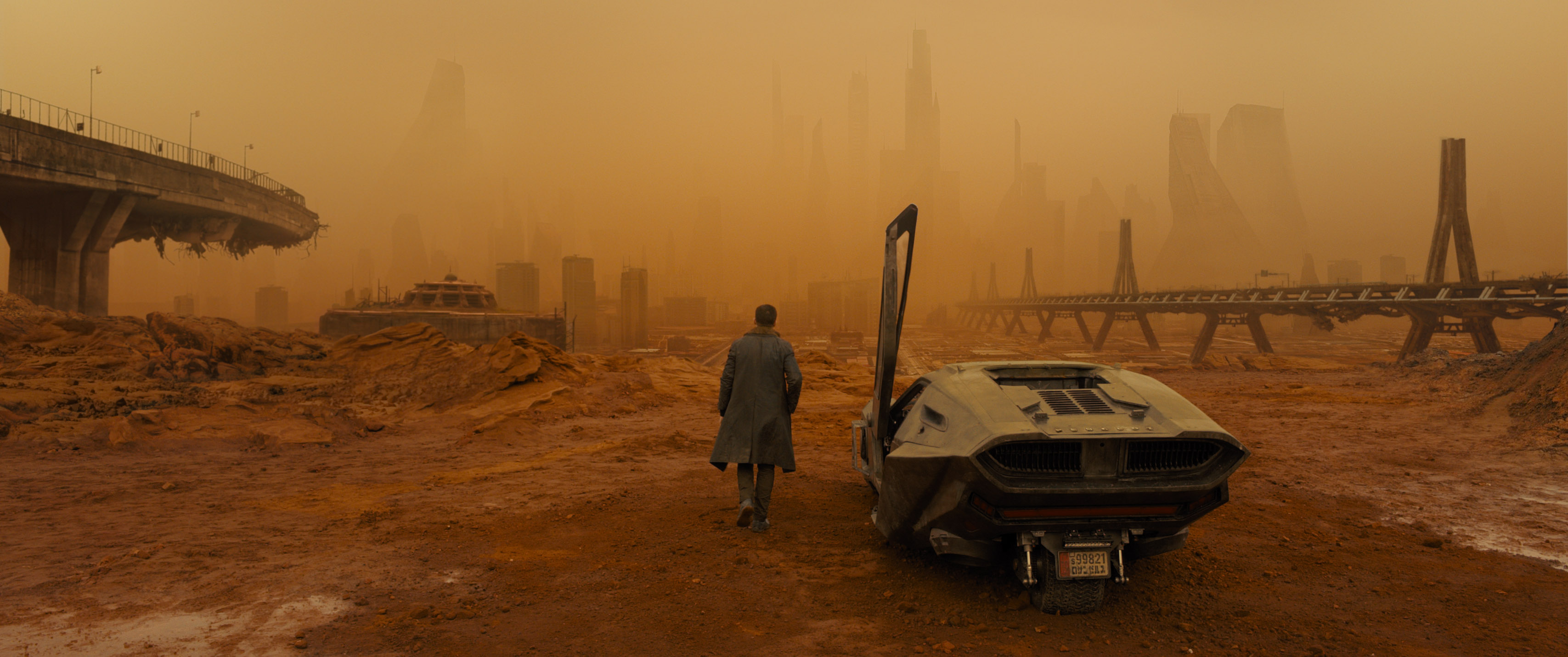
As you can probably tell from my frequent posting on the matter, Blade Runner 2049 is kind of a big deal here. The legacy of the original Blade Runner from 1982 spreads far and wide, it rolls deep with die-hard fans from director Chris Cunningham to EL-P of Run the Jewels fame singing its hypnotic praises. It’s the kind of movie that inspired a lot of other movies, not to mention an astronomical amount of music, fashion and art. For better or worse, Ridley Scott’s futurist meditation on the nature of human existence has been seared into our collective consciousness. Personally, I wasn’t really sure what to expect from the Denis Villeneuve-directed follow-up. It seemed a difficult proposition for a variety of reasons.
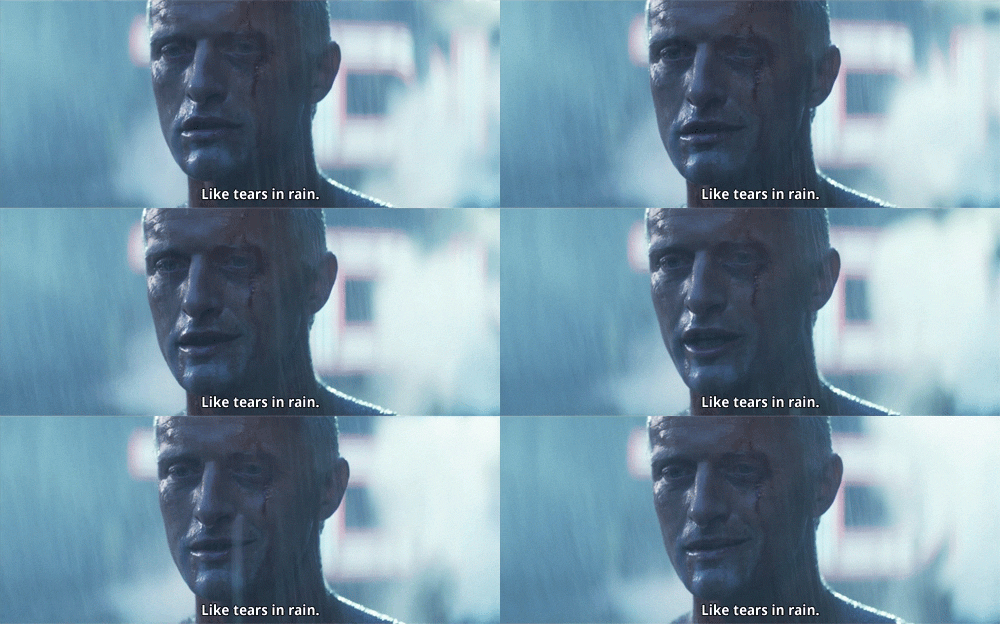
Full disclosure: if I’m honest with myself, I was probably never a die-hard fan of the original. While I can totally appreciate its dense, melancholy atmosphere, singular vision and stunning visual innovation on a more cerebral level, I’ve always found it hard to get emotionally invested. In spite of its unquestionable strengths, it never really got me in my feels. There’s a distinct possibility that I’ve just found it hard to see past the dated bits. For some people, the wonky, early 80s kitsch is the movie’s main appeal, but for me it sometimes becomes the wayward, pointy projectile that sends the soaring Hindenburg of a movie crashing down to earth in cyberpunk-tinted flames. My ADHD-riddled internet brain probably doesn’t do me any favors when it comes to Scott’s meditative sci-fi odyssey, and I certainly can’t rule out that I’m just so used to fast-paced Netflix entertainment that its relentless dwelling on idiosyncratic detail – soundtracked by sticky synths and self-indulgent saxophone solos – is why I sometimes catch myself zoning tf out. This is a movie that’s drunk on its own imagination. It wallows in its own melancholy. That said, I do think parts of Blade Runner, like Rutger Hauer’s dying in the rain with its inspired monologue, are earth-shatteringly great.
What I’m trying to say is that my relationship with Blade Runner is fairly complex, if not a little agnostic. From my perspective, parts of Blade Runner are flat out tiresome, while others are borderline genius. In other words, Blade Runner 2049’s potential was hard to determine. It could go either way, as far as I was concerned.
For the purposes of making this review more orderly and palatable, less rambling and ranting, I’ve divided it into four segments: the soundtrack, the plot, the world-building and the politics. Let’s jump in at the deep end with the heavily contested soundtrack. Spoilers ahead!
The Soundtrack
As I mentioned, there was a bit of an uproar in Nerdland when Denis Villeneuve gave Jóhan Jóhansson the boot in favor of Blockbuster titan, Hans Zimmer. Murmurings that Denis Villeneuve was losing his neuve (lølz) flourished in many a geek-driven corner of the internet, and I can totally see where they’re coming from; with Jóhansson’s timelessly yearning, neo-classical sound, Blade Runner could potentially have followed in the footsteps of its avant-garde predecessor by turning everything on its head. By flipping off an increasingly ossified sci-fi establishment. Then again, A Blade Runner movie that completely neglects the soaring Vangelis synth, wouldn’t really feel like a Blade Runner movie. You can sense Villeneuve’s pickle.
If we start out in the nitpicking department, the main problem with Zimmer’s score is that is has the all the subtlety of being bro-slapped at a toga party. On more than one occasion, I felt compelled to grab the German composer by the scruff of the neck and tell him to cool it with those massive ‘BWAAAAH!’ sounds that he also pummelled to death in Inception. And it’s nice to be overwhelmed by an all-encompassing wall of surround sound in the cinema, but when the wall is so frequent and so loud, it kind of feels like that episode of The Simpsons where they’re making fun of surround sound ads and people’s teeth and valuables get torn off in the soundwave.
Moving on to the good parts, Hans clearly knows what he’s doing. A seasoned craftsman with a proven track record in mesmerizing the big screen sci-fi audience, his vast, immersive tones compliment, contextualize and enhance the movie’s grave, larger-than-life themes. At one point when K flies into the foreboding Wallace monolith, the ambient background noise suddenly turns into a weird, heavily processed, guttural tribal chant that manages to stay on the right side of outrageous. Strange, fucked-up, colossal buildings where they engineer human slaves necessitate strange, fucked up, unholy sounds.
As an old synth-freak I can’t help relishing the generous washes of Vangelis-indebted synth-work that Zimmer implements with knowing precision. Hovercraft ride with AI-girlfriend: Vangelis-synth. Dying in the snow for a bigger cause, which is the final proof that you’re not a ‘skin job’, but a real human being with a real soul: Vangelis-synth. It works a charm, and I wouldn’t have it any other way.
All in all, I’d say the the good outweighs the bad by a long shot. 7 out of 10 vintage Yamaha synthezisers.
The Plot
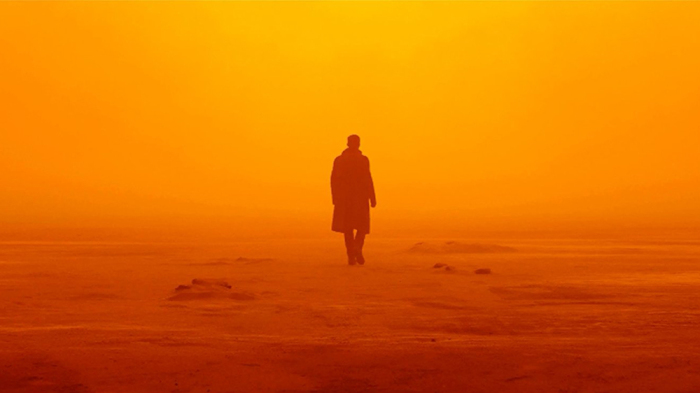
Here lies the centre of my struggle, my main gripe with 2049. I mean, I love the introductory text describing how the Tyrell Corporation had its downfall and the ecosystem collapsed making way for Wallace and his ‘mastery’ of synthesized farming. The scene is set for an epic, downcast, post-apocalyptic adventure.
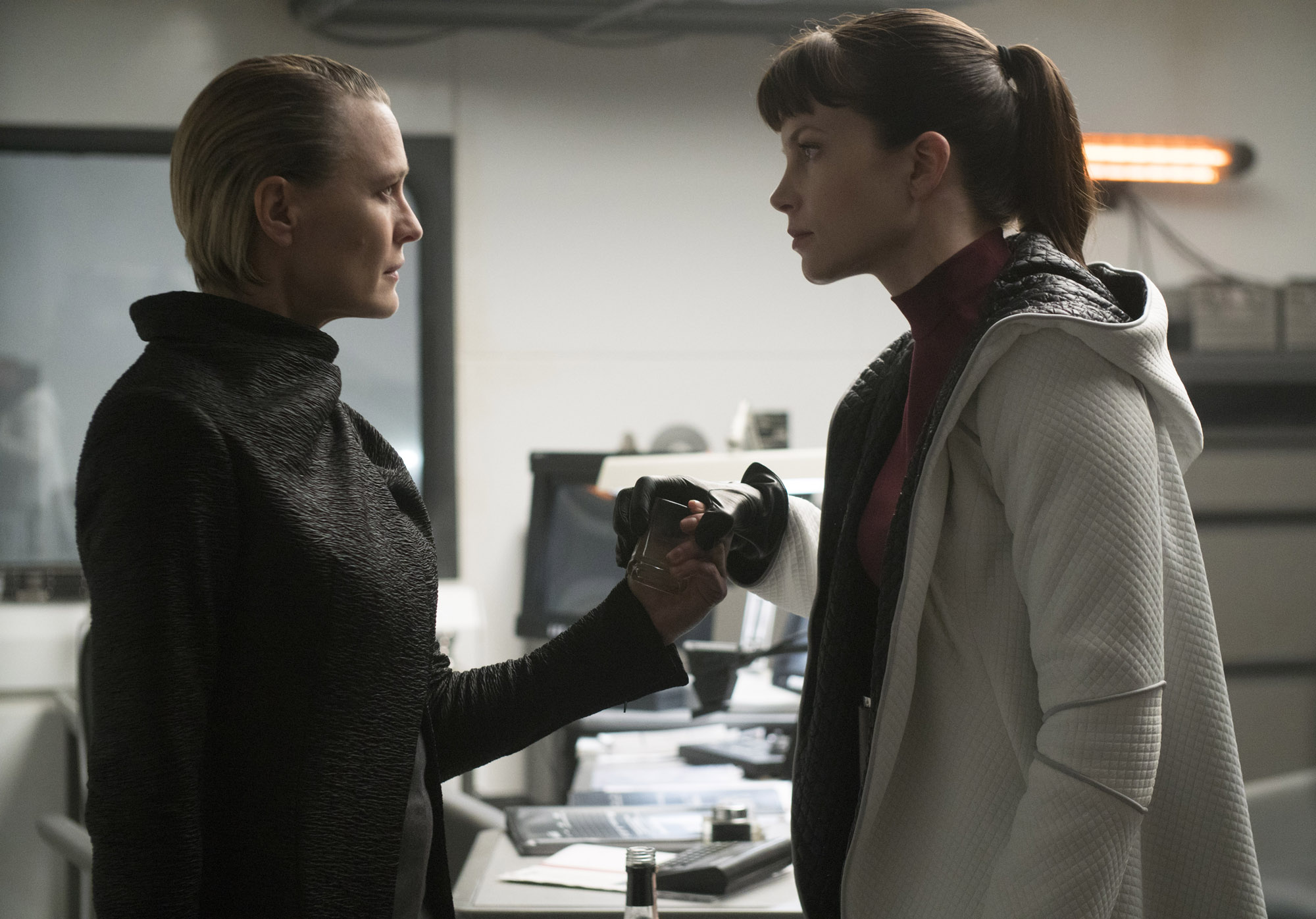
But then comes Robin Wright’s lackluster claim that they need to ‘keep order’ and if they don’t – if everyone finds out about the replicant baby – civil war between humans and replicants will break out. With no tangible backstory, no discernible character motivation, to underpin this pivotal claim, the premise that the entire movie rests on becomes one person’s half-baked opinion.
It’s a bit flimsy for my tastes. And the combination of uninspired acting and sloppy screenwriting kind of kills the plot for me. Theoretically speaking, I can see how a baby born to a replicant could stoke the fires of an insurrection. The way in which this crucial plot device is delivered, however, just makes the point of no return fizzle out into mediocrity – and I find it very hard to get fully invested in what comes next. Adding to that, the completely overshadowing focus on cinematography can sometimes make it seem like you’re watching 10 different, isolated short films in succession instead of one, unified whole. The plot gives way to the visuals. Now, depending on who you ask, this is either a strength or a flaw. More on that in a second.
These are my main points of contention with 2049. In no way do they make it suck, but they don’t do it any favors either.
The World-Building
This is where Denis and crew really nail it down to a tee. 2049 is a visual cornucopia of sci-fi boner-inducing imagination. I realize that I’m contradicting myself here, but the lack of backstory and character motivation actually serves an engaging purpose in this particular respect because it pushes us straight into the vertigo-inducing action, and sort of makes us observe what these strange people who are so unlike us, but still kind of similar get up to in a fascinating, distorted reality. It becomes a window into an alternate universe that’s taken a hard turn for the worse, and its immersive properties are by turns exhilarating, enticing and deliciously melancholy. Channeling the true, maverick spirit of the original, 2049 makes few attempts to guide its audience along a traditional blockbuster narrative, opting instead to enmesh its viewers in colour, mood and atmosphere with relatively open-ended thematic conclusions.
This is one of the most visually appealing movies I’ve ever seen. If cinematography is your bag, this is your holy grail. It also sits incredibly well with the atmospheric, world-building of the original while building on and expanding its prescient ideas into the present and beyond.
The Politics
At the end of 2017, making a big budget movie can never not be politicized. Sure enough, accusations of misogyny came flying left and right when Blade Runner 2049 first premiered. I-D fired a few rounds at Villenueve, castigating the film as ‘a misogynistic mess’ saying that women in the movie are either prostitutes or ‘violent boss vomen.’ If you judge the new Bade Runner according to criteria that usually apply to contemporary movies, this is a very fair point. In that case, the portrayal of women is straight-up barbaric and very one-dimensional. In other words, most of these women make for dubious role models.
In my humble opinion, this critique is fairly short-sighted. It also kind of misses the point. First of all, this is cyberpunk. We find ourselves in a post-apocalyptic society that’s gone off the rails. It’s creative extrapolation, making us live a worst-case scenario. We have to assume, I think, that untamed capitalism, unchecked patriarchy, toxic masculinity and all the other ills of this world are factors in the precipitous descent into debasement, leaving our protagonists with the sad, broken pieces of a world in rapid decline. Or rather, the decline is over and they’ve hit rock-bottom. Their job is to navigate this hyper-oppressive dystopia where human beings are commodities, and their use-value is the only thing they have going for them. None of these people – neither the men, nor the women – are role models. They’re misguided outcomes of a society based on the every- person-for-itself- rule. I’d agree that creating a visually titillating dystopia could be construed as irresponsible, but that’s a different discussion. (Also, if you’ve read this blog, you’ll know that I’d love to see a full-on utopian movie).
But like Black Mirror, Blade Runner is, partially at least, about seeing how bad shit can really get if we don’t stop and think – if we don’t find a way to curb our most self-destructive impulses. The 2049 universe is the opposite of woke; it’s a scenario that plays out how the world might look if we don’t find some way to change. Hence, big-breasted statues of women in the abandoned, toxic desert are not reinforcing patriarchy, they’re pointing fingers at it. They’re showing us how obsolete, dehumanizing and damaging the commodification of human beings can be.
True, 2049’s themes are subtle and ambiguous. I don’t know about you, but I prefer my entertainment subtle and ambiguous to obvious and lecturing. You could argue that today’s political climate requires lecturing, but that’s another discussion for another time – and one that I’d like to keep out of a Blade Runner debate. Simply put: if you’re going to make a movie or music about how things should be with themes that should be taken literally, that’s amazing and commendable. It has nothing to do with Blade Runner, though, and from my perspective Villeneuve does a good job of orchestrating a bold, new take on the groundbreaking Blade Runner legacy.
I can see how people can get pissed off by Blade Runner 2049 (and a few of my friends actually have). Still, I find it hard to be offended by it. If anything it depresses me. It reminds me that we’re pushed with increasing speed into the totally insane task of changing the course of humanity, so we can avoid living in a real-world dystopia where brute force, dickheaded antagonism and soulless technological innovation and are the only constants in a terrifyingly chaotic universe.
To my own surprise, I’m having a hard time wrapping my head around this movie despite seeing it twice. I’d love to give you a clear-cut answer along the lines of ‘it’s really great’ or ‘it’s embarrassingly bad’, but I can only say It’s mind-blowingly great in some respects, but kinda half-assed and sophomoric in others. Which is more or less what I have to say about the original, so I guess everything is as it should be.
Interestingly, the original Blade Runner got crap reviews when it first came out in 1982. 2049 being so ahead of its time that I just don’t fully get could be within the realms of possibility. Maybe Villeneuve’s sequel will be to your generation what Fritz Lang’s ‘Metropolis’ (1910) is to us. It manages the unlikely feat of being a beautiful, depthless void favoring form over substance, as well as a deep-seated visual poem on the intersection between technology and humanity all at the same time. The fact that it can be both may be too much for my binary, early 21st century pea brain to handle. I might even have to watch it a third time to see if I can make more sense of it all. Maybe that’s what Blade Runner is: a beautiful, confusing mess of conflicting energies.
Wherever you are, whether it’s your version of cyberspace or somewhere on an off-world colony, I sincerely hope it hasn’t aged too poorly and that you’re able to watch it without feeling embarrassed for your early 21st century ancestors. Who will probably all be gone by the time you read this.
Like inactive Google+ accounts deleted from the internet.
We’re big on fictional dystopias in my time. Maybe this is down to some warped, Freudian impulse or maybe it’s just plain, old human boredom manifesting itself in decadent, thrill-seeking fantasy. In any case, I’m pleased to report that Blade Runner 2049 just got propped-up by Blade Runner Black Out 2022, an Anime short-film made as a prequel to the main event, scored by Flying Lotus with music by the illustrious Kuedo. Watch the whole thing here.
With 2049 weighed down by mounting soundtrack complications, this expansive cyberpunk gem directed by Cowboy Bebop creator Shinichiro Watanabe is a breath of fresh, wide-eyed replicant air in the increasingly cynical human media racket surrounding the new Blade Runner movie.
Who knows, Blade Runner 2049 might still be great. But this tight, little short packing deliciously melancholy Anime-noir is kind of amazing. Denis Villeneuve needs to stay at the top his game to keep up with Blade Runner Black Out 2022.
One of my main worries about this extremely one-sided correspondence is that you’ll have no idea what the hell I’m talking about. To that end, I’ve decided to merge a contemporary, cultural phenomenon known as Game of Thrones with Special Request’s latest junglist piano house banger in the attempt to accurately convey how music can make people feel about things in 2017.
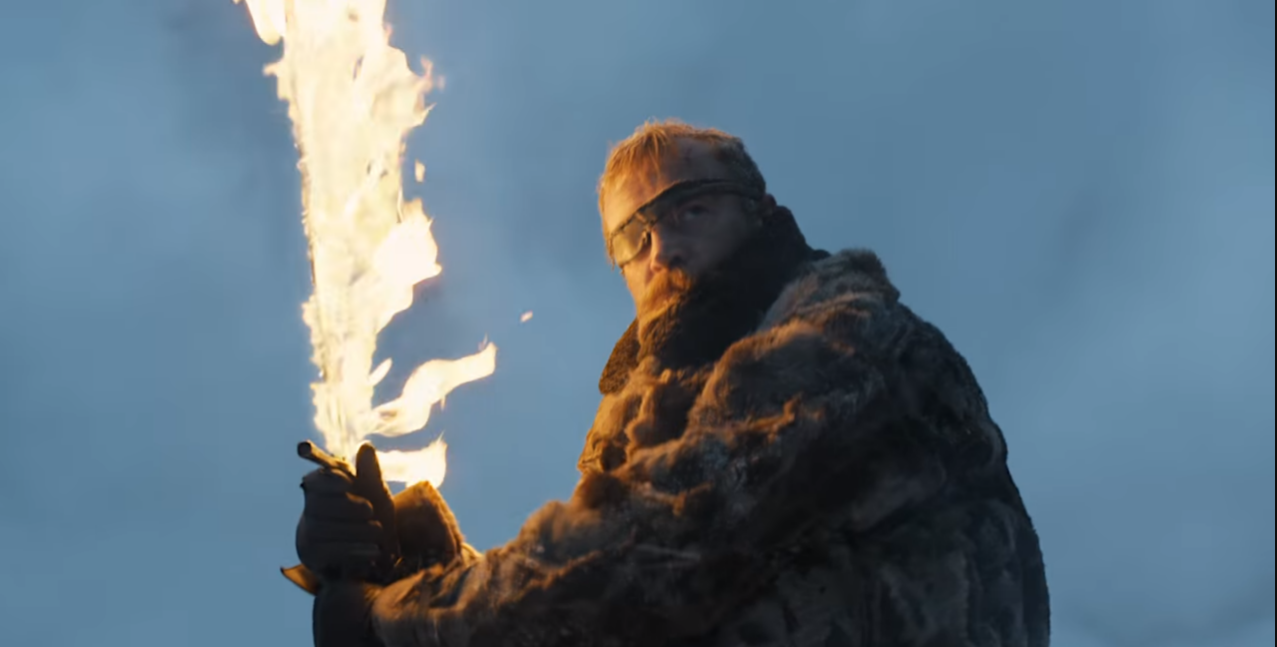
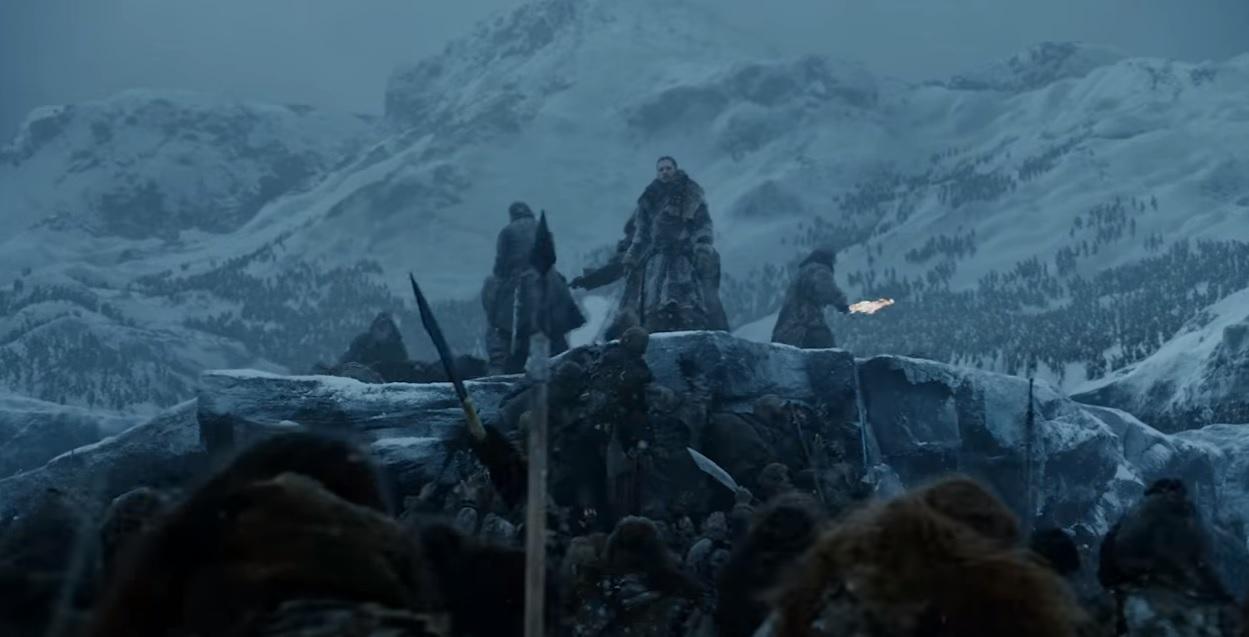
Picture the scene: you’ve been walking for ages in an unforgiving winter wasteland with only the obstinate, smart-alecky interjections of a hideously scarred, smelly sociopath called The Hound to keep you company. The quest: acquire a hissing, undead corpse for the Dragon Queen. It’s the only way she’ll ever believe there’s an army of White Walkers coming to kill life itself. Things go awry at some point and you end up in the middle of a frozen lake surrounded by a vast phalanx of hungry zombies in various stages of rot and decay. The Hound is a belligerent fuckhead, so he throws rocks at your enemy, which ends up setting everything in motion, including the patch-eyed, Lord of Light servant’s flaming sword.
Enter Special Request’s ‘Brainstorm’:
As the undead army approaches, you press play on your medieval/fantasy soundsystem to get pumped for battling the Night King’s army of skeletal reprobates with your boss weapon forged from newly excavated dragonstone.
The booming kick makes the rocky foundation you’re standing on reverberate with the golden age of rave – and you have to slap some sense into the ginger wildling to keep him from busting trippy, Fiorucci Made me Hardcore/ 90s warehouse moves. The dead-eyed freaks come at you in droves and the Kool Keith sample eggs everyone on. You’re putting up a formidable fight, swords singing and gleaming in the pale winter light, White Walker heads fly left and right. At some point, though, you run out of steam and the Walkers start eating your buddy’s face and pulling people into the lake.
But then. A soaring, HI-NRG piano riff accompanied by slaying diva vocals lights up the sky; the Dragon Queen Khaleesi has arrived on her surly dragon to save your ass and incinerate the enemy. You barely manage to hang on to the scaly beast at it leaves and in your mind’s eye you can’t help but notice how Paul Woolford’s hardcore barnstormer of a track makes the perfect soundtrack for fighting off White Walker’s with a flaming sword.
If you’re a connoisseur of popular culture in the 2010s, this will all make perfect sense. If you’re not, I suggest you start reading up on things. Some people have given up on GOT here. They don’t know what they’re missing.
‘Brainstorm’ by Special Request is out now on Houndstooth.
I can’t speak to the newsworthiness of this in relation to people living a hundred years from now. All I know is that few sci-fi writers have managed to mess so masterfully with my head as Philip K. Dick, which makes the appearance of a trailer promoting a TV show based on a range of the volatile writer’s short stories something of an event here in my present. When the space head who dreamt up shadowy, literary masterpieces like ‘Do Androids Dream of Electric Sheep’ gets his small screen debut, you can’t not post about it. At least not if you’re a nerd like me.
The trailer isn’t exactly mind-blowing, and it looks like they might have borrowed a little too heavily from Black Mirror, but I’ll reserve final judgment for when ‘Philip K. Dick’s Electric Dreams’ lands in my digital entertainment system.
Grasping the bigger, more significant perspectives of your era can sometimes be a challenge when all you have at your disposal is the sluggish, old human sensory apparatus. Our 2017 brains have limited processing capabilities, which makes it difficult to comprehend and analyze the total sum of everything that goes on around us. When you’re caught in the hurricane of all these overwhelming, hectic impulses and impressions, your memory is compromised and your ability to make connections between cultural, technological and political events is stretched beyond its means like a cheap balloon enlarged by the ruddy cheeks of an overzealous 7-year-old.
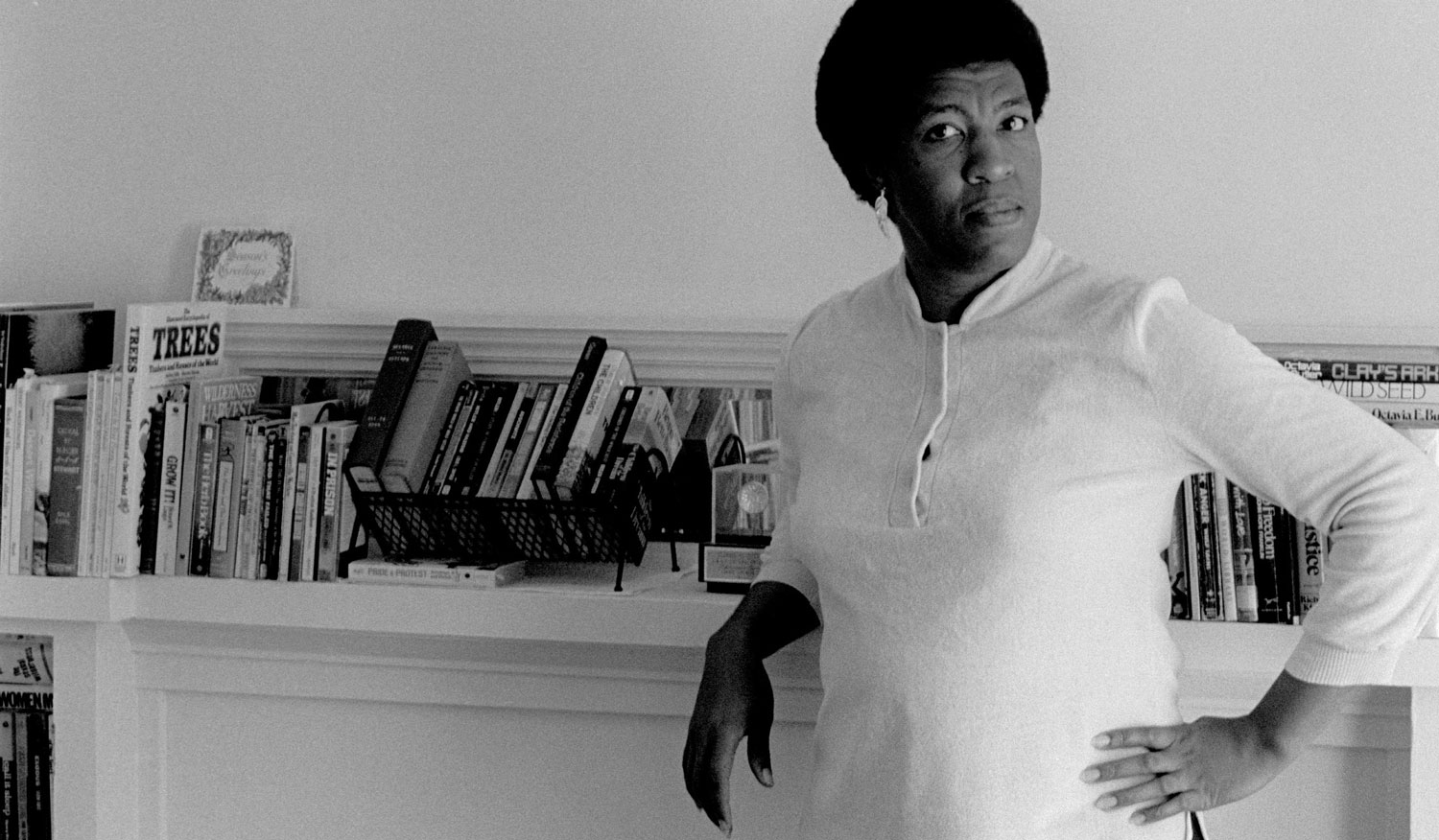
However, some people, particularly certain science-fiction writers, are blessed with the ability to make those connections, enabling them to process the relevant information of the present and make startlingly accurate predictions about the future. Cases in point are George Orwell’s “Nineteen Eighty-Four“, Aldous Huxley’s “Brave New World” and, as it was just highlighted in the New Yorker yesterday, Octavia Butler’s 1998 novel ‘Parable of the Talents.’
I have to admit that I’d never heard of Butler (despite Queen Beyoncé mining Octavia for inspiration on her latest album), but that’s an oversight I intend to rectify posthaste. As Abby Aguirre puts it:
‘In the ongoing contest over which dystopian classic is most applicable to our time, Octavia Butler’s “Parable” books may be unmatched.’
Lately, with the rise of Trump, people have been falling over themselves in the quest to name the classic dystopian book that most aptly describes the present ‘Trumpified’ moment. Orwell’s media-controlled totalitarianism and Huxley’s culture held captive by trivial hedonism are inevitable science-fictional touchstones, but maybe Octavia Butler’s ‘prescient vision of a zealot elected to make America great again’ (actual words) is the novel that got it right. In ‘Parable of the Talents’:
‘The Donner Administration has written off science, but a more immediate threat lurks: a violent movement is being whipped up by a new Presidential candidate, Andrew Steele Jarret, a Texas senator and religious zealot who is running on a platform to “make American great again.’
In 2120, you might be asking yourself why we’re not doing anything if some people can see the train hurtling at us at breakneck speed. I can only say: good question. At the moment, a lot of people don’t really seem to care what smart novelists have to say.
Thought I’d share a newish track with you. I can’t decide if it’s really stupid or really great or an interesting mix of the two – which might be what makes it really great, to be honest. It’s been a while since I’ve heard news from Bullion, and Blue Pedro is an interesting proposition to say the least. Regardless of what you think of the music, I can’t help thinking that making a track, which sounds like the next Hobbit movie (in which Gandalf and Bilbo throw caution to the wind, venturing out to sea for a rowdy knees-up with their jolly dwarf brethren) is a pretty ballsy move. After more than half a decade of moody techno ruling the airwaves, this shines a joyful little light on my Monday. Have a listen:
Maybe it’s just the jam you need to set your Mars-based graduation party on fire?




 The Himalayas are visible for the first time in 30 years as pollution levels in India plummet.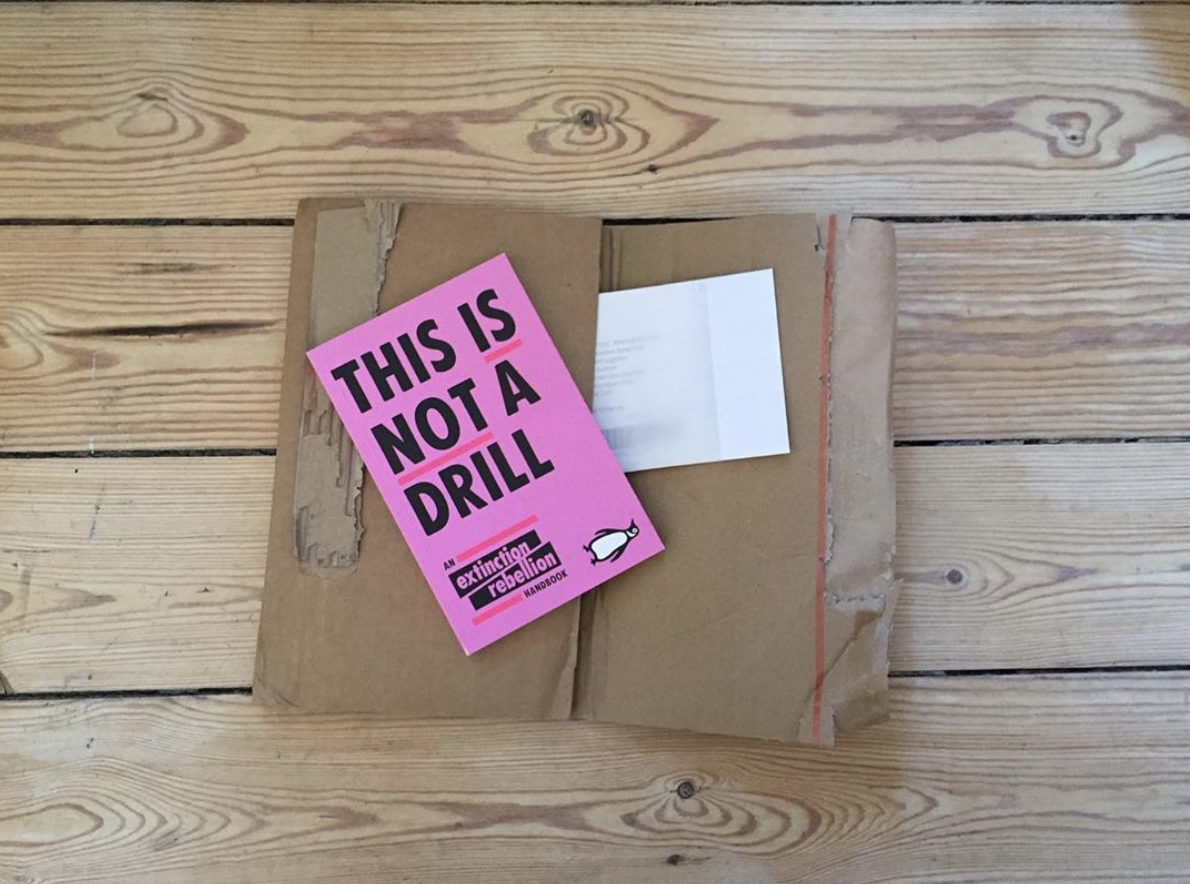







 Letters to 2120