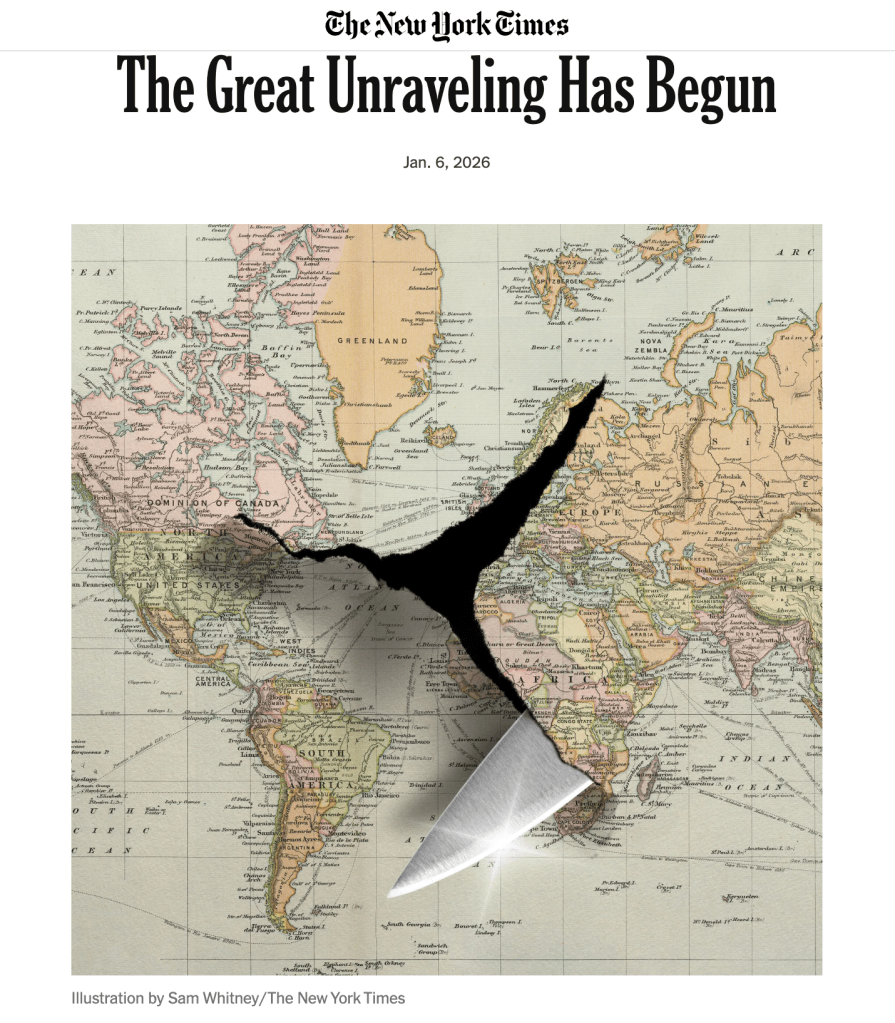
2025: The Year in Review

Dear 2120,

What are we doing? Where’s this going? What is this? Who am I?

If 2025 was an extremely discombobulating year offering more questions than answers, it looks like we’d better buckle up: 2026 is set to be even more intense. The US is sliding into a bizarre form of tech-enabled proto-fascism, dubbed by zany jokesters as ‘The Nerd Reich.’ Palestine keeps suffering despite the so-called ceasefire. The far right has surged across Europe. And we’ve breached 7 out of 9 planetary boundaries, according to PIK. It’s bleak AF out there.

But good things are happening too. Zohran Mamdani became New York’s new socialist mayor, running a fearless campaign for working-class affordability. The Green Party’s Zack Polanski is now the UK’s most popular party leader, championing a similar progressive agenda. Across the world, people are organizing, resisting, building alternatives.

At this point, people here in 2025 usually wheel out that Gramsci quote about monsters as a way of sounding worldly while managing their metacrisis anxiety. I like Gramsci. It’s a good quote. But here’s the thing: there’s no guarantee these monsters are disappearing anytime soon. In fact, they’re having a pretty good run. They seem invigorated, like they’re having a grand old time wreaking untold damage on us and the planet in their deranged pursuit of influence, control, and obscene wealth. There’s definitely some form of sociopathy at play here. 

The brutal truth is that they’re not going to stop unless someone stops them.

Enter Regenerative Propaganda

This situation, this clusterfuck, this slow-motion collapse, whatever you want to call it,  is what prompted me to start my own company, Regenerative Propaganda. After spending most of my career in culture, communications, and advertising, watching talented people waste their abilities on stupid and harmful things, I decided to just go do what I always wanted without compromising. No more quietly rolling my eyes like a surly teenager when my boss told me to write or make something more “palatable to the market.”

So I went and did it.

I wouldn’t call it an overnight success story. But I’m at a point where it’s starting to make sense financially. I still hustle in the old world of extractive consumerism  (selling people shit they don’t need) to make ends meet. But I think it balances out on the good vs. bad scale. And every month, the balance tips a little more toward the work that matters.

What I’ve Learned This Year

There’s very little money in actual regenerative communication. And I mean actual regenerative communication: degrowth, sufficiency, having fewer material possessions to focus on what truly matters: community, care, ecology, purpose. It should be the world’s biggest open goal, but here we are. To an alarming and frustrating degree, the system rewards the people selling the disease, not the cure.

The work finds you if you’re patient. Once I stopped chasing every gig and started being clear about what I stand for, the right projects started appearing. Not many. Not enough. But the right ones. People and organizations who actually want transformation, not just greenwash their way through quarterly reports.

You can’t do this alone. Building something regenerative in a degenerative system is exhausting. You need community, co-conspirators, people who get it. This year I’ve been lucky to connect with others doing similar work — designers, strategists, activists, artists — all trying to build the world we actually want to live in.

Compromise is inevitable, but capitulation isn’t. Yes, I still take work that makes me wince sometimes. But there’s a difference between bending and breaking. I’m learning where my lines are, what I can live with, what I can’t. It’s messy and imperfect, but that’s the reality of trying to operate ethically under capitalism.

This is going to take longer than any of us want. The monsters aren’t going anywhere fast. The systems that produce them are deeply entrenched. Real change is slow, frustrating, unglamorous work. But it’s the only work worth doing.


What’s Next

In 2026, I want to do more of the work that matters and less of the work that just pays the bills. I want to collaborate with people building genuine alternatives; community energy projects, worker cooperatives, regenerative farms, mutual aid networks, social movements that actually threaten exploitative empire. I want to help tell their stories, amplify their work, and make the case for a world beyond endless growth and extraction.

I’m also thinking about how to build more resilient structures for this kind of work. How do we fund truly regenerative communication without compromising its integrity? How do we support each other through the inevitable precarity? How do we build something that lasts?

I don’t have all the fully-formed answers. But I’m learning, adapting, trying to practice what I preach.

Here’s to a turbulent, terrifying, occasionally beautiful 2026.

We’re Cooked (again)

Dear 2120,

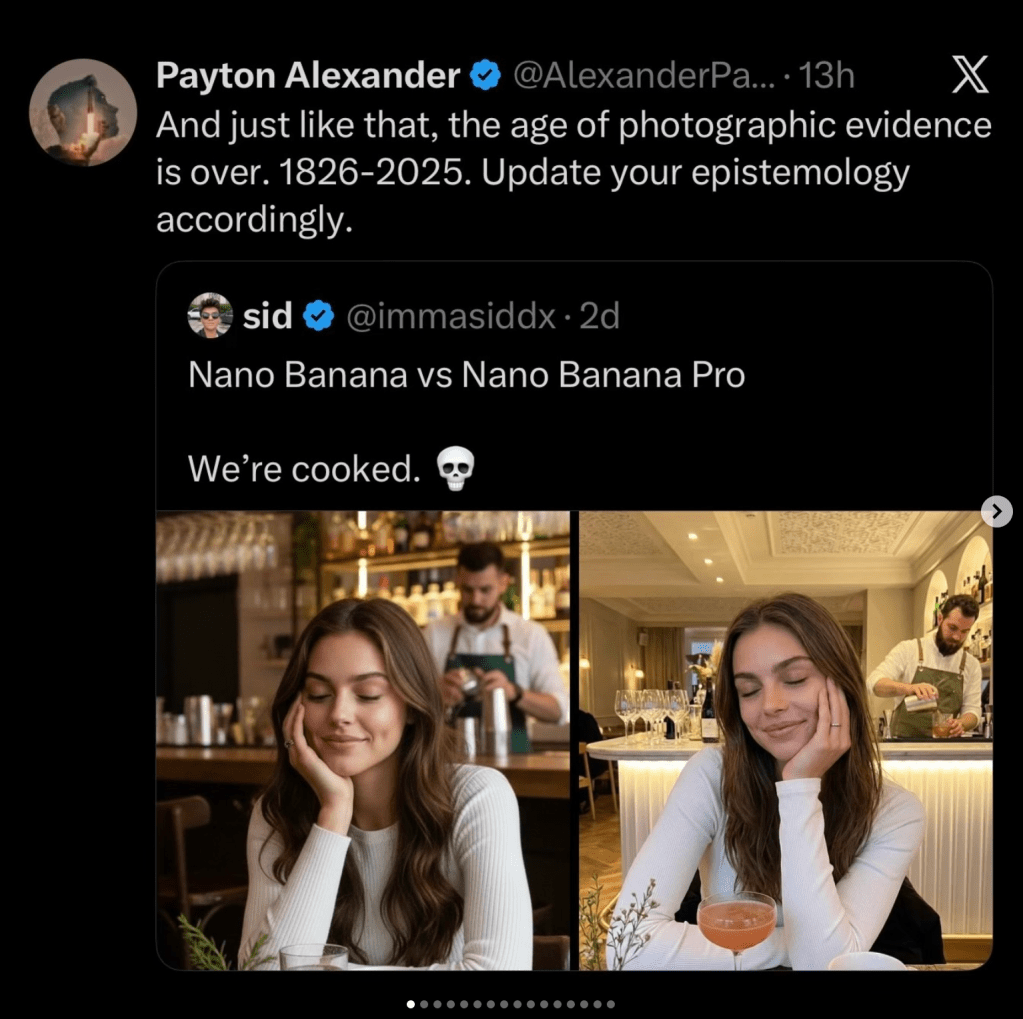
Reality is coming apart at the seams, it would seem. If you’re wondering why I haven’t sent you an AI-themed letter yet, it’s mostly because: A) I’d like to try and forget the work and money it’s costing me as a person who makes a living writing things, and B) the indisputable fact that the legions of people who yap incessantly about AI here in 2025 are among the most insufferable members of our species.

This caught my attention, however. Made me think The Matrix wasn’t a pipe dream – and maybe not even that far away.

RIP, the real world.

Imagining 2120: Generating Desire for Postcapitalism

Dear 2120,

Writing to you feels weird. Like texting someone who won’t read it for a century. But here we are, stuck between a world that’s clearly breaking and one we haven’t figured out how to build yet.

Here’s the thing: we’re supposed to imagine the future, but we’re really bad at it. Most of what we get fed is either dystopian nightmares or the same capitalism we have now, just with fancier phones and flooded cities. Mark Fisher (quoting Jameson) said it’s easier to imagine the end of the world than the end of capitalism. He/they nailed it.

But something’s definitely shifting. People are starting to realize that what we want – like, actually want – matters politically. Our desires either keep this broken system running or help bring something new into being.

Ursula Le Guin said the future is a kind of fiction, and she was right. We don’t have to accept Silicon Valley’s depressing version as the only story. We can write different ones. Slower, weirder, more human.

There’s this idea from Jacques Attali that every dying system contains hints of what comes next. And yeah, we’re definitely dying; supply chains failing, climate chaos, institutions crumbling. But in all that noise, we’re hearing something else. Mutualism replacing rigid hierarchies. Local communities thriving within global networks. Economies that measure health instead of just growth. The next thing isn’t going to show up complete, it’s emerging in pieces, visible in the cracks.

The problem is we’ve been trained to want the wrong things. We’re addicted to ownership, competition, endless accumulation – and these habits keep us locked into a system that’s literally killing us. Even people who want change often want it to be easy, comfortable, something they can buy into without real disruption.

So the challenge isn’t just building new systems. It’s rewiring how we imagine life itself. Making the postcapitalist world feel not just possible but genuinely desirable.

What if creativity wasn’t about competing but about contributing? What if technology helped people and ecosystems thrive instead of extracting from them? What if pleasure came from connection rather than consumption? What if status meant what you gave, not what you owned? What if growth meant maturing, not just expanding?

Writing to you instead of just about you changes something. It makes you real – not some abstract concept but someone we’re in relationship with. You’re not a prediction; you’re who comes after us. And you’ll inherit both our mess and whatever we manage to get right.

We’re trying to build you something that doesn’t eat itself. A world where abundance is about ecology, not money. Where resilience is collective, not just a personal brand. Where liberation includes everyone or it’s meaningless.

If we pull this off, your world will seem obvious. Just like feudalism looks absurd to us now, our obsession with markets and competition and individual success will seem embarrassingly primitive to you. Maybe you’ll laugh at how we measured everything in productivity and profit. Or maybe you’ll just be relieved we finally moved on.

I’m not writing this as prophecy – more like a reminder that we can shape what we want. Desire isn’t fixed. We can redirect it. The future isn’t something we just watch happen. It’s something we create.

If we learn to want different things, we’ll build different things.

And if we build different things, maybe you’ll inherit a world that actually works.

We’re still figuring it out. But we are actually trying.