The Ultimate Resonance: Boards of Canada and the Sound of 2026

Dear 2120,

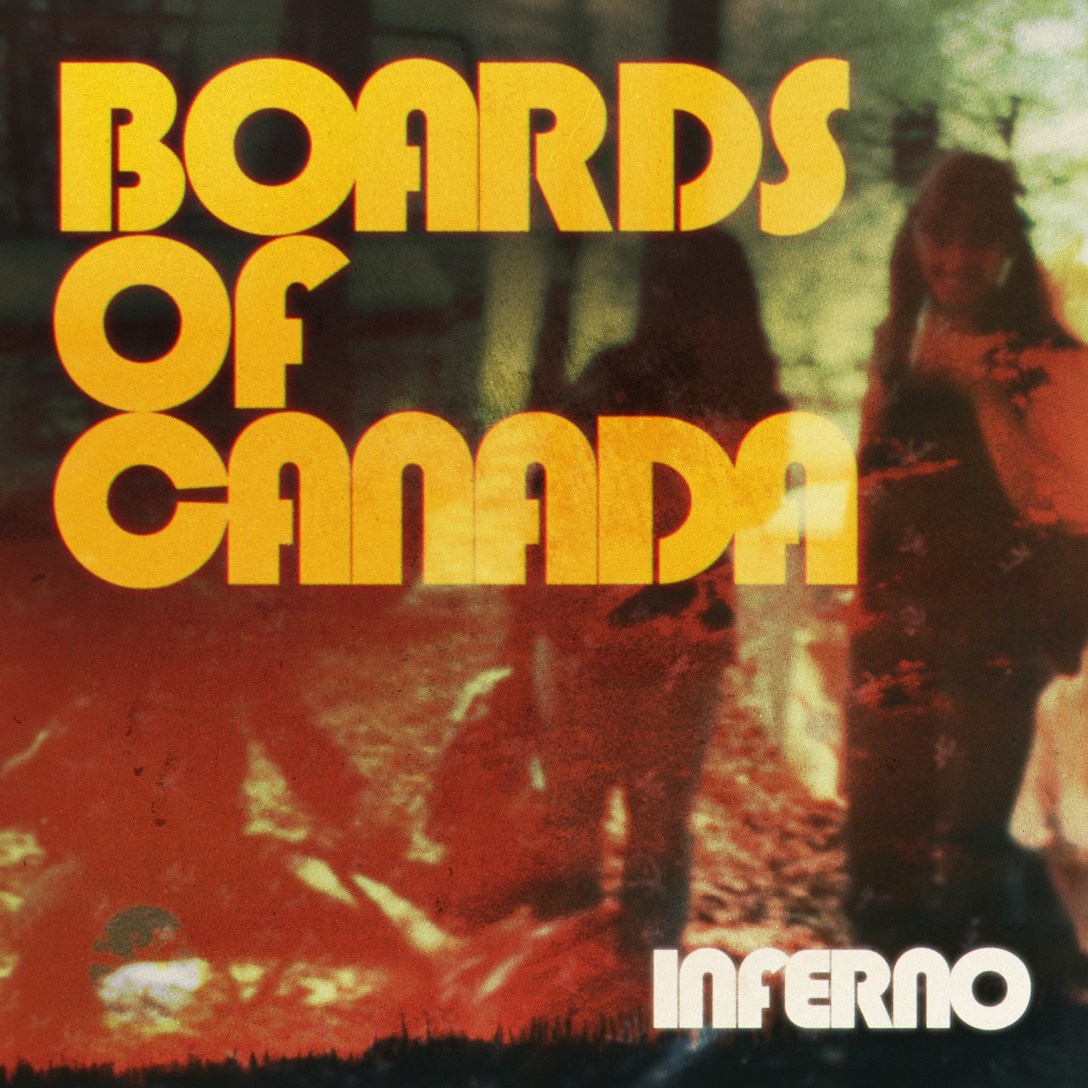
I’m sending you a message about the new Boards of Canada album. It’s called Inferno, and it’s  the mysterious Scottish duo’s first LP in 13 years. To you this album isn’t new. It’s nearly a century old. I’m bringing it up in this very one-sided conversation of ours because the music is what we call a sign of the times. It articulates what so many of us have been struggling to say. The confusion, the frustration, the anticipatory grief, the hyperobjective transformation happening in real-time, on our ever-restless screens as we worry about the kind of future our children will have to navigate. If you want to get a sense of what living right now actually feels like, this album is a pretty good place to start. 

The metacrisis moment
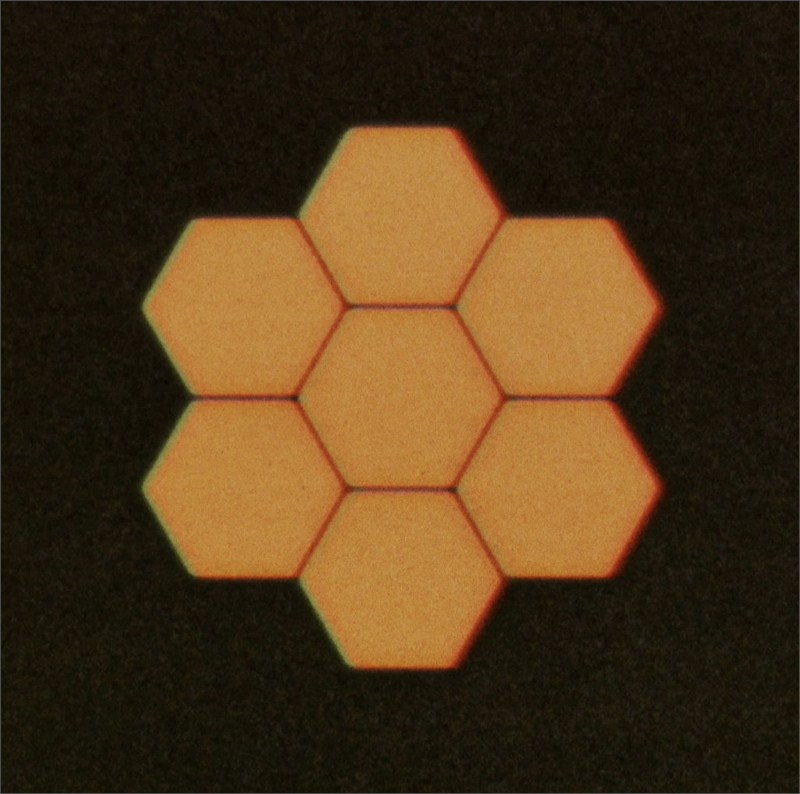
Boards of Canada’s ominous hexagon sun

The endless theorizing about our volatile geopolitical moment – the metacrisis, the climate crisis, the Epstein files, AI, the genocide, the far-right resurgence; how these connect, intertwine and intersect, and what it all means – that’s been covered pretty exhaustively by our talking heads in the media.

Things are getting worse. They’ll quite likely get a lot worse before they get better. We’ve got a pretty good grasp of the intensifying change happening all around us. But up until now it’s been too complex and elusive to capture through art in a way that makes you feel what that feels like.  

To put it another way, art made about the metacrisis has, up until now, always felt slightly off. Kind of dilettantish. Try-hard. And very performative. Regardless of the level of ambition or well-intentioned effort it has, with a few notable exceptions, fallen short of capturing the unadulterated mindfuck that is the 2020s. It fails because it tries to commentate on the crisis rather than inhabit it. It has watched it from afar, perched on its cozy institutionalized vantage point rather than channel and embody its deeply fucked up energy. 

Somehow, Mike Sandison and Marcus Eoin have become the bearers and mediators of that energy. Wherever it is they live in rural Scotland is the nodal point, the lightning rod absorbing how we collectively careen on the edge of the abyss and stare deeper into it with every new calamity we’re confronted with by the unrelenting news cycle. 

Head-pounding prophecy

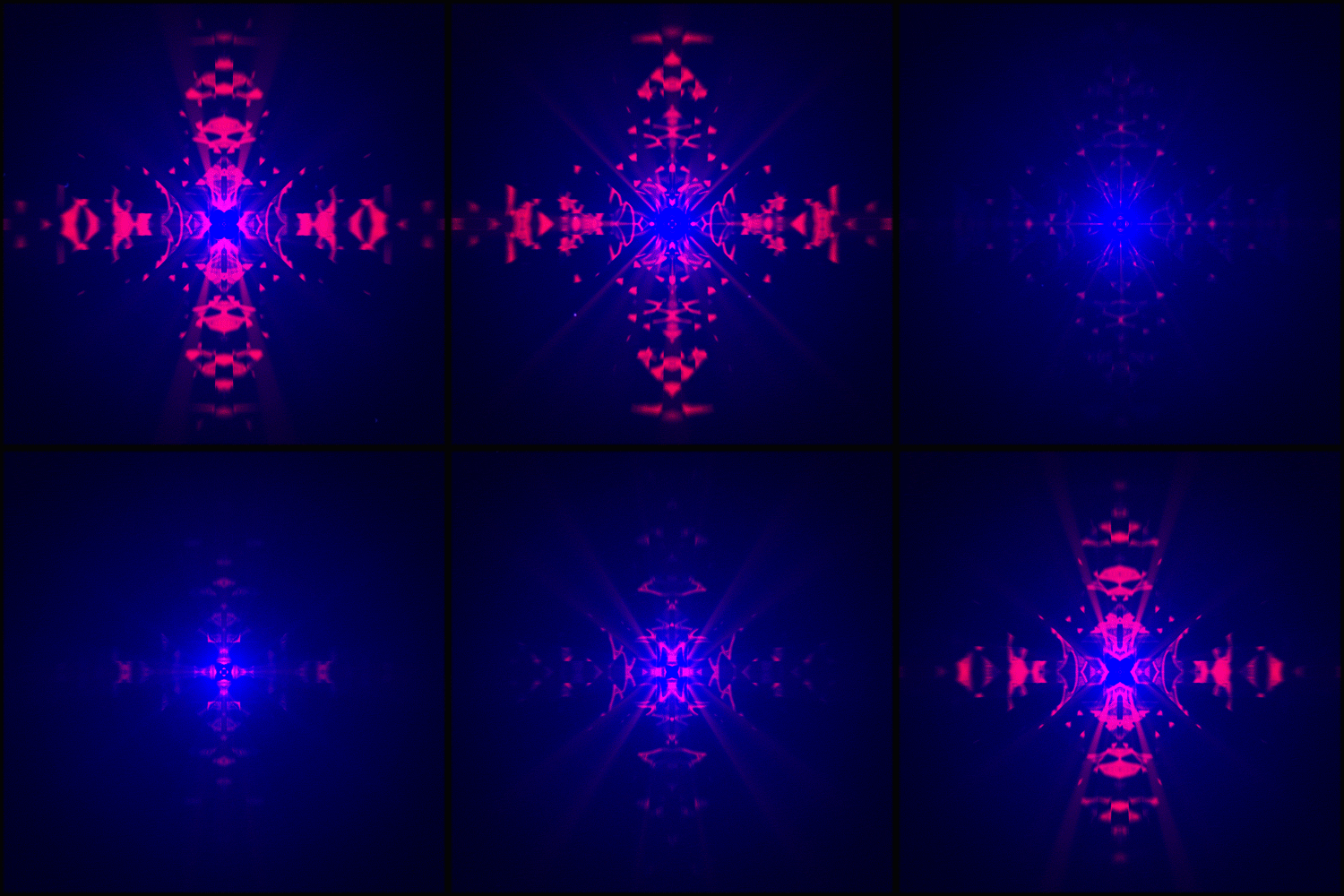
Take the album’s first single Prophecy at 1420 Hz. Supported by a video created by visual artist  Robert Beatty, it gets underway with a cinematic Middle-Eastern flute. In the video, swirling light shapes, bearing an uncanny resemblance to Israeli iron dome rockets launched against Gaza, create a visual framing for the flute as it leads us into what suddenly becomes a  surprisingly goth affair with chiming, downcast guitar. What’s more, the sound design exhibits a textural digital crispness that feels invigoratingly sharp as it cuts through their trademark analogue haze with determined precision.


Not only that, but halfway through the track you realize that the BoC-brothers didn’t come to play on their fifth album as they summon a warped and demonic AI entity from another realm that’s possibly the future. ‘I AM GOD, THE ULTIMATE RESONANCE’ it proclaims – a genuine WTF moment for long-time BoC-fans like myself. Not because it isn’t amazing (it is) but, in my opinion, one of Boards of Canada’s greatest strengths has always lain in their subtlety. Their unparalleled ability for teasing out deep emotional resonance with few elements. Prophecy is an entirely different beast altogether; it throws the duo’s well-known talent for evocative restraint by the wayside and takes a big fucking swing in a glorious all-out assault on established good taste and expectation. By trading their signature analogue warmth for a colder digital signature Sandison and Eoin could be admitting that the past can no longer protect us. The comforting retro-haze of the 20th century has officially curdled into the hyper-accelerated digital panic of 2026. They aren’t looking back anymore; they’ve been forced to look forward, and it sounds terrified and terrifying. 

I was completely floored on the first 20 listens. It’s Boards of Canada, but from some alternately evolving timeline – which probably has a lot to do with the alternating times we live in. The strength of Prophecy was actually so impactful that it created the paradoxical effect of making me ever so slightly nervous that the brothers had pulled out their biggest gun early in the game in a marketing ploy to sell more records (hey, we all live in late capitalism – Warp Records are no exception). 

Thankfully, my fears were put to rest when I finally sat down and listened to the whole entire thing. This wildly rich and expansive journey through space and time. People are comparing it to Pink Floyd’s Dark Side of the Moon. With the exception of The Guardian who lambasted the drum programming and what they thought was dubious interrogation of religion, the critics love it, too.  Rarely have so many reviews become thinkpieces stepping out of the traditional music review framework. And with good reason; Inferno is just so interesting sonically and thematically. It prompts wider and deeper analysis. Which brings us to:

The Boards of Canada lore


Every Boards of Canada album launch is surrounded by intense speculation and relentless analysis. Every little detail is pored over, no aural stone is left unturned. The music is littered with symbolism, allusion, nods, winks and all kinds of surreptitious narratives often pulled from esoteric and occult sources. Inferno is no exception. In fact, it just might be their most reference-laden album yet.

To be honest with you, I never went too deeply into all that stuff. I’ve always been fairly crap at math, and I thought dissecting and arguing about possible interpretations of a given 70s sample on obscure message boards were for budding incels and people with an abundance of time on their hands. Up until now, I’ve just enjoyed the way the music makes me feel. However, with the launch of Inferno, I’ve changed my mind a bit. The references and the symbolism lend the listening experience an intellectual and thematic framework that you’ll be hard pressed to find on other contemporary albums. 

Here’s a small fraction of Inferno lore lifted and repurposed from the delightfully nerdy Bocpages  

Track HighlightEsoteric & Occult AllusionsScientific / Mathematical Anchor
‘Introit’Liturgical introduction opening a Christian holy communion mass.Sets the thematic baseline of structural ritualism.
‘Prophecy at 1420 MHz’Features Islamic scholar Seyyed Hossein Nasr declaring God as the ultimate resonance.Points to the 1420.4 MHz hydrogen line frequency targeted by SETI for extraterrestrial life detection.
‘Age of Capricorn’Samples a Christian televangelist weaving prophecies of the antichrist and Nostradamus’s “Mabus.”Direct astrological nod to the zodiac age succeeding the idealized Age of Aquarius.
‘Naraka’References the distinct purgatory/hell realm found in traditional Buddhist and Hindu theology.Combines murky, low-end bass with ecstatic, looped Hare Krishna chanting.
‘The Process’Evokes the 1960s apocalyptic cult, The Process Church of the Final Judgement.Mimics an automated, algorithmic breakdown using distorted, synthesized text-to-speech word salad.
‘I Saw Through Platonia’Interrogates the absolute loss of linear temporal movement.Concept from physicist Julian Barbour suggesting time is an illusion; built completely over a raw human heartbeat.

As you can probably tell, Boards of Canada don’t play when it comes to their conceptual storytelling. You could spend decades decoding the music (as I’m sure many people have), and still not get to grips with everything.  

The sound of now


But what of the music itself? How does it actually sound as a cohesive body of work, and how does it make you feel? Speaking from within the 2026 context, my main takeaway is that it has reawakened my aural curiosity and to some extent my belief in music as a catalyst for transformation. That’s no small thing, obviously. Again, this is because it feels like the duo inhabit the zeitgeist rather than produce perspectives on it. Inferno is on fire in the best possible way: 


There’s the upliftingly sinister vibe on Age of Capricorn where a faded voice switches between ‘Mabus’  (a predecessor to the third antichrist, or the antichrist itself, according to Nostradamus) and simply ‘marvellous.’ It’s hard to tell the words apart. Needless to say, the ambiguity is something else.  

Then there’s Naraka, a bass weighty banger full of dread and danceable hooks that ends in joyfully uttered Hare Krishna samples. This would be corny AF on any other record than this (I’m still not completely sold on it, to be honest, but when you’re dealing with an LP of this magnitude – and all-out conviction – you tend to give it the benefit of the doubt).

Further on, Into the Magic Land hits an emotional register I can only describe – somewhat feebly and reaching – as out of this world. Interdimensional. From some place I know very intimately, but also feels decidedly alien. It’s a sort of comforting eeriness that envelops you, making you feel warm and cold simultaneously. It’s genuinely new in some way I struggle to describe. Maybe that’s why it’s so uncanny.

On Blood in the Labyrinth, you get the sense of a duo becoming increasingly emboldened in their newfound stylistic groove as they introduce a sitar, infusing the track with a 60s-psychedelia filtered-through-a-20s-lens vibe.  

And You Retreat in Time and Space is a French Touch moment with disco-noir vibrations suddenly pierced by cacophonous sci-fi blockbuster brass noise that might not sound out of place on Daft Punk’s Random Access Memories – from the upside down. 
Underneath it all I’m hearing multiple musical currents run in and out of the foreground: tinges of kraut-rock, generous helpings of Italian horror maestro Dario Argento’s opulent synth-driven soundtracks – and maybe even a bit of classic Dopplereffekt electro.

Questions to explore


Let it be said that I’m a die-hard fan. I’m more biased than most, but if I pull my head out of my ass for a split-second or two I might say: Boards of Canada are electronic music royalty living in complete isolation in rural Scotland, entirely insulated from the physical realities of the genocides, climate collapses, and economic ruin they are supposedly mediating. Isn’t there a deep, hypocritical paradox that I’m letting them slide on – blinded as I am by their creative fortitude? Is their hyper-isolated silence a form of artistic purity, or is it the ultimate luxury of privilege, withdrawing into a Scottish fortress to aestheticize our suffering into expensive vinyl packages and deluxe flexi-discs for late capitalism?

Much to consider. For now, I’ll let the answers to those questions blow in the temperate Scottish winds. The seeming contradictions won’t detract from my profound enjoyment of this headfuck of an album.


I could ramble on about Inferno for days on end. Its warm and creeping dread. The way it activates parts of your memory that makes you feel like you’re communicating with another version of yourself. Ultimately, words fail to do it justice. It’s just that good. You’ll need to listen for yourself in a little under a hundred years. 

This is the end

I will say this, though. For me, personally, its greatest feat is creating a space for emerging emotions. For a world in visceral transition. There’s religion in there, sure, but that feels like a gateway to something else. Something to do with capturing a rapidly evolving collective consciousness. And possibly a way of alleviating your fears and thus dissolving your apathy by naming and exploring their causes.

All that’s left to say now is that Inferno feels like a big deal in 2026. It makes you feel like you’re a teenager again doing homework you actually enjoy. The metacrisis art that fails makes you feel implicated, guilty, overwhelmed. This makes you feel curious. Engaged. Like the world is still worth figuring out. That’s not a small thing in 2026.

I hope you’re listening in 2120.

Inferno by Boards of Canada is out now on Warp Records.

The Hydrogen Line: Boards of Canada Just Dropped Some Spine-Tingling New Music

Dear 2120,

A Scottish duo called Boards of Canada just released their first music in thirteen years. The track is called “Prophecy at 1420 MHz,” and I think you should know about it. Not because of the music, exactly, but because of what the title is pointing at.

1420 megahertz is the hydrogen line. It’s the frequency at which hydrogen atoms naturally emit radio waves, and because hydrogen is the most abundant element in the universe, this frequency is essentially everywhere, always. It’s the hum underneath everything. SETI, the Search for Extraterrestrial Intelligence, designated it the most logical channel for interstellar communication precisely because any sufficiently advanced civilization would know it. If something out there wants to be heard, that’s where it would transmit.

Boards of Canada named their comeback single after the universal distress frequency.

The music fits that frequency. It’s slow and midtempo and ominous, built from droning bass synths, flutes, melancholic guitar, and a computerized voice delivering something that sounds less like lyrics and more like a transmission from an uncertain future. It doesn’t sound like a band returning in triumph. It sounds like a signal that was always there, finally reaching us.

Here’s what I keep thinking about: the hydrogen line is a frequency no one invented. It predates every civilization that has ever listened for it. It will still be transmitting long after every civilization that ever sent anything along it. It’s a reminder that the universe operates on timescales that make our drama look like static.

Boards of Canada have always done this, embedded cosmological anxiety inside accessible, deeply emotional electronic music. Their earlier work is full of references to astronomy, information theory, mathematics. The beauty of “Music Has the Right to Children,” their breakthrough record from 1998, is inseparable from its terror. It sounds like childhood memory and entropy simultaneously. Like something is being preserved and decaying at the same time.

That tension feels different now than it did then. In 1998, the dread was ambient, metaphysical. Today it’s operational. We have actual timelines. We know what 2120 might look like under various emissions scenarios. The hydrogen line is still transmitting, indifferent to all of it.

What a strange thing to put on a lead single from your comeback album. A prophecy, delivered over a beat that makes you want to keep moving anyway. The frequency that connects everything, dressed up in something that makes your body respond before your mind catches up.

Maybe that’s enough. Keep transmitting. The hydrogen line doesn’t care whether civilisation makes it.

The album is called Inferno. It’s out May 29th on Warp Records.

www.warp.net


Bassy Escape: Tracey – Sex Life (feat. Riko Dan)

Dear 2120,

Hot on the heels of Donald Trump taking a step down the escalation ladder (as a Danish journalist aptly phrased it) and revising his inflammatory statements about annexing Greenland, we’re all in desperate need of a break from the theater of geopolitical absurdity.

Trump seems uncharacteristically subdued — for now, at least.

What we need right now is a little pause on the politics and a big fat PLAY > on the ass-shaking.

Enter Tracey with “Sex Life”— a momentous, low-slung bass banger. A much-needed escape from late-stage capitalism feasting on itself:

2025: The Year in Review

Dear 2120,

What are we doing? Where’s this going? What is this? Who am I?

If 2025 was an extremely discombobulating year offering more questions than answers, it looks like we’d better buckle up: 2026 is set to be even more intense. The US is sliding into a bizarre form of tech-enabled proto-fascism, dubbed by zany jokesters as ‘The Nerd Reich.’ Palestine keeps suffering despite the so-called ceasefire. The far right has surged across Europe. And we’ve breached 7 out of 9 planetary boundaries, according to PIK. It’s bleak AF out there.

But good things are happening too. Zohran Mamdani became New York’s new socialist mayor, running a fearless campaign for working-class affordability. The Green Party’s Zack Polanski is now the UK’s most popular party leader, championing a similar progressive agenda. Across the world, people are organizing, resisting, building alternatives.

At this point, people here in 2025 usually wheel out that Gramsci quote about monsters as a way of sounding worldly while managing their metacrisis anxiety. I like Gramsci. It’s a good quote. But here’s the thing: there’s no guarantee these monsters are disappearing anytime soon. In fact, they’re having a pretty good run. They seem invigorated, like they’re having a grand old time wreaking untold damage on us and the planet in their deranged pursuit of influence, control, and obscene wealth. There’s definitely some form of sociopathy at play here. 

The brutal truth is that they’re not going to stop unless someone stops them.

Enter Regenerative Propaganda

This situation, this clusterfuck, this slow-motion collapse, whatever you want to call it,  is what prompted me to start my own company, Regenerative Propaganda. After spending most of my career in culture, communications, and advertising, watching talented people waste their abilities on stupid and harmful things, I decided to just go do what I always wanted without compromising. No more quietly rolling my eyes like a surly teenager when my boss told me to write or make something more “palatable to the market.”

So I went and did it.

I wouldn’t call it an overnight success story. But I’m at a point where it’s starting to make sense financially. I still hustle in the old world of extractive consumerism  (selling people shit they don’t need) to make ends meet. But I think it balances out on the good vs. bad scale. And every month, the balance tips a little more toward the work that matters.

What I’ve Learned This Year

There’s very little money in actual regenerative communication. And I mean actual regenerative communication: degrowth, sufficiency, having fewer material possessions to focus on what truly matters: community, care, ecology, purpose. It should be the world’s biggest open goal, but here we are. To an alarming and frustrating degree, the system rewards the people selling the disease, not the cure.

The work finds you if you’re patient. Once I stopped chasing every gig and started being clear about what I stand for, the right projects started appearing. Not many. Not enough. But the right ones. People and organizations who actually want transformation, not just greenwash their way through quarterly reports.

You can’t do this alone. Building something regenerative in a degenerative system is exhausting. You need community, co-conspirators, people who get it. This year I’ve been lucky to connect with others doing similar work — designers, strategists, activists, artists — all trying to build the world we actually want to live in.

Compromise is inevitable, but capitulation isn’t. Yes, I still take work that makes me wince sometimes. But there’s a difference between bending and breaking. I’m learning where my lines are, what I can live with, what I can’t. It’s messy and imperfect, but that’s the reality of trying to operate ethically under capitalism.

This is going to take longer than any of us want. The monsters aren’t going anywhere fast. The systems that produce them are deeply entrenched. Real change is slow, frustrating, unglamorous work. But it’s the only work worth doing.


What’s Next

In 2026, I want to do more of the work that matters and less of the work that just pays the bills. I want to collaborate with people building genuine alternatives; community energy projects, worker cooperatives, regenerative farms, mutual aid networks, social movements that actually threaten exploitative empire. I want to help tell their stories, amplify their work, and make the case for a world beyond endless growth and extraction.

I’m also thinking about how to build more resilient structures for this kind of work. How do we fund truly regenerative communication without compromising its integrity? How do we support each other through the inevitable precarity? How do we build something that lasts?

I don’t have all the fully-formed answers. But I’m learning, adapting, trying to practice what I preach.

Here’s to a turbulent, terrifying, occasionally beautiful 2026.

We’re Cooked (again)

Dear 2120,

Reality is coming apart at the seams, it would seem. If you’re wondering why I haven’t sent you an AI-themed letter yet, it’s mostly because: A) I’d like to try and forget the work and money it’s costing me as a person who makes a living writing things, and B) the indisputable fact that the legions of people who yap incessantly about AI here in 2025 are among the most insufferable members of our species.

This caught my attention, however. Made me think The Matrix wasn’t a pipe dream – and maybe not even that far away.

RIP, the real world.

Imagining 2120: Generating Desire for Postcapitalism

Dear 2120,

Writing to you feels weird. Like texting someone who won’t read it for a century. But here we are, stuck between a world that’s clearly breaking and one we haven’t figured out how to build yet.

Here’s the thing: we’re supposed to imagine the future, but we’re really bad at it. Most of what we get fed is either dystopian nightmares or the same capitalism we have now, just with fancier phones and flooded cities. Mark Fisher (quoting Jameson) said it’s easier to imagine the end of the world than the end of capitalism. He/they nailed it.

But something’s definitely shifting. People are starting to realize that what we want – like, actually want – matters politically. Our desires either keep this broken system running or help bring something new into being.

Ursula Le Guin said the future is a kind of fiction, and she was right. We don’t have to accept Silicon Valley’s depressing version as the only story. We can write different ones. Slower, weirder, more human.

There’s this idea from Jacques Attali that every dying system contains hints of what comes next. And yeah, we’re definitely dying; supply chains failing, climate chaos, institutions crumbling. But in all that noise, we’re hearing something else. Mutualism replacing rigid hierarchies. Local communities thriving within global networks. Economies that measure health instead of just growth. The next thing isn’t going to show up complete, it’s emerging in pieces, visible in the cracks.

The problem is we’ve been trained to want the wrong things. We’re addicted to ownership, competition, endless accumulation – and these habits keep us locked into a system that’s literally killing us. Even people who want change often want it to be easy, comfortable, something they can buy into without real disruption.

So the challenge isn’t just building new systems. It’s rewiring how we imagine life itself. Making the postcapitalist world feel not just possible but genuinely desirable.

What if creativity wasn’t about competing but about contributing? What if technology helped people and ecosystems thrive instead of extracting from them? What if pleasure came from connection rather than consumption? What if status meant what you gave, not what you owned? What if growth meant maturing, not just expanding?

Writing to you instead of just about you changes something. It makes you real – not some abstract concept but someone we’re in relationship with. You’re not a prediction; you’re who comes after us. And you’ll inherit both our mess and whatever we manage to get right.

We’re trying to build you something that doesn’t eat itself. A world where abundance is about ecology, not money. Where resilience is collective, not just a personal brand. Where liberation includes everyone or it’s meaningless.

If we pull this off, your world will seem obvious. Just like feudalism looks absurd to us now, our obsession with markets and competition and individual success will seem embarrassingly primitive to you. Maybe you’ll laugh at how we measured everything in productivity and profit. Or maybe you’ll just be relieved we finally moved on.

I’m not writing this as prophecy – more like a reminder that we can shape what we want. Desire isn’t fixed. We can redirect it. The future isn’t something we just watch happen. It’s something we create.

If we learn to want different things, we’ll build different things.

And if we build different things, maybe you’ll inherit a world that actually works.

We’re still figuring it out. But we are actually trying.

In Defense of Utopianism

Dear 2120,

What does the Venus Project, Silicon Valley hype men, Italian Futurism, Ray Kurzweil, David Lynch, Holly Herndon, new age prophet Terrence McKenna and the abonimable snowwoman Ayn Rand have in common? They all feature in this week’s letter on the benefits of utopianism, that’s what. If your tolerance for emotional earnestness is of the lower variety, now would be a good time to disengage your ocular viewing configuration. If, on the other hand, your interest in self-indulgent tirades from around a century ago have been piqued, I suggest you get locked into your interface because it’s about to get real.

IMG_4043
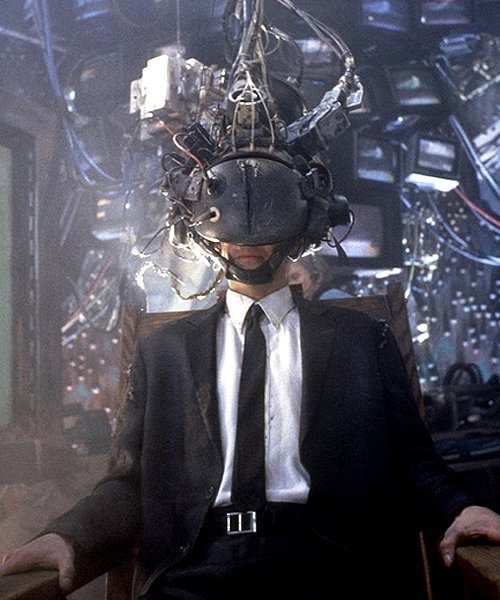
A 1995 visualization of you from Johnny Mnemonic

First off, I should probably come clean. It’s a precarious state of affairs, but a lot my contemporaries look at me funny when I speak in utopian terms. When I venture the offensively uncomplicated opinion that the world would be a much better place if everyone thought happier thoughts and that the solution to a lot of the problems we face is optimism instead of pessimism, I get accused of propagating the sinister, shiny-surfaced, dream-colonizing rhetoric of modern advertising.

As soon as I lift the lid on my belief that we’re bound to overcome the challenges faced by the entirety of humanity, and that we’ll do it by collectively aligning our thought patterns along more positive pathways, I’m suddenly cast in the same category as Silicon Valley hype men disguising their hidden, megalomaniac, Ayn Rand-inspired agenda with progressive, world-changing aims. Either that, or they patiently take their time to politely let me know that I’m full of shit.

You see, I surround myself with people of a certain persuasion. Creative people, writer people, academic people, people of a certain ilk of whom Tolstoy would likely say that their lives are passed in ‘idleness, amusement and dissatisfaction.’ Open to experience and informed by power-critiquing strands of postmodernist thought as they are, they seek complex answers to complex questions.

Tolstoy_Leo
Old man Tolstoy. 

It’s not that I blame my friends and learned acquaintances for shooting me dirty looks when I state my optimism. All things considered, I realize full well that I can sound like a bit of a dickhead. Bearing in mind how zealots, terrorists, fanatics, Italian Futurists, Steve Jobs, Bono and other self-aggrandizing fringe groups and individuals with utopian agendas furthered untold devastation, fascism and questionable, rose-tinted eyewear, my utopianism is, somewhat understandably, regarded with guarded skepticism and overbearing glances among the cognoscenti (also, in my day, this is pretty much par for the course when you dare to suggest that the human condition can ever be anything, but an interminable struggle in the presence of people who make a living thinking about things).

The funny thing is that I’m not even that happy, so it’s not as if my utopianism comes easy to me. I mean, I’m happy enough, I have a lovely girlfriend whom I love, reasonable health and all that, but for various reasons, I am, like a sizable part of my generation, what you could call ‘existentially challenged.’ With no religion or fixed belief system to give me an overarching sense of purpose, I fail to see what the big deal about existing really is. What the point is, to be accurate. In that particular respect, I’m probably not that different to my worldly buddies.

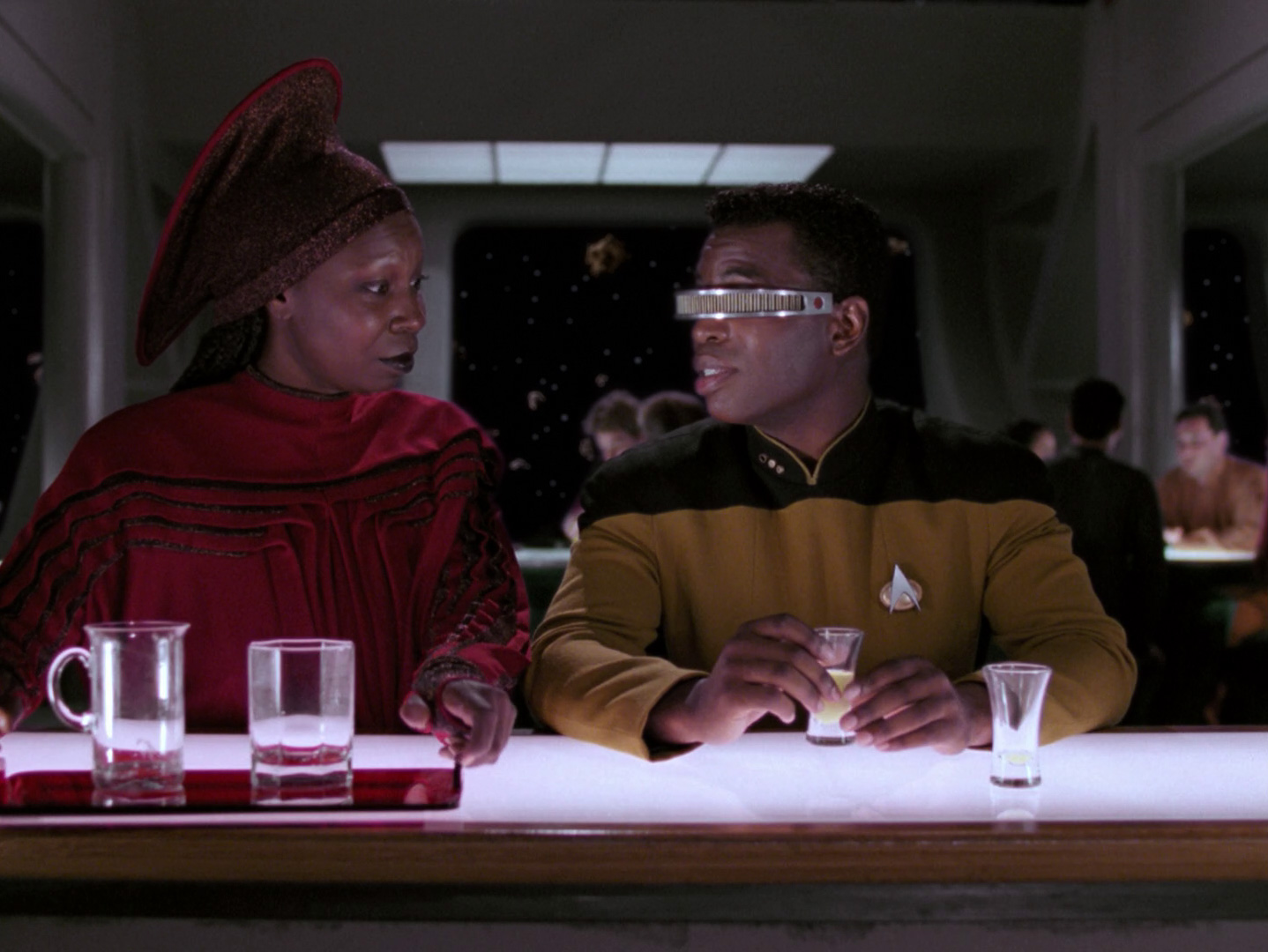
Still, despite these reservations about the sanctity of existence, I remain, forever and always, an optimist on the part of humanity. Maybe it’s the excessive Star Trek TNG-watching of my impressionable youth, which drummed it into me that we’re destined for escaping the minor quibbles of Earth to sail among the stars, forging neorealist, diplomatic relations with samey variations on humanoids who’ve somehow all mastered English.

Guinan_and_Geordi_La_Forge_

Or maybe it’s just that I’m so deeply embedded into the capitalist matrix’s modus operandi of ‘working hard, applying yourself and not whining about it’, which is giving me tunnel vision, effectively blinding me to the irreconcilable contradictions of our age. Whatever it is, I can’t seem to shake it. Don’t really want to, in all honesty. And I have my reasons. Reasons that I’ll now send your way because, well, you’re not even born yet, so you don’t really have a say in the matter.

1) David Lynch has my back – No, really!

I mean, it’s not like I can call up one of the most brilliant directors on the planet and get him to explicitly state that he agrees with me, but the director of Twin Peaks and the creator of tons of other genius, mind-bending stuff is a practitioner of Transcendental Meditation also known as TM. TM, if you’re unfamiliar, has as one of its core tenets that if the square root of 1% of the world’s population acted according to its beliefs, we’d be on our way to an enlightened tomorrow. Sound crazy? Stupid? Dangerous, even? Possibly. But you know what else sounds crazy, stupid, fucked-up and dangerous? The fact that we’re blithely skipping on the precipe of the biggest catastrophes mankind has ever faced without taking necessary steps to fix things. That’s literally the dumbest shit I’ve ever heard. With that in mind, I’ll take what I can get, quite frankly. And if David Lynch believes TM might provide some kind of structure or solution that makes everyone unite and come together, who am I to disagree? Some people might call it grasping for straws. I call it actively looking for alternatives to a mindset with a proven track record in failure.

bigd

2) We fucking need it

Pardon my potty mouth, but I can’t think of a time in history when we’ve needed utopianism more than the present moment. Nuclear war, the impending collapse of ecosystems, the cannibalization of resources, loose cannons at the helm of the military-industrial complex; these are all very real threats to our way of life occurring right now in my present, while we’re sitting idly by, feeling smug about impotent Trump-roasting tweets, garnering 4 hearts and a retweet. Utopianism might feel dangerous and difficult to control, which, I suspect, is why so many are apprehensive about letting the utopian genie out of the lamp, as it were. But quite frankly: the shit is, by qualified accounts, so close to hitting the fan that you can practically smell the contents of last night’s dinner being wafted in your direction by a cool fanning system on a globally-warmed summer’s day. As prominent braniac Stephen Hawking isn’t shy about pointing out in the Guardian:

Now, more than at any time in our history, our species needs to work together. We face awesome environmental challenges: climate change, food production, overpopulation, the decimation of other species, epidemic disease, acidification of the oceans. Together, they are a reminder that we are at the most dangerous moment in the development of humanity. We now have the technology to destroy the planet on which we live, but have not yet developed the ability to escape it.

Adding to this dire clusterfuck is the fact that the hottest 17 years on record have all occurred since 2000. In other words, there’s literally no other way out. We have to step up. It won’t be easy or pretty, but, in my opinion, the grand, sweeping utopian, narratives of positive change need to be invoked if we’re to have a shot in hell at turning things around. For all their dewy-eyed corniness, imagined utopias are pretty much all we have at this point.

Animated GIF  - Find & Share on GIPHY

3) Contemporary Visions of Utopia Don’t Suck in the Slightest

Screen Shot 2017-05-04 at 21.19.36 pm

Are contemporary visions of utopia really that untenable and/or quixotic as certain people claim they are? Whenever I see the proposition of a radically new model of civilization, like The Venus Project you get the inevitable cynical, smartass on social media commenting how humans are inherently selfish and that ‘communism doesn’t work.’ I’m sorry, but it’s not a case of ‘communism vs. capitalism.’ We need to break out of this reductive, simplistic, binary, fift-grade conceptualization of societal modes and get more nuanced about the essential matters determining our future.

The Venus Project isn’t without its flaws, but in the light of the rapid, accelerating decline of everything we hold dear, this bold attempt at transforming the world, has to be admired and encouraged. It has to better, in any case, than making snide, inconsequential remarks on Facebook? Or posting resigned, fatalist articles on the coming ecocide?I love you, Motherboard, but this kind of thing is doing infinitely more harm than it can ever do good

4) It might even give some of us a sense of where we’re going

If anything does actually give me a sense of purpose it’s utopianism. The notion that we’ll eventually overcome our primitive, moronic barbarisms and create a world where we function as reflective caretakers instead of mindless locusts, makes me feel like I’m taking part in something bigger than myself.

Today, part of the problem and one of the reasons, I think, that clinical depression statistics in the well-off, industrialized world are soaring is that we’re left to our own devices in personalized, atomized bubbles facilitated by intimacy-faking social media. We’ve been individualized and trapped in our own little algorithm-orchestrated worlds, which runs counter to the sense of cohesion, characterizing earlier models of society. Don’t get me wrong, I’m not advocating a return to feudalism, or anything like that, but maybe there’s a way to incorporate the productive, collectivist social dynamics of history into our own behavior and letting it work to our advantage? It would be pretty arrogant to assume that our ancestors were all hapless cretins and that we are, in every way, the apex of civilization. As an atheist, I can even find it within myself to listen to Alain de Botton when he tells me to borrow from religion from time to time. Maybe it’s time to do some serious Spring cleaning in our inventory of ideas and philosophies.

5) Capitalist realism is obstructing our view – dismantle it and we’re free to dream big

Within the all-encompassing sphere of capitalist realism, all radicalism and novel ideas are inevitably stunted, assimilated and rendered toothless. Robbed of their original intent and radical potential, and transformed into novel ideas fuelling the voracious engine of capitalism. This is a very important point, I think. As Slavoj Zizek puts it in his Occupy Wall Street speech:

Let me tell you a wonderful old joke from Communist times. A guy was sent to work in East Germany from Siberia. He knew his mail would be read by censors, so he told his friends, ‘Let’s establish a code. If a letter you get from me is written in blue ink, it is true what I say; if it is written in red ink, it is false.’ After a month, his friends get a first letter. Everything is in blue. It says, this letter: ‘Everything is wonderful here. The stores are full of good food, movie theatres show good films from the West, apartments are large and luxurious. The only thing you cannot find is red ink.’ This is how we live. We have all the freedoms we want, but what we are missing is red ink: the language to articulate our non-freedom.

Animated GIF  - Find & Share on GIPHY

In today’s seemingly endless cycle of newness and appropriation, those who dare to dream big, agents and actors whom I would consider the utopianists of our age, like Elon Musk, David Lynch and Holly Herndon are easily reduced by cynics to savvy marketers whose ideas, new and potentially transformative as they may be, lend themselves well to the assimilation of capital – that amorphous, omnipresent system without a face that devours our resources and seems hell-bent on sending humanity on a precipitous descent into Mad Max-like instability. But here’s the thing; imagining life outside this system is crucial to the betterment of our future. Our survival as a species, even. Bringing Zizek’s red ink into existence, the language and culture in which we can express ideas that fall manifestly outside the current paradigm is a matter of life and death. As the electronic artist and self-proclaimed optimist Holly Herndon says it:

If society is ever going to progress, and move beyond certain oppressive institutions and infrastructure, then the idea of fantasy is essential.”

Going back to my pessimist friends and acquaintances, the people who were skeptical of my utopianism, I’ll grant them that complexity comes with the territory when discussing the future of everything. However, building a better future, a future that’s fair and just with the potential to liberate all of humanity from the seen and unseen reins impeding progress, doesn’t necessarily require complex, ideological frameworks. It is, quite simply, a matter of collective will. Of daring to dream the collective dream and instilling a collective fantasy – a utopia accommodating the entirety of the human experience. It’s that thing where if everyone got off their asses right now and demanded that their government took real action against climate change, we’d be on the right path tomorrow. Call me naïve or one-dimensional, but in my view, it really is that simple. In the end it’s about faith. Faith in the Tolstoyan sense that we’ll get on top of it all despite grim-looking prognoses and statistics. As a concept, faith tends to get a shitty rep with my friends because of its religious overtones. But quite honestly, what do we have if we don’t have faith? Feelings of superiority by playing the jaded misanthope at dinner parties? Also, if you think about it, why would you get up in the morning if you believe that humanity is doomed – and that it’s bound to end pretty soon? Personally, I can’t really get my head around that.

6) It’s a phase – a very scary, apocalyptic-seeming phase but a phase all the same

Look at history; you’ll find that most civilizations from the Mayans until today have been obsessed with the apocalypse. It’s very human to think that we’re special enough to be the last humans on Earth. However, being the optimist that I am, I can’t help but think that the present moment of uncertainty and instability, represents a transition phase in our history. That what we’re seeing is the death throes of the old paradigm anticipating the next stage of evolution. Whether that’s some form of Ray Kurzweil’s singularity I don’t feel brave enough to predict. I do feel brave enough, however, to show you a video featuring Terrence McKenna that sees him elucidate his leftfield take on the intensification of our world using cosmology, thermodynamics, the Mayan Calendar and other phantasmagorical, imagination-fuelling agents. McKenna’s worldview, warped as it may seem to some people – particularly the cynics of this world – is enticing to say the least. For those of you with an attention span as compromised as my own, I’ve taken the liberty of highlighting one, important point:

‘Human technologies, languages, migrations, art movements, ideologies, are not something different from nature. They’re the same download of process that we see in the movement of continents, the evolution of new species of animals – except that these human, novel emergent situations are happening much more quickly. So, I see the cosmos, if you will, as a kind of novelty-producing engine. A kind of machine, which produces complexity in all realms: physical, chemical, social, whatever. And then uses that achieved level of complexity as a platform for further complexity. Well, this explains our present circumstance. It explains the rush towards new technology and all forms of social organization in the new millennium.’

What uncle Terrence is saying here, I think, is basically that we’re not separated from nature. That the nature/culture divide is elaborately orchestrated bullshit. And that the fact that everything is speeding up and complexifying is intense as hell, but a natural process, which means that we’re not an exponentially procreating virus, but an integral part the planet. For me, that puts a different, very productive perspective on things. But I highly recommend sitting through as much his ingenious rant you have time for. I promise that’s it’s thought-provoking. Consider it psychedelic poetry, if that makes it more palatable.

Speaking of rants, that was one of the longer ones one my part. If you’re there in 2120 and you made it to the end, a tipping of the hat is in order. Brevity has never been my strong suit. What’s more, a lot of this stuff is probably so self-evident to you that it’s making you embarrassed for me. The thing is that in my time this needs to be said over and over. And the people who I think should be saying it, people who have the ears of the influencers and decision-makers of the next generation, aren’t saying it nearly enough. With brilliant, lucid and capable people like Jonathan Safran Foer holed up in a navel-gazing midlife crisis, less brilliant, less eloquent people have to step up and give it a go. This is me giving it a go. Curious as that sounds, even to me.

So if you’re listening, I’d like it noted somewhere for your future record that I gave it a try. If it all goes south, contrary to my utopian hopes and dreams, here’s written proof that I actually did something.

Another Monday in Late Capitalism at the Ass-End of the Workweek

Dear 2120,

I’ve got a case of ‘the Mondays.’ Here in my time, you see, a lot of us spend Monday to Friday toiling, restless and beaver-like, in undignified hierarchical command structures with the weekend as the week’s only saving grace, the light at the end of a treacherous tunnel filled with passive/aggressive confrontation and mediocre coffee. In the 10s, the weekend is widely regarded as the time to unwind. We ‘let off some steam,’ and forget our woes through stimulant-driven, physical exorcise like raving or, if you’re slightly older, going to a bar and shouting directly into someone’s eardrum over loud music while simultaneously keeping an anxious, watchful eye on the fickle attention of the alcohol-dispensing bartender.

I could write long-winded diatribes on the oppressive nature of capitalist realism (and don’t worry, I shall), but having had my energy and joi de vivre depleted by alcolhol-fuelled, dopamine-stealing activity and the afore-mentioned shouting, I’ll take the typical, lazy shortcut of my post-reflective generation by conveying my Monday melancholy and escapist yearning in easily disgestable sound, image and, of course, GIFs:

IMG_3921

IMG_3680

IMG_3682

IMG_4045

IMG_2684

IMG_4012

IMG_2921

IMG_4010

mapplethorpe

IMG_2365

IMG_3824

Animated GIF  - Find & Share on GIPHY

Here’s to Universal Basic Income becoming manifest reality long before 2120 rolls around the corner.

From Transgression to Restriction to Sustainable Hedonism

Dear 2120,

I imagine that you’re busy. Busy doing things unfathomable to us, but pedestrian, maybe even tedious to you. Be it communicating techno-telepathically with the entire world all at once; purging yourself, odourlessly, of feces in some wonder machine of the future instead of taking a smelly, old-timey crap; or maybe just cleaning up the steaming pile of crap we left you with. My sincere apologies if  it’s the third, turd-shovelling option. In that case, we failed to get it together for some deranged reason. ‘Together’ being the operative word.

Even so, in the hope that you might be interested in hearing about what went before what is now, I’ve written a message for perusal at your convenience. I’m hoping that it might offer some insight. Maybe even some kind of explanation for whatever you currently find yourself in.

It starts in my formative years, the 1990s. That’s when I got into skateboarding, music, beer, marijuana and girls. Back then, we listened to angry, militant hip hop, abrasive metal, grunge, techno and indie-rock. Sometimes the genres would merge and cross paths, creating bastardized off-shoots like rap-metal.

bring_the_noise_1024

Public Enemy and Anthrax fistbumping in the early 1990s. 

Running through it all was the narrative of what you might call transgressive subversion. Public Enemy and NWA, the voices of black, disenfranchised youth, stuck it to systemic oppression, Rage Against the Machine raged against the machine, metal stuck it to prevailing notions of bourgeois decency, Autechre, Orbital and The Prodigy stuck it to the Criminal Justice Bill and Kurt Cobain stuck it to just about everyone – including, in the end, himself. Telling ‘the man’ to fuck off was what it was about back then. In hindsight, some of it was probably a tad self-righteous and naïve. The youth cultural movements of the 90s purported to speak for the downtrodden, but largely neglected the unfairly stacked challenges faced by developing countries. To a certain degree, it was untamed neoliberalism with a humanitarian sheen – as thoroughly documented by Naomi Klein in her 1999 book ‘No Logo.’

nikeriot

In my twenties, the 00s, awkwardly named the ‘noughties’, it was probably more about transgression than subversion. As the birth of Transgressive Records in 2004 would seem to support.

In the wake of 90s political correctness and identity politics fatigue, the 80s made a big, brazen comeback and with it cascades of electro, punk, synth-freakery and cocaine reentered culture’s cutting-edge. Revivals come around every 20 years where I’m from (I suspect that you might have an astute observation to make about that based on your historical overview) and the 80s in the noughties was, overwhelmingly, about partying hard and ‘not giving a fuck’ in skillfully disheveled, punk-tinged ensembles. About transgressing boundaries and doing things deemed off-limits by your hippie-baby-boomer mother/father. Looking and acting like a douchebag uncle with a filthy little mustache and an ilicit drug habit, was suddenly your ticket to getting laid. This all made sense at the time, believe it or not.

deathfromabove1979

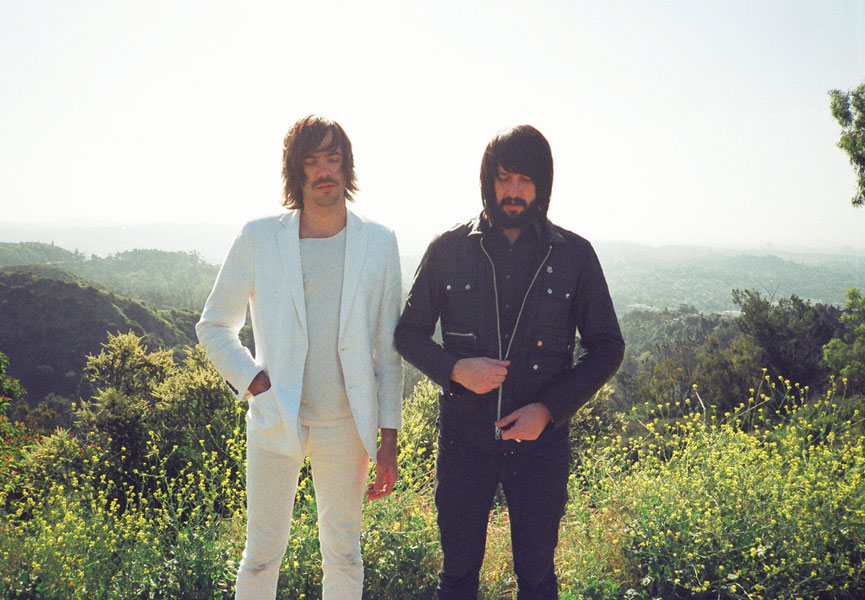
Death from Above 1979 being their very 00s selves. 

On the whole, I think that the unifying theme in the transgressions of the noughties was the quest for freedom. Freedom from constraints, freedom from shame and guilt, freedom from categorization and labels, the freedom to be an arrogant diva and/or a self-centered asshole, the freedom to dress like a confusing mess with a jumbled-up aesthetic somehow existing outside the tyranny of being nailed down to a specific era. That, and not taking things too seriously. There was definitely a playful element to things back then.

In and of itself, there’s nothing wrong with wanting freedom. The trouble with an urgent belief in freedom from everything, including responsibility, is that it impinges on other people’s freedom in unseen an unforeseen ways. It’s just plain antisocial. Admittedly, this went way over my head when I was 25 in 2005.

ulriko1

Photo of a careless me getting ‘hyphy’ circa 2005.

At some point in the late 2000s, what started out as refreshing irreverence in the face of stale, self-righteous sanctimony began to fester and transform into its own kind of stifling bullshit. A wanna-be reckless, heavily orchestrated lifestyle, (which shall remain nameless here mainly because I’m sick of uttering said lifestyle’s deeply problematic label) that so desperately tried to be free and new, but was ultimately snared in by all the unseen reins of the past. In any case, countless blogs and articles dedicated to calling out and mocking the allegedly oblivious, ego-centered cultural elite started popping up left, right and center.

vice2

Broadly speaking, in somewhat simplified terms, I think it was the combination of the global recession of 2008 and the growing, physical realization that we were doing irreversible harm to a planet with finite resources, creeping in gradually through the cultural cracks, which ultimately permeated everything and made mustachioed creatives and fashion-forward designers seem irresponsible and oblivious. Knowing that you’re fucking the planet on an abstract, theoretical level is very different to knowing it physically. When it really gets under your skin, when it seeps into every pore and the all-too-real real possibility of your partaking in the escalating apocalypse intermingles with your molecular structure, it completely knocks the wind out of your sails. To the point of needing an escape route; an exit from the great depression caused by the seemingly impending End of the World. For some people the escape became the identification of a scapegoat. Sure enough, around 2008, creatives became that scapegoat. People needed a vent and the vent was aimed squarely at all the designers, graphic designers, musicians, artists and gallery owners who purportedly failed to care about the important issues of the day (paradoxically, though, a lot of so-called conscientious observers were targeting themselves with their bashing. But that’s another story).

So, to sum it up, we went from the narrative of transgression to the narrative of restriction. Limiting yourself in all aspects of life, living frugally, reflectively and conscientiously while sporting ecologically-grown facial hair was the logical conclusion to the recklessness of the 2000s. It was the responsible, detoxing hangover cure following a decade of being mindlessly drunk on extroverted fun and games. PC and ID politics dusted themselves off and tried again, to paraphrase the great poet Aaliyah, clearing the stage for new and fresh takes on 90s anti-patriarchy, like intersectional feminism, the Black Lives Matter Movement, LGBT rights and innumerable, other worthy, ‘woke’ ways to limit and restrict the damage done by the careless, self-absorbed noughties.

Finitude and finality of resources, the idea that our planet is anything but a boundless reservoir of fossilized energy, finally etched itself indelibly into our collective psyche, creating vertigo-inducing, introverting cerebral wounds that we’re likely still recovering from. Hence all the apathy and failure to act. Adding to that, I think a certain transgressivist individualism, as mapped out by Adam Curtis in several documentaries, is proving incredibly hard to shake. It seems to underpin everything from the person-obsessed art world to the upper echelons of global capital. Negotiating the paradigmatic shift from the cult of individualism to a new kind of collectivism that gets everyone onboard regardless of political orientation is undoubtedly the great challenge of our generation. As the late, great cultural theorist and author of the highly recommendable book Capitalist Realism, Mark Fisher AKA K-punk puts it in an interview on the book:

'The thing is it's nobody's fault, you can say, in a genuine sense, but that is the problem - because there is no agent 
capable of acting. There's no agent at the moment that's capable of taking responsibility for a 
problem on the scale of the environmental catastrophe that we're facing. Instead, it's contracted out 
to us as individuals as if we could do anything about it by simply putting plastic in the right bin. That 
won't solve the environmental catastrophe that we're up against. The only thing that can solve it is 
the production of an agent capable of acting. But of course nothing like that has ever existed 
throughout human history until now - which doesn't mean it can't exist, but that we're in very new 
territory.'

As an incorrigible optimist, I have to believe that we’ll somehow produce this first-time occurrence in the history of the world: a collective agent capable of acting on behalf of the atomized human race. Dropping the ball on the future of the planet isn’t really an option. If this message is to have a recipient, we clearly need to jettison our cynicism, stop our pathological fixation on fictional doomsday scenarios, curb alarmist clickbait headlines, and relinquish a billion bad habits that have colonized our biological harddrives into submission. Moreover, it’s essential that we make doing the right appealing to everyone. Not just people with fancy educations and unlimited surplus energy.

Thankfully, progressive initiatives following that line of thought are in the works. Danish architect Bjarke Ingels has recognized that restriction and limitation aren’t among the most inspiring or sexy virtues in the world. He calls his architecture ‘hedonistic sustainability’ presumably as a way to dispel the notion that sustainable living has to be about tasteless vegetables and acquiring nervous tics about carbon footprints. On the face of it, at least, it seems a progressive philosophy, attempting to reconcile the forces of modernity with the critical necessity of reconfiguring the cannibalizing consumption of late capitalism.

bjarkeingels2
The Hualien Residencies in Taiwan designed by BIG/Bjarke Ingels Group.

Other than attempting to make us an interplanetary species and possibly overdoing the acid, Elon Musk is making sustainability look dynamic and appealing by creating swish, affordable electric cars and nice, solar roof shingles that don’t cost an arm and a leg. It looks like sustainability can actually be good for your bottom line, not to mention your cultural capital, all of which you have to understand is incredibly important here in late capitalism. In the long run, people here in 2017 usually prefer the dynamic and the active to the static and restrictive.

Still, we have long-ass way to go, to use a a contemporary colloquialism. These initiatives are at best small, anomalous ripples in a sea of excrement. Trump was recently elected president and he instilled a cabinet, which largely denies the proven reality of anthropogenic climate change. In turn, reality in the early 21st century is getting increasingly surreal and scary.

If you’re living in a worst case scenario, this message might seem the like the deranged, deeply offensive, frighteningly clueless cries of a 7-year-old, convinced that the world will bend to his petulant whims. On the contrary, if you’re living in a best case scenario, if we made it, and you’re living the fifth generation or so of the internet, you’ll probably just be hopped up on some benign version of Soma, thinking that  I’m old, stuffy and irrelevant.

All things considered, I guess I can live with that. Just know that in a hundred years from 2120, someone will probably think the same about you, old sport.

21 Tracks for 2120

Dear 2120,

As 2017 marches on relentlessly, providing shock, awe, frustration and disbelief in equal, abrupt measure, Regular Joes like me are left in the dark as to what kind of world we’re entering. The nature of truth seems to be in a state of flux. In the age of social media, it’s clear that the age-old axiom: ‘there’s two sides to every story’ is becoming increasingly irrelevant on an interconnected planet where people are flocking, fugue-like, to the internet to give their two cents on anything from a man getting kicked off a plane to Trump’s intervention in Syria.

Adding to that, powerful and persuasive propaganda machinery is working overtime to sway the hearts and minds of the global population, creating more confusion, less transparency and a consistent blurring of reality. There isn’t necessarily two sides to a story; there’s around three billion of them – all piled up on Facebook Twitter, Instagram, etc., in angry, sad, elated, euphoric and ultimately conflicting, little soundbites empowered by technology.

feels

A strategy of coming to terms with this overwhelming, new uncertainty and its byproducts of paranoia, anxiety, apathy and moodswings, is attempting to grasp the elusive, incomprehensible hyperobjects governing our reality, so that they can be expressed, communicated and felt in immediate, comprehensible ways. Condensing your reaction into music is one way of going about this. What’s more, not only does music resonate and speak to the visceral complexities of the present, it has the added benefit of hinting at the future, as French theorist, Jacques Attali, so boldly points out in his book: Noise: The Political Economy of Music:

Music, an immaterial pleasure turned commodity, now heralds a society of the sign, of the immaterial up for sale, of the social relation unified in money. It heralds, for it is prophetic. It has always been in its essence a herald of times to come. Thus, as we shall see, if it is true that the political organization of the twentieth century is rooted in the political thought of the nineteenth, the latter is almost entirely present in embryonic form in the music of the eighteenth century.

In the attempt to traverse the insurmountable barrier of time and communicate with you in a language you’ll experience more directly, the language of music and emotion, we’ve compiled a playlist that echoes the tumultuous now while potentially hinting at things to come.

klaskklask

Obviously, a list directed at you guys living a hundred years from now, needs to be edgy and forward-thinking AF (Translation: As Fuck), which is why I’ve enlisted the help of my good, knowing and capable friend Tobias who DJs and also works at Vice, a company specializing in being down with the cutting-edge kids and their next-generation-shenanigans.

So, from the downcast soundcapes of Kuedo, Sd Laika and Actress to the grand lamentations of Arca and the frenzied, celestial trance of Lorenzo Senni, we hope you’ll dig the Letters to 2120 selection when you have a minute to disengage yourself from whatever futuristic activity you’re currently involved in.