Dear 2120,
Opinions are like buttholes. Everyone has one – and sometimes it’s irritated.
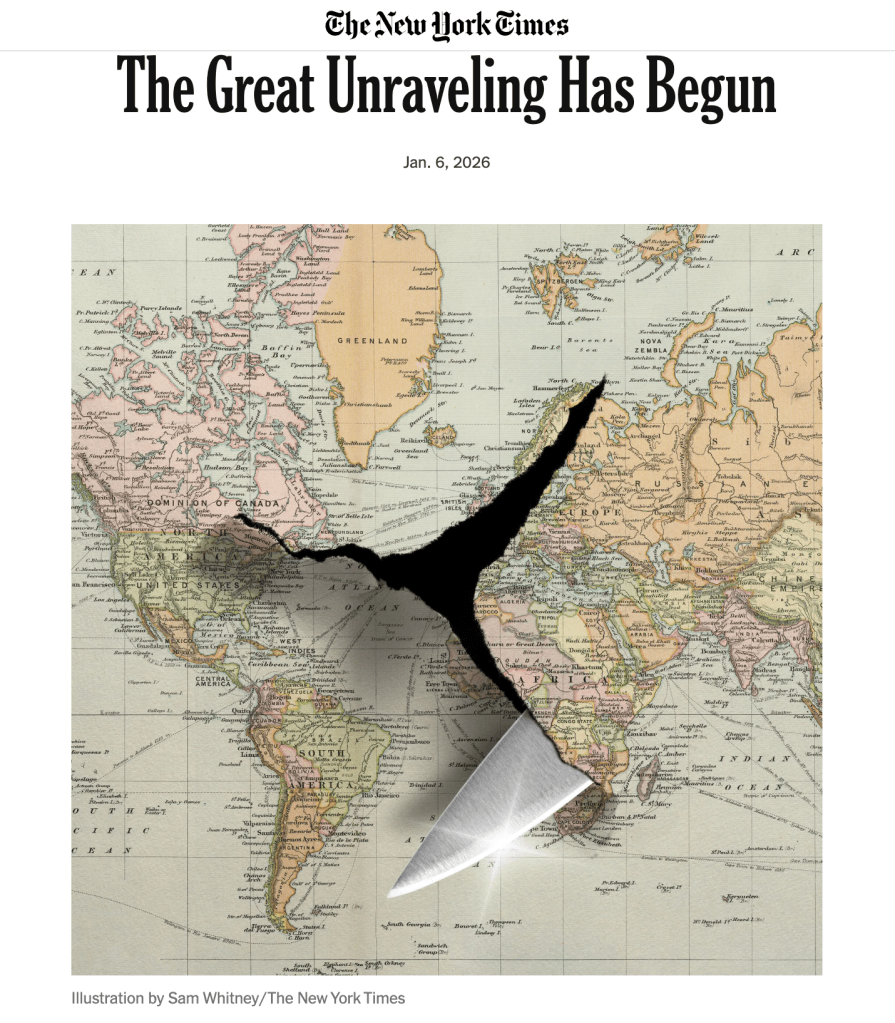
These days, the people who spend their days thinking about things, more specifically the worsening conditions we all find ourselves sinking deeper into by the day, are in abundant supply. What you might call ‘pop-collapsology’ is all the rage, featuring in podcasts, YouTube essays, op-eds and similar formats, fuelled by a cultural moment that sees us simultaneously horrified and fascinated by the prospect of our own demise.
But what happens when a new politically-minded media class make a living from selling worst case scenarios, effectively promoting sensationalism in the guise of thoroughly researched insight?
The answer, increasingly, is this: the map becomes the territory. When collapse is the product, collapse must be perpetually imminent. The audience — anxious, engaged, algorithmically primed — rewards the darkest read of any given situation. A bad jobs report becomes the death rattle of the middle class. A regional conflict becomes the opening act of World War Three. A political setback becomes the end of democracy itself. Each piece is meticulously sourced, carefully hedged, and yet somehow always arrives at the same destination: we are, irreversibly, going down.
There’s a word for this. It used to be called doom-mongering. Now it comes with a Substack, a Patreon, and a guest spot on a podcast with three million subscribers.
To be clear: the problems are real. The inequality is real. The ecological crisis is real. The institutional rot is real. Nobody serious is arguing otherwise. But there is a profound difference between bearing witness to crisis and monetising the certainty of its conclusion. One demands moral courage. The other is just a more sophisticated form of infotainment — trading on your audience’s dread the same way a tabloid trades on their outrage.
And it’s not just contrarians saying so. As @earthlyeducation put it recently: “If you say humanity is doomed to extinction and that there is nothing we can do to prevent total climate breakdown and ecosystem collapse, we need you to know that is just as unscientific as saying there’s no climate crisis.” Certified doom, in other words, isn’t bravery. It’s denialism with better footnotes. The solutions exist. The science is there. What’s missing, as they point out, is the political and financial will of those who hold the power — and that will is not a fixed quantity. It can be built. It can be demanded. But not if we’ve already written the obituary.
What gets lost in the collapse industrial complex is agency. If the system is terminal, if the arc of history has already bent toward catastrophe, then the only rational response is either paralysis or the grim satisfaction of being right. Both are, conveniently, great for engagement. Neither produces change. Worse, collapse-certainty actively depletes the political will it claims to be lamenting — because audiences internalise the conclusion, not the analysis. They don’t come away galvanised. They come away spent.
History is not a conveyor belt. Movements have reversed what looked like iron laws. Institutions thought too rotten to save have been rebuilt. Majorities written off as comatose have woken up and acted. The people who called these things impossible were not stupid — they were, in many cases, the best-informed voices in the room. They just mistook the weight of evidence for the verdict of fate.
Analysis is a tool. In the right hands, it illuminates what needs to change and sharpens the case for changing it. But analysis untethered from the possibility of action isn’t insight. It’s a performance of intelligence — and in this particular cultural moment, it may be one of the more consequential things making the worst more likely.
The question worth sitting with isn’t whether things are bad. They are. It’s whether your intellectual framework leaves any room for them to get better — and whether you’re willing to tolerate the uncertainty and occasional embarrassment of believing they still could.

 Letters to 2120