We’re Cooked (again)

Dear 2120,

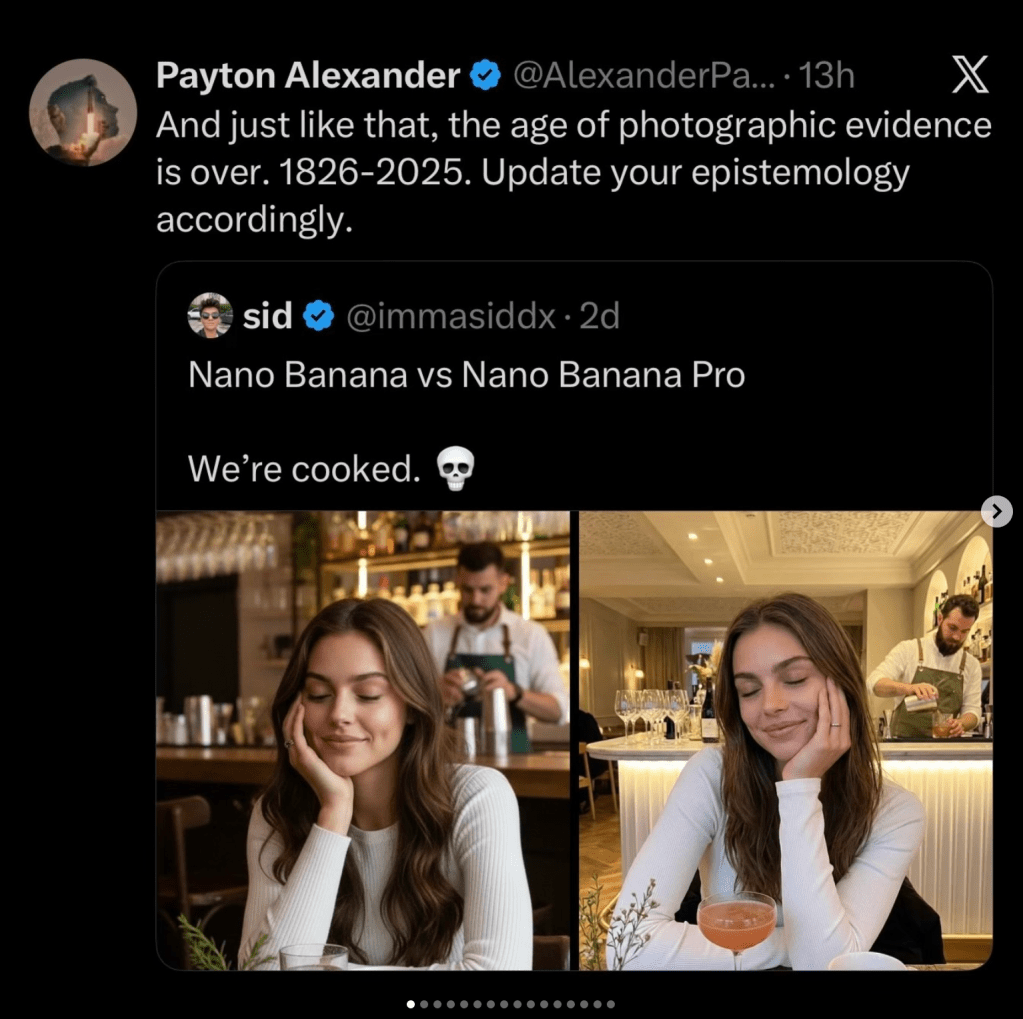
Reality is coming apart at the seams, it would seem. If you’re wondering why I haven’t sent you an AI-themed letter yet, it’s mostly because: A) I’d like to try and forget the work and money it’s costing me as a person who makes a living writing things, and B) the indisputable fact that the legions of people who yap incessantly about AI here in 2025 are among the most insufferable members of our species.

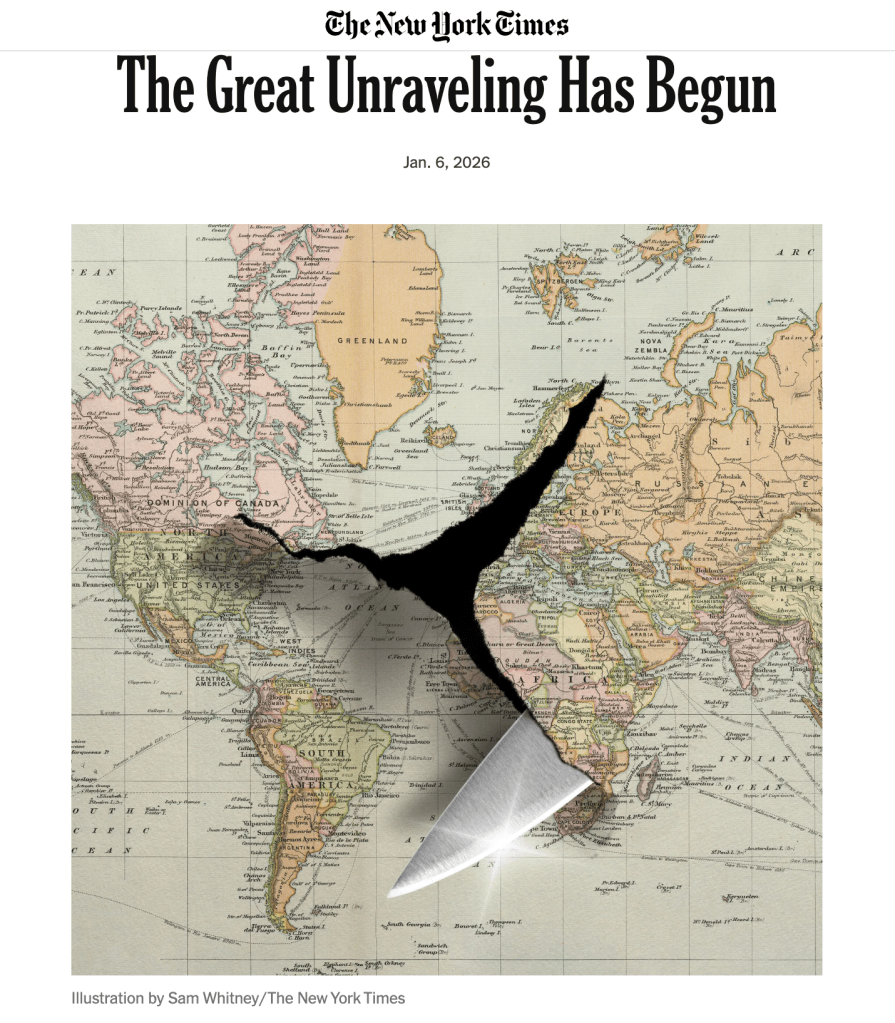
This caught my attention, however. Made me think The Matrix wasn’t a pipe dream – and maybe not even that far away.

RIP, the real world.

How Fossil-Fueled Expansion Engineered Our Obsession With Newness and Reinvention

Still from Paul Thomas Anderson’s ‘There Will Be Blood’ (2007)

Dear 2120,

I hope you’re settled. Because we’re not. We’re addicted to newness. New stuff, new looks, new versions of ourselves. It feels totally normal, but it’s actually a pretty recent thing, engineered by cheap fossil fuels and the insane growth they made possible.

How It Started

Fossil fuels powered more than factories. They rewired how we think about stuff and identity. When production exploded in the 20th century, buying things became who you are. “New” turned into shorthand for progress, success, basically everything good.

Cities powered by cheap energy became testing grounds for different lifestyles. Novelty stopped being special and became expected. Your identity became something you’re supposed to constantly upgrade.

Breaking Rules Became the Rule

Fast change made disruption a virtue. People who broke boundaries became heroes. The growth-at-all-costs mindset loved rule-breakers because they suggested more expansion was possible.

This logic runs everything now. Tech worship “disruption.” Culture chases the next edgy thing. If you’re not breaking something, you’re boring. Transgression went from rebellious to required.

The Reinvention Hamster Wheel

Global supply chains and social media algorithms cranked this into overdrive. Now we cycle through trends and identities constantly. Reinvention went from meaningful choice to compulsive behavior. Staying the same feels like stagnation. Change became convention.

You end up with this restless psychology where you have to keep reinventing yourself just to feel relevant.

When Reality Isn’t Enough

Umberto Eco wrote about how we became obsessed with making things that feel more real than reality. Prosperity stopped being about actual material comfort and became a vibe you engineer. We remake reality to be louder, shinier, more intense every time.

The ‘new’ is addictive because you can always design it to feel better than what actually exists. Culture turned into an escalation machine where each iteration has to top the last one.

The Dark Side

Paul Thomas Anderson’s There Will Be Blood shows where this psychology goes. Daniel Plainview builds an oil empire through pure conquest. He violates every boundary to expand and dominate. Competition defines his whole identity. He wants wealth for the myth of it, not what it provides. Prosperity as spectacle.

And where does it end? Isolation and self-destruction. That’s what happens when transgression becomes your whole personality.

What It Cost Us

This mindset gave us climate chaos, biodiversity collapse, and depleted resources. But it also did internal damage; constant restlessness, insecurity, loss of meaning.

Transgression used to challenge power structures. Now the system just absorbed it and uses it as fuel for faster cycles of consumption and novelty.

What’s Next

We need to rethink what prosperity, desire, and creativity even mean. Stuff like degrowth, regenerative design, doughnut economics: these show how novelty can come from restoration instead of extraction.

The goal is redirecting creativity and transgression, not killing them. Transgression can mean breaking with the logic of “more, faster, louder” itself. Reinvention can mean getting back to balance. Novelty can mean building things that actually last.

The 20th century trained us to crave endless newness. We escalated that into fake realities that feel more abundant than real life (Eco). We built a psychology of conquest disguised as ambition (Anderson).

The myth we inherited says progress has to break boundaries. Always. Forever.

But there’s a different way. Value having enough over having more. Depth over escalation. Sticking with things over constant reinvention. Transgression as refusing the destructive playbook we were handed, not as domination.

That’s the shift we’re trying to figure out. I hope for our sake and yours that it does.

Aphex Twin Just Dropped Two New Tracks

Dear 2120,

Aphex Twin, ‘the electronic Mozart’ of our era, just uploaded two tracks to SoundCloud. The description says he’s annoyed about UK rain and there are “probably better mixes” he’ll share if he finds them.

That’s it. 

Everything online is supposed to be polished and optimized to compete for attention. But he’s been using SoundCloud like a messy folder, just dropping rough recordings and sketches whenever. No strategy. 

It’s small, but it matters. Not everything has to be content. Not everything has to be finished. Some stuff can just exist for people who are actually listening.

Maybe you’ll look back and see this as artists learning to opt out of the content mill. Or maybe by then it’ll just be normal to share work without needing it to perform.

Antimemetics: The Death of the ‘When’ Meme

Dear 2120,

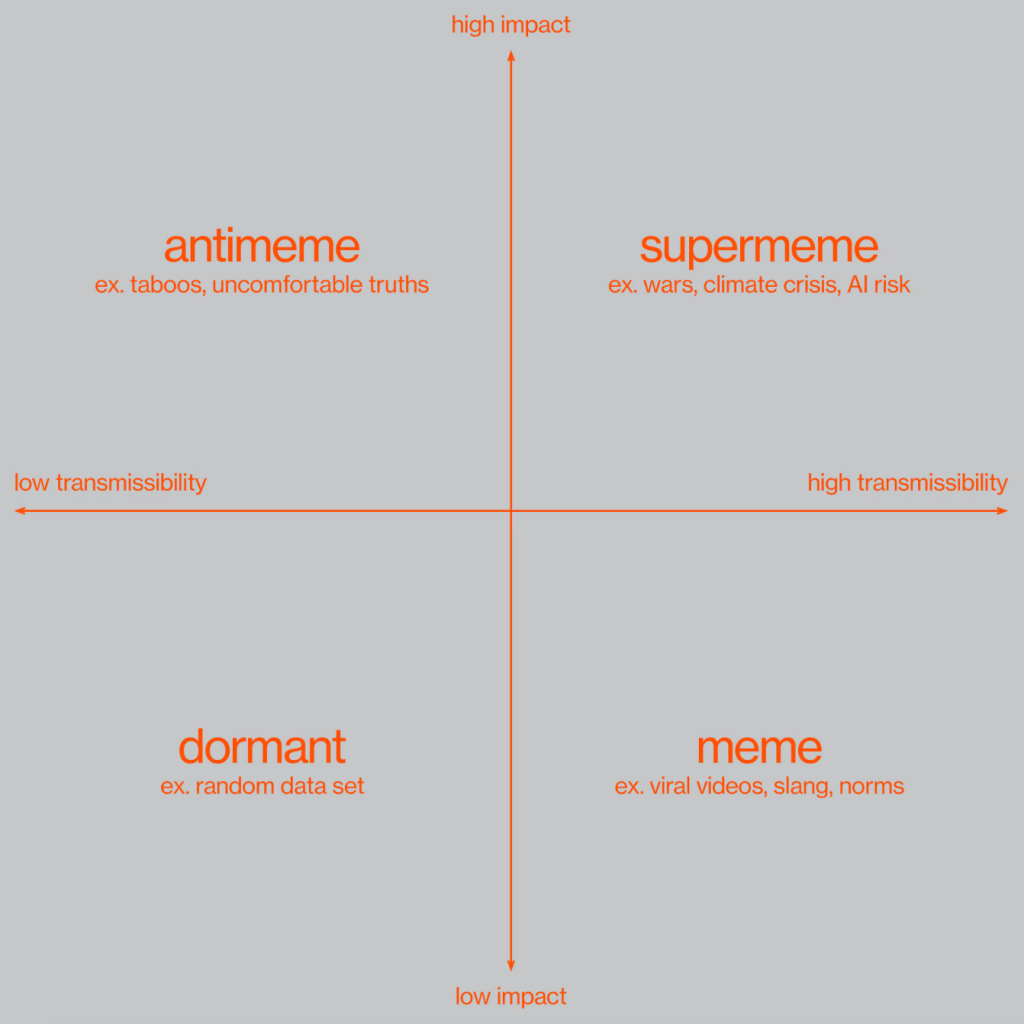
I want to tell you about a book called Antimemetics and why it matters – both now and hopefully for you too. It’s about ideas that don’t spread. Not because they’re bad, but because they’re too complex, too uncomfortable, or too inconvenient to go viral. Memes spread everywhere. Antimemes just… vanish. They leave barely any trace except in quiet corners where people are actually paying attention.

This hits different right now, to stay in the parlance of meme culture, because of how our platforms work. Everything’s optimized for speed and visibility. The ideas that win aren’t the most important ones – they’re just the loudest, the catchiest, the most entertaining. Meanwhile, the slow stuff, the complicated truths about climate and justice and how we actually relate to each other get buried. Antimemetics gives us language for that. For what disappears even though it matters.

Here’s what’s interesting from a futures perspective: if attention is our main currency, then invisibility becomes a kind of resistance. The ideas that refuse to be broadcast: cooperative economies, regenerative systems, ways of valuing things beyond money. Those might be the real foundation of whatever comes after capitalism.

Bifo Berardi wrote about how late capitalism exhausts our attention, and how that exhaustion might open up new ways of thinking. David Graeber showed how everyday cultural practices can hide radical possibilities. Italo Calvino reminded us that entire worlds can exist in the imagination if we bother to look. They’re all pointing at the same thing: the invisible is where new worlds grow.

A century from now, you might look at Antimemetics as a snapshot of a weird transition period. A time when the most important ideas couldn’t compete for attention. When what shaped culture was as much about what was absent as what was everywhere. You might trace back to the quiet networks and experimental practices that survived in the margins The stuff we couldn’t see clearly but that somehow carried us forward. All our viral spectacles will look silly, but those invisible signals might be what actually mattered.

I’m writing this because paying attention is the first step of caring about something. Cultivating the invisible means cultivating possibility. Antimemetics teaches us to notice what resists the algorithm, to follow what doesn’t want to be broadcast, and to protect the seeds of ideas that might actually build something lasting.

Antimemetics: Why Some Ideas Resist Spreading


Imagining 2120: Generating Desire for Postcapitalism

Dear 2120,

Writing to you feels weird. Like texting someone who won’t read it for a century. But here we are, stuck between a world that’s clearly breaking and one we haven’t figured out how to build yet.

Here’s the thing: we’re supposed to imagine the future, but we’re really bad at it. Most of what we get fed is either dystopian nightmares or the same capitalism we have now, just with fancier phones and flooded cities. Mark Fisher (quoting Jameson) said it’s easier to imagine the end of the world than the end of capitalism. He/they nailed it.

But something’s definitely shifting. People are starting to realize that what we want – like, actually want – matters politically. Our desires either keep this broken system running or help bring something new into being.

Ursula Le Guin said the future is a kind of fiction, and she was right. We don’t have to accept Silicon Valley’s depressing version as the only story. We can write different ones. Slower, weirder, more human.

There’s this idea from Jacques Attali that every dying system contains hints of what comes next. And yeah, we’re definitely dying; supply chains failing, climate chaos, institutions crumbling. But in all that noise, we’re hearing something else. Mutualism replacing rigid hierarchies. Local communities thriving within global networks. Economies that measure health instead of just growth. The next thing isn’t going to show up complete, it’s emerging in pieces, visible in the cracks.

The problem is we’ve been trained to want the wrong things. We’re addicted to ownership, competition, endless accumulation – and these habits keep us locked into a system that’s literally killing us. Even people who want change often want it to be easy, comfortable, something they can buy into without real disruption.

So the challenge isn’t just building new systems. It’s rewiring how we imagine life itself. Making the postcapitalist world feel not just possible but genuinely desirable.

What if creativity wasn’t about competing but about contributing? What if technology helped people and ecosystems thrive instead of extracting from them? What if pleasure came from connection rather than consumption? What if status meant what you gave, not what you owned? What if growth meant maturing, not just expanding?

Writing to you instead of just about you changes something. It makes you real – not some abstract concept but someone we’re in relationship with. You’re not a prediction; you’re who comes after us. And you’ll inherit both our mess and whatever we manage to get right.

We’re trying to build you something that doesn’t eat itself. A world where abundance is about ecology, not money. Where resilience is collective, not just a personal brand. Where liberation includes everyone or it’s meaningless.

If we pull this off, your world will seem obvious. Just like feudalism looks absurd to us now, our obsession with markets and competition and individual success will seem embarrassingly primitive to you. Maybe you’ll laugh at how we measured everything in productivity and profit. Or maybe you’ll just be relieved we finally moved on.

I’m not writing this as prophecy – more like a reminder that we can shape what we want. Desire isn’t fixed. We can redirect it. The future isn’t something we just watch happen. It’s something we create.

If we learn to want different things, we’ll build different things.

And if we build different things, maybe you’ll inherit a world that actually works.

We’re still figuring it out. But we are actually trying.

Absolute Sæxophone–the Playlist

Dear 2120,

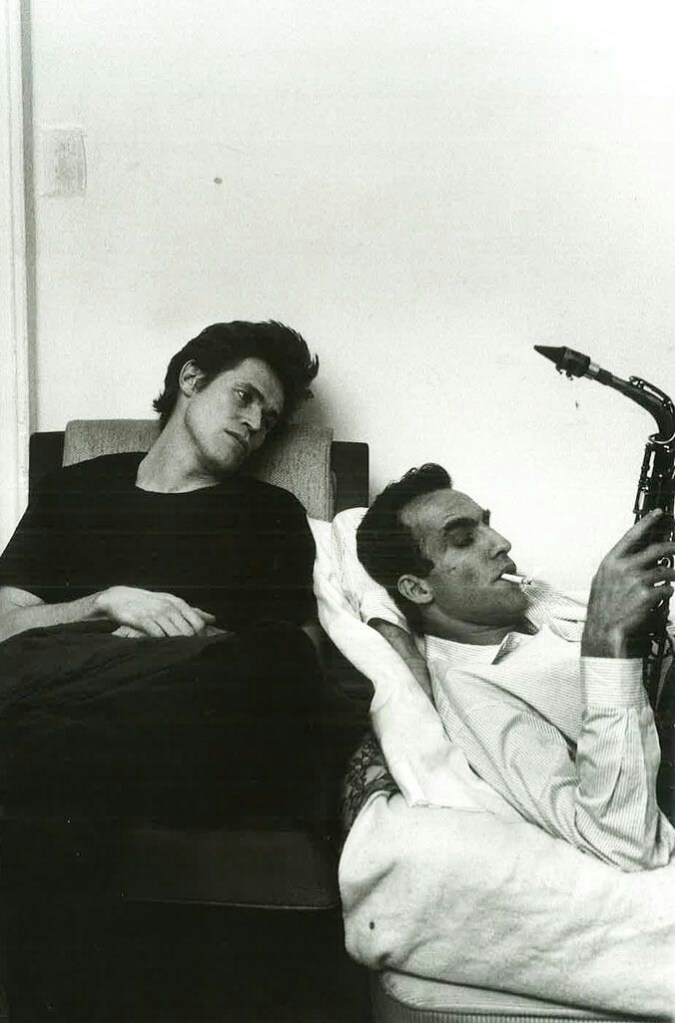
I’d like to introduce you to a dear and horny friend of mine. It’s shiny, sexy, complicated as hell and smoother than a television evangelist wooing a soap opera starlet at a Napa County winescapade. Sometimes it’s punk, sometimes it’s on a yacht. There are times when it’s jazzy and spacy—and then it can veer off into different directions, smelling like dank NYC basement and starch-addled suits. My friend can travel further along the evolutionary road and add color, ambiance and sophistication to a house music atmosphere. I’ve been in a sticky, tempestuous relationship with this particular friend for as long as I can remember.


Despite its imperfect legacy, my best musical friend will forever be the saxophone. Here in 2021, a lot of people tend to think of stupid hats, gyrating Moldovans and cloying, coked-out sentimentality when picturing the storied woodwind instrument. In other words, they don’t take it seriously. And they don’t know what they’re missing. Now, I’m not gonna deny that listening to the sounds of the saxophone comes with its share of sleazy, schmaltzy imagery—that’s a central part of its rakish charm. But the simple fact remains that what is commonly known as ‘the devil’s horn’ plants a horn-emblazoned flag in our innermost human desires. That’s why it rears its shiny head all over the musical spectrum from basic, shitty beer jazz to genre-expanding, intergenerational experimentation. It’s why Kenny G and Sun Ra are united in their common humanity over this one vital thing that defies the reductive, compartmentalizing ‘takes’ of the internet age. In simpler terms, the saxophone transcends all that impermanent bullshit. There’s a certain timelessness embedded in its fluctuating tonality. An eternally relevant, distinct, yet elusive energy—a time-traveling, mood-altering tonic filled with uncontainable passion and yearning that I think you might just dig in 2120.                

I would even go so far as to say that in a billion years when all is said and done, when our civilization fades into view and the Earth is restored to its natural equilibrium––that’s when the aliens come to visit the now untouched planet without a name and the most fitting monument to humanity with its infinite capacity for lust, love, pain, imagination, porn addiction and half-baked conspiracy theories would be: a blaring saxophone encased in a giant monolith made of indestructible silicone. A tad melodramatic, you say? This is a saxophone playlist.          

Listen to Absolute Sæxophone, a playlist lovingly compiled by me. Music about fucking and fighting made for you.


A Letter from Quarantine

Dear 2120,


Here’s one for the history books. Maybe the year 2020 is part of the curriculum in your schools and educational institutions? I’m wondering if you’ve been reading my letters thinking: ‘When is he getting to the global pandemic? I bet that’s gonna be something else.’ If that sort of vicarious thrill-seeking floats your fusion-powered hydro-vessel, you’ll be interested to know that coronavirus is upon us, and that it’s toying mercilessly with our tiny minds.

april

A photo from 2020 taken in Toronto, Canada.

It’s the strangest thing. A virus that predominantly preys on the vulnerable and the elderly. The rationalistic part of me is reluctant to admit this, but it’s hard to shake the feeling that we’re being tested. Tried on our moral convictions and collective ability to adapt and find common ground in the face of a rapidly proliferating challenge. Maybe the overlords running the simulation have unleashed a black swan event to see how we measure up with new upheavals thrust upon us. Or maybe this was bound to happen in one way or another as an inevitable by-product of our failure to engage with the world in a meaningful and sustainable way. It’s the latter, of course. Quarantine has made me go off on a slightly unhinged, quasi-spiritual nerd tangent. I guess that entertaining the fantastical sci-fi fantasy makes it less real and scary for a split-second or two. It’s been very real and pretty scary.

Whenever coronavirus hits a new country, the onslaught consistently induces the same behavioral pattern: indifference; followed by jokey comparisons with the common flu; and then, when it finally lands that this unstoppable viral phenomenon has the very real potential to upend living as you know it, shock and varying degrees of panic begin to set in.

As of April 8, 2020, 82.000 people have died amid nationwide lockdowns, far-reaching restrictions on social interaction and a global economy brought to its quivering knees. Here in Denmark, a generation with little to no experience in collective hardship or adversity are holed up in their homes, frightened and #alonetogether, moods swinging like brittle chandeliers on the Titanic, with dubious, personal information-stealing media as their primary source of connection. In the midst of fear-inducing pandemonium arriving on our doorstep and proceeding to seep into our sheltered home like a highly contagious, invisible ghost, It feels as if reality itself is in some sort of flux. We’ve been shoved out of our comfort zones without a moment’s notice into an eerie precarious existence that grief expert David Kessler calls ‘anticipatory grief.


‘The loss of normalcy; the fear of economic toll; the loss of connection is hitting us and we’re grieving. Collectively. We are not used to this kind of collective grief in the air.’


As a learned friend of mine rightfully pointed out, that shitty feeling of uncertainty is the rule and not the exception for two-thirds of the world’s population. The unfairly balanced distribution of wealth and resources means that some of us have gotten free passes up until now. To a certain extent, we’ve been living in a wilfully oblivious fantasy world. An old-world reality, which is now coming to an abrupt, unceremonious end. Some people are calling it the end of globalization. We’ll see. In any event, I hope that doctors and medical experts don’t stop sharing new findings and knowledge across borders. If that positive side-effect of globalization ceases, we’re truly done for. It’s the neoliberalist part of globalization that needs to die, not the part where we collectively get more intelligent.

The deficit of hindsight
We should have seen it coming. Many ominous articles have been written on the dangers of multi-resistant bacteria. Countless warnings have been issued by people we should have listened to. It’s possible that we’ve been too busy lamenting our spiritual poverty in flights of self-absorbed navel-gazing. One thing is clear, however; the world has changed overnight. It’s a fairly unsettling thing to watch.
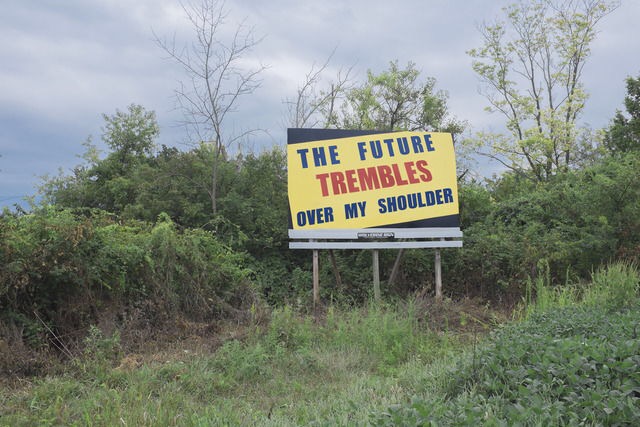
IMG_4887

Distancing existences
Certain forms of distancing are required in this virulent, new reality. Social distancing, the preferred protective measure of the world’s governing bodies sounds fancy and academic, but it really just means staying at home to avoid spreading or contracting the virus. Then there’s emotional distancing, the act of removing yourself from reality because it sometimes becomes too heavy and too much to bear. People are dying in droves. Your parents are categorized as being in the ‘at-risk’ group. Jobs are being cut on a massive scale and you can’t be completely sure if you have one in a month or two because the future has never looked more uncertain. You need to keep reality at bay to keep your head above water.

Apparently, this disengagement from the real world means embracing eco-fascist ideas for some people:

In my book, widening inequality, the handful of corporations killing the planet, and the military-industrial complex are the culprits here, not humanity.  We all have our coping mechanisms, I guess.

It’s also been suggested that Mother Earth has sent us to our rooms to think about what we’ve done. To me, it feels more paralyzing. More vindictive and severe. More like a mean-spirited, older sibling kneeling on your chest and writing  ‘dickhead’ on your forehead with a permanent marker – and then proceeding to shove you into your room, quickly maneuvering to hold the door shut while you bang on the other side filled with impotent rage and despair.

Grounds for optimism
Still, it’s not all bad. There are actually positive stories to be found beneath the mounting rubble of this world-toppling crisis. Glimpses of what the world might be like if we finally decided to get our act together. C02 emissions have taken a drastic downturn, pollution levels are plummeting and the sky is literally clearer for it.

china_trop_2020056

Maps show drastic drop in air pollution after COVID-19.
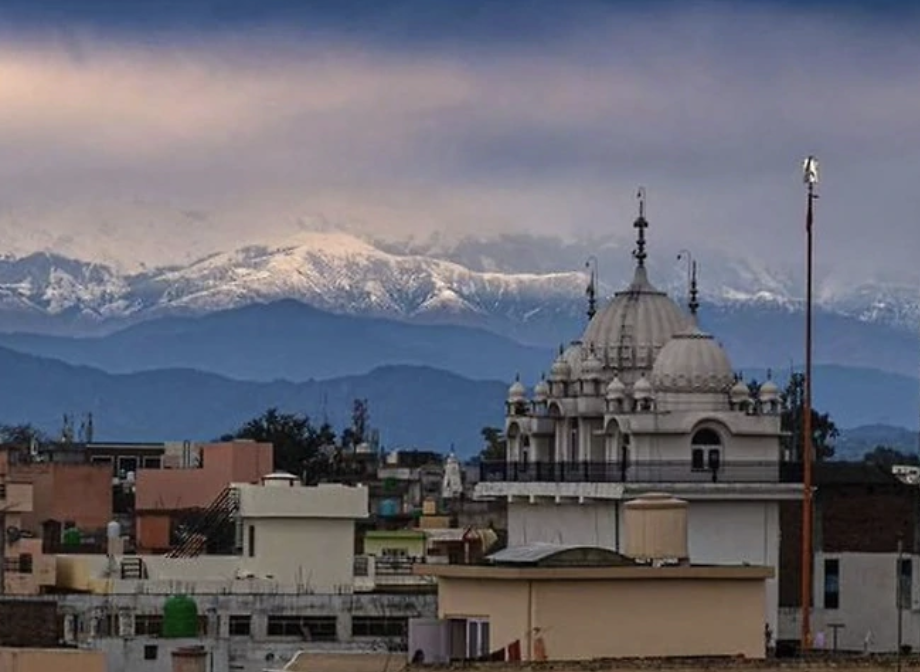
Screen Shot 2020-04-08 at 16.30.37 The Himalayas are visible for the first time in 30 years as pollution levels in India plummet. 

The word ‘solidarity’ has been mainstreamed within the space of a week or two. Collectivism seems to be growing stronger as people are robbed of social contact and realize how much they depend on one another, and prominent voices from across the political spectrum are calling for unified action on climate change.

Don’t fuck it up
This feels like one of those pivotal moments. With the global population being jolted out of their daily routines and comfort zones, comes fear and anxiety, but it also produces a range of opportunities. The chance to change our common mindset and with it the collective trajectory, which is currently set for unimaginable hardship if business as usual continues. The course we’re on has been altered for a moment in time and we’re all scratching our heads in collective reflection and wonderment. New things – things that seemed far-fetched to most people a month ago – are suddenly viable options. And so, what we do next will have significant implications on how we live in the future. As Indian activist and author Arundhati Roy writes in the Financial Times (of all places):


‘Whatever it is, coronavirus has made the mighty kneel and brought the world to a halt like nothing else could. Our minds are still racing back and forth, longing for a return to “normality”, trying to stitch our future to our past and refusing to acknowledge the rupture. But the rupture exists. And in the midst of this terrible despair, it offers us a chance to rethink the doomsday machine we have built for ourselves. Nothing could be worse than a return to normality.’


As an optimist by choice, I have to believe that this historical event, challenging and grief-riddled as it undoubtedly is, can steer us in a direction that recalibrates our systemics, repurposes the way we organize ourselves, and reimagines how we engage with our natural surroundings. But that’s for you to know and me to find out, I suppose. For now, I guess I’ll just keep going a little cray in the quar. While we’re on that topic, I, for one, hope that the unpredictable whims of the benevolent Simulation Overlords don’t take us too far over the edge.

In Defense of Utopianism

Dear 2120,

What does the Venus Project, Silicon Valley hype men, Italian Futurism, Ray Kurzweil, David Lynch, Holly Herndon, new age prophet Terrence McKenna and the abonimable snowwoman Ayn Rand have in common? They all feature in this week’s letter on the benefits of utopianism, that’s what. If your tolerance for emotional earnestness is of the lower variety, now would be a good time to disengage your ocular viewing configuration. If, on the other hand, your interest in self-indulgent tirades from around a century ago have been piqued, I suggest you get locked into your interface because it’s about to get real.

IMG_4043
A 1995 visualization of you from Johnny Mnemonic

First off, I should probably come clean. It’s a precarious state of affairs, but a lot my contemporaries look at me funny when I speak in utopian terms. When I venture the offensively uncomplicated opinion that the world would be a much better place if everyone thought happier thoughts and that the solution to a lot of the problems we face is optimism instead of pessimism, I get accused of propagating the sinister, shiny-surfaced, dream-colonizing rhetoric of modern advertising.

As soon as I lift the lid on my belief that we’re bound to overcome the challenges faced by the entirety of humanity, and that we’ll do it by collectively aligning our thought patterns along more positive pathways, I’m suddenly cast in the same category as Silicon Valley hype men disguising their hidden, megalomaniac, Ayn Rand-inspired agenda with progressive, world-changing aims. Either that, or they patiently take their time to politely let me know that I’m full of shit.

You see, I surround myself with people of a certain persuasion. Creative people, writer people, academic people, people of a certain ilk of whom Tolstoy would likely say that their lives are passed in ‘idleness, amusement and dissatisfaction.’ Open to experience and informed by power-critiquing strands of postmodernist thought as they are, they seek complex answers to complex questions.

Tolstoy_Leo
Old man Tolstoy. 

It’s not that I blame my friends and learned acquaintances for shooting me dirty looks when I state my optimism. All things considered, I realize full well that I can sound like a bit of a dickhead. Bearing in mind how zealots, terrorists, fanatics, Italian Futurists, Steve Jobs, Bono and other self-aggrandizing fringe groups and individuals with utopian agendas furthered untold devastation, fascism and questionable, rose-tinted eyewear, my utopianism is, somewhat understandably, regarded with guarded skepticism and overbearing glances among the cognoscenti (also, in my day, this is pretty much par for the course when you dare to suggest that the human condition can ever be anything, but an interminable struggle in the presence of people who make a living thinking about things).

The funny thing is that I’m not even that happy, so it’s not as if my utopianism comes easy to me. I mean, I’m happy enough, I have a lovely girlfriend whom I love, reasonable health and all that, but for various reasons, I am, like a sizable part of my generation, what you could call ‘existentially challenged.’ With no religion or fixed belief system to give me an overarching sense of purpose, I fail to see what the big deal about existing really is. What the point is, to be accurate. In that particular respect, I’m probably not that different to my worldly buddies.

Still, despite these reservations about the sanctity of existence, I remain, forever and always, an optimist on the part of humanity. Maybe it’s the excessive Star Trek TNG-watching of my impressionable youth, which drummed it into me that we’re destined for escaping the minor quibbles of Earth to sail among the stars, forging neorealist, diplomatic relations with samey variations on humanoids who’ve somehow all mastered English.

Guinan_and_Geordi_La_Forge_

Or maybe it’s just that I’m so deeply embedded into the capitalist matrix’s modus operandi of ‘working hard, applying yourself and not whining about it’, which is giving me tunnel vision, effectively blinding me to the irreconcilable contradictions of our age. Whatever it is, I can’t seem to shake it. Don’t really want to, in all honesty. And I have my reasons. Reasons that I’ll now send your way because, well, you’re not even born yet, so you don’t really have a say in the matter.

1) David Lynch has my back – No, really!

I mean, it’s not like I can call up one of the most brilliant directors on the planet and get him to explicitly state that he agrees with me, but the director of Twin Peaks and the creator of tons of other genius, mind-bending stuff is a practitioner of Transcendental Meditation also known as TM. TM, if you’re unfamiliar, has as one of its core tenets that if the square root of 1% of the world’s population acted according to its beliefs, we’d be on our way to an enlightened tomorrow. Sound crazy? Stupid? Dangerous, even? Possibly. But you know what else sounds crazy, stupid, fucked-up and dangerous? The fact that we’re blithely skipping on the precipe of the biggest catastrophes mankind has ever faced without taking necessary steps to fix things. That’s literally the dumbest shit I’ve ever heard. With that in mind, I’ll take what I can get, quite frankly. And if David Lynch believes TM might provide some kind of structure or solution that makes everyone unite and come together, who am I to disagree? Some people might call it grasping for straws. I call it actively looking for alternatives to a mindset with a proven track record in failure.

bigd

2) We fucking need it

Pardon my potty mouth, but I can’t think of a time in history when we’ve needed utopianism more than the present moment. Nuclear war, the impending collapse of ecosystems, the cannibalization of resources, loose cannons at the helm of the military-industrial complex; these are all very real threats to our way of life occurring right now in my present, while we’re sitting idly by, feeling smug about impotent Trump-roasting tweets, garnering 4 hearts and a retweet. Utopianism might feel dangerous and difficult to control, which, I suspect, is why so many are apprehensive about letting the utopian genie out of the lamp, as it were. But quite frankly: the shit is, by qualified accounts, so close to hitting the fan that you can practically smell the contents of last night’s dinner being wafted in your direction by a cool fanning system on a globally-warmed summer’s day. As prominent braniac Stephen Hawking isn’t shy about pointing out in the Guardian:

Now, more than at any time in our history, our species needs to work together. We face awesome environmental challenges: climate change, food production, overpopulation, the decimation of other species, epidemic disease, acidification of the oceans. Together, they are a reminder that we are at the most dangerous moment in the development of humanity. We now have the technology to destroy the planet on which we live, but have not yet developed the ability to escape it.

Adding to this dire clusterfuck is the fact that the hottest 17 years on record have all occurred since 2000. In other words, there’s literally no other way out. We have to step up. It won’t be easy or pretty, but, in my opinion, the grand, sweeping utopian, narratives of positive change need to be invoked if we’re to have a shot in hell at turning things around. For all their dewy-eyed corniness, imagined utopias are pretty much all we have at this point.

Animated GIF  - Find & Share on GIPHY

3) Contemporary Visions of Utopia Don’t Suck in the Slightest

Screen Shot 2017-05-04 at 21.19.36 pm

Are contemporary visions of utopia really that untenable and/or quixotic as certain people claim they are? Whenever I see the proposition of a radically new model of civilization, like The Venus Project you get the inevitable cynical, smartass on social media commenting how humans are inherently selfish and that ‘communism doesn’t work.’ I’m sorry, but it’s not a case of ‘communism vs. capitalism.’ We need to break out of this reductive, simplistic, binary, fift-grade conceptualization of societal modes and get more nuanced about the essential matters determining our future.

The Venus Project isn’t without its flaws, but in the light of the rapid, accelerating decline of everything we hold dear, this bold attempt at transforming the world, has to be admired and encouraged. It has to better, in any case, than making snide, inconsequential remarks on Facebook? Or posting resigned, fatalist articles on the coming ecocide?I love you, Motherboard, but this kind of thing is doing infinitely more harm than it can ever do good

4) It might even give some of us a sense of where we’re going

If anything does actually give me a sense of purpose it’s utopianism. The notion that we’ll eventually overcome our primitive, moronic barbarisms and create a world where we function as reflective caretakers instead of mindless locusts, makes me feel like I’m taking part in something bigger than myself.

Today, part of the problem and one of the reasons, I think, that clinical depression statistics in the well-off, industrialized world are soaring is that we’re left to our own devices in personalized, atomized bubbles facilitated by intimacy-faking social media. We’ve been individualized and trapped in our own little algorithm-orchestrated worlds, which runs counter to the sense of cohesion, characterizing earlier models of society. Don’t get me wrong, I’m not advocating a return to feudalism, or anything like that, but maybe there’s a way to incorporate the productive, collectivist social dynamics of history into our own behavior and letting it work to our advantage? It would be pretty arrogant to assume that our ancestors were all hapless cretins and that we are, in every way, the apex of civilization. As an atheist, I can even find it within myself to listen to Alain de Botton when he tells me to borrow from religion from time to time. Maybe it’s time to do some serious Spring cleaning in our inventory of ideas and philosophies.

5) Capitalist realism is obstructing our view – dismantle it and we’re free to dream big

Within the all-encompassing sphere of capitalist realism, all radicalism and novel ideas are inevitably stunted, assimilated and rendered toothless. Robbed of their original intent and radical potential, and transformed into novel ideas fuelling the voracious engine of capitalism. This is a very important point, I think. As Slavoj Zizek puts it in his Occupy Wall Street speech:

Let me tell you a wonderful old joke from Communist times. A guy was sent to work in East Germany from Siberia. He knew his mail would be read by censors, so he told his friends, ‘Let’s establish a code. If a letter you get from me is written in blue ink, it is true what I say; if it is written in red ink, it is false.’ After a month, his friends get a first letter. Everything is in blue. It says, this letter: ‘Everything is wonderful here. The stores are full of good food, movie theatres show good films from the West, apartments are large and luxurious. The only thing you cannot find is red ink.’ This is how we live. We have all the freedoms we want, but what we are missing is red ink: the language to articulate our non-freedom.

Animated GIF  - Find & Share on GIPHY

In today’s seemingly endless cycle of newness and appropriation, those who dare to dream big, agents and actors whom I would consider the utopianists of our age, like Elon Musk, David Lynch and Holly Herndon are easily reduced by cynics to savvy marketers whose ideas, new and potentially transformative as they may be, lend themselves well to the assimilation of capital – that amorphous, omnipresent system without a face that devours our resources and seems hell-bent on sending humanity on a precipitous descent into Mad Max-like instability. But here’s the thing; imagining life outside this system is crucial to the betterment of our future. Our survival as a species, even. Bringing Zizek’s red ink into existence, the language and culture in which we can express ideas that fall manifestly outside the current paradigm is a matter of life and death. As the electronic artist and self-proclaimed optimist Holly Herndon says it:

If society is ever going to progress, and move beyond certain oppressive institutions and infrastructure, then the idea of fantasy is essential.”

Going back to my pessimist friends and acquaintances, the people who were skeptical of my utopianism, I’ll grant them that complexity comes with the territory when discussing the future of everything. However, building a better future, a future that’s fair and just with the potential to liberate all of humanity from the seen and unseen reins impeding progress, doesn’t necessarily require complex, ideological frameworks. It is, quite simply, a matter of collective will. Of daring to dream the collective dream and instilling a collective fantasy – a utopia accommodating the entirety of the human experience. It’s that thing where if everyone got off their asses right now and demanded that their government took real action against climate change, we’d be on the right path tomorrow. Call me naïve or one-dimensional, but in my view, it really is that simple. In the end it’s about faith. Faith in the Tolstoyan sense that we’ll get on top of it all despite grim-looking prognoses and statistics. As a concept, faith tends to get a shitty rep with my friends because of its religious overtones. But quite honestly, what do we have if we don’t have faith? Feelings of superiority by playing the jaded misanthope at dinner parties? Also, if you think about it, why would you get up in the morning if you believe that humanity is doomed – and that it’s bound to end pretty soon? Personally, I can’t really get my head around that.

6) It’s a phase – a very scary, apocalyptic-seeming phase but a phase all the same

Look at history; you’ll find that most civilizations from the Mayans until today have been obsessed with the apocalypse. It’s very human to think that we’re special enough to be the last humans on Earth. However, being the optimist that I am, I can’t help but think that the present moment of uncertainty and instability, represents a transition phase in our history. That what we’re seeing is the death throes of the old paradigm anticipating the next stage of evolution. Whether that’s some form of Ray Kurzweil’s singularity I don’t feel brave enough to predict. I do feel brave enough, however, to show you a video featuring Terrence McKenna that sees him elucidate his leftfield take on the intensification of our world using cosmology, thermodynamics, the Mayan Calendar and other phantasmagorical, imagination-fuelling agents. McKenna’s worldview, warped as it may seem to some people – particularly the cynics of this world – is enticing to say the least. For those of you with an attention span as compromised as my own, I’ve taken the liberty of highlighting one, important point:

‘Human technologies, languages, migrations, art movements, ideologies, are not something different from nature. They’re the same download of process that we see in the movement of continents, the evolution of new species of animals – except that these human, novel emergent situations are happening much more quickly. So, I see the cosmos, if you will, as a kind of novelty-producing engine. A kind of machine, which produces complexity in all realms: physical, chemical, social, whatever. And then uses that achieved level of complexity as a platform for further complexity. Well, this explains our present circumstance. It explains the rush towards new technology and all forms of social organization in the new millennium.’

What uncle Terrence is saying here, I think, is basically that we’re not separated from nature. That the nature/culture divide is elaborately orchestrated bullshit. And that the fact that everything is speeding up and complexifying is intense as hell, but a natural process, which means that we’re not an exponentially procreating virus, but an integral part the planet. For me, that puts a different, very productive perspective on things. But I highly recommend sitting through as much his ingenious rant you have time for. I promise that’s it’s thought-provoking. Consider it psychedelic poetry, if that makes it more palatable.

Speaking of rants, that was one of the longer ones one my part. If you’re there in 2120 and you made it to the end, a tipping of the hat is in order. Brevity has never been my strong suit. What’s more, a lot of this stuff is probably so self-evident to you that it’s making you embarrassed for me. The thing is that in my time this needs to be said over and over. And the people who I think should be saying it, people who have the ears of the influencers and decision-makers of the next generation, aren’t saying it nearly enough. With brilliant, lucid and capable people like Jonathan Safran Foer holed up in a navel-gazing midlife crisis, less brilliant, less eloquent people have to step up and give it a go. This is me giving it a go. Curious as that sounds, even to me.

So if you’re listening, I’d like it noted somewhere for your future record that I gave it a try. If it all goes south, contrary to my utopian hopes and dreams, here’s written proof that I actually did something.

Aphex Twin and His ‘4xAtlantis take 1’

Dear 2120,

Aphex Twin, the grand, ponytailed wizard of electronic music, has a new a track out. ‘Made to test out the Poly CV feature on the Cirklon sequencer,’ produced by sequencer manufacturer, Sequentix (hence the dodgy Sequentix video), it’s classic, soaring and shapeshifting, Aphex sinisterness.

That is all. Except to say that if you don’t know Aphex Twin in 2120 something is about to go seriously wrong fairly soon.

aphex Twin

Another Monday in Late Capitalism at the Ass-End of the Workweek

Dear 2120,

I’ve got a case of ‘the Mondays.’ Here in my time, you see, a lot of us spend Monday to Friday toiling, restless and beaver-like, in undignified hierarchical command structures with the weekend as the week’s only saving grace, the light at the end of a treacherous tunnel filled with passive/aggressive confrontation and mediocre coffee. In the 10s, the weekend is widely regarded as the time to unwind. We ‘let off some steam,’ and forget our woes through stimulant-driven, physical exorcise like raving or, if you’re slightly older, going to a bar and shouting directly into someone’s eardrum over loud music while simultaneously keeping an anxious, watchful eye on the fickle attention of the alcohol-dispensing bartender.

I could write long-winded diatribes on the oppressive nature of capitalist realism (and don’t worry, I shall), but having had my energy and joi de vivre depleted by alcolhol-fuelled, dopamine-stealing activity and the afore-mentioned shouting, I’ll take the typical, lazy shortcut of my post-reflective generation by conveying my Monday melancholy and escapist yearning in easily disgestable sound, image and, of course, GIFs:

https://www.youtube.com/watch?v=Acs8NOJheUQ

IMG_3921

IMG_3680

IMG_3682

IMG_4045

IMG_2684

IMG_4012

IMG_2921

IMG_4010

mapplethorpe

IMG_2365

IMG_3824

Animated GIF  - Find & Share on GIPHY

Here’s to Universal Basic Income becoming manifest reality long before 2120 rolls around the corner.