FIGHTING THE AIR OF INEVITABILITY – Analysis is driving collapse

Dear 2120,

Opinions are like buttholes. Everyone has one – and sometimes it’s irritated.
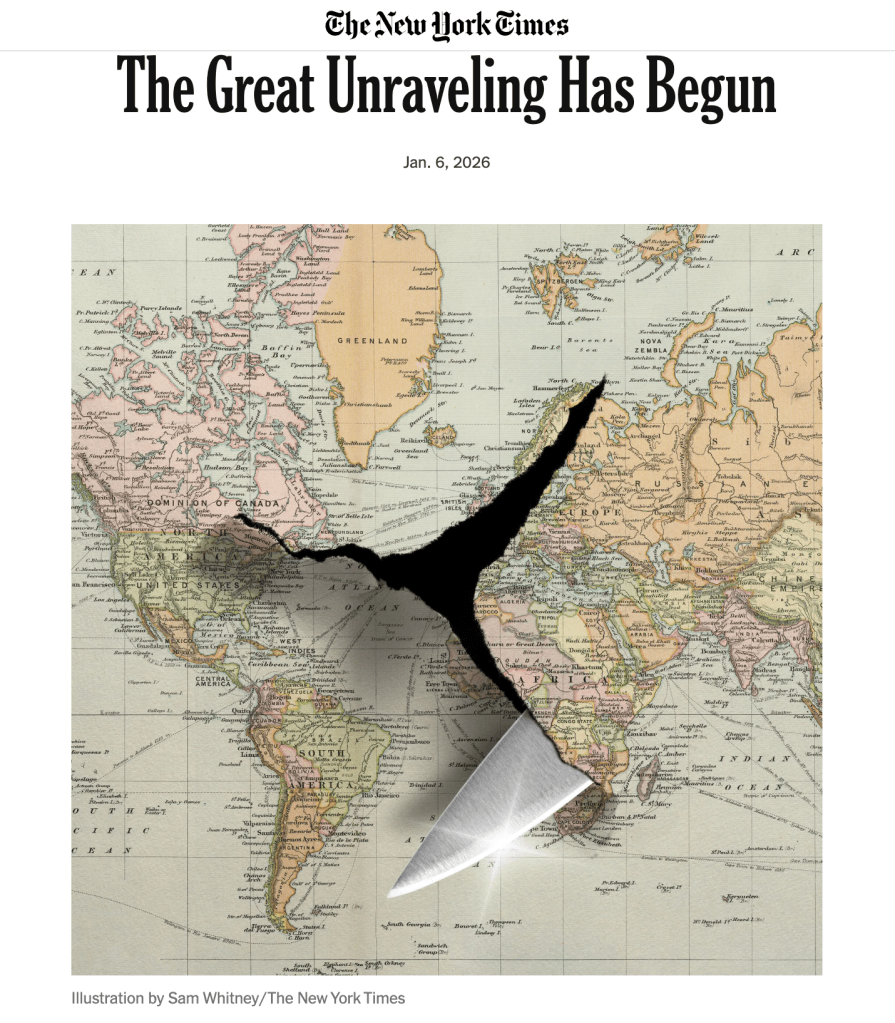
These days, the people who spend their days thinking about things, more specifically the worsening conditions we all find ourselves sinking deeper into by the day, are in abundant supply. What you might call ‘pop-collapsology’ is all the rage, featuring in podcasts, YouTube essays, op-eds and similar formats, fuelled by a cultural moment that sees us simultaneously horrified and fascinated by the prospect of our own demise.

But what happens when a new politically-minded media class make a living from selling worst case scenarios, effectively promoting sensationalism in the guise of thoroughly researched insight?

The answer, increasingly, is this: the map becomes the territory. When collapse is the product, collapse must be perpetually imminent. The audience — anxious, engaged, algorithmically primed — rewards the darkest read of any given situation. A bad jobs report becomes the death rattle of the middle class. A regional conflict becomes the opening act of World War Three. A political setback becomes the end of democracy itself. Each piece is meticulously sourced, carefully hedged, and yet somehow always arrives at the same destination: we are, irreversibly, going down.

There’s a word for this. It used to be called doom-mongering. Now it comes with a Substack, a Patreon, and a guest spot on a podcast with three million subscribers.

To be clear: the problems are real. The inequality is real. The ecological crisis is real. The institutional rot is real. Nobody serious is arguing otherwise. But there is a profound difference between bearing witness to crisis and monetising the certainty of its conclusion. One demands moral courage. The other is just a more sophisticated form of infotainment — trading on your audience’s dread the same way a tabloid trades on their outrage.

And it’s not just contrarians saying so. As @earthlyeducation put it recently: “If you say humanity is doomed to extinction and that there is nothing we can do to prevent total climate breakdown and ecosystem collapse, we need you to know that is just as unscientific as saying there’s no climate crisis.” Certified doom, in other words, isn’t bravery. It’s denialism with better footnotes. The solutions exist. The science is there. What’s missing, as they point out, is the political and financial will of those who hold the power — and that will is not a fixed quantity. It can be built. It can be demanded. But not if we’ve already written the obituary.

What gets lost in the collapse industrial complex is agency. If the system is terminal, if the arc of history has already bent toward catastrophe, then the only rational response is either paralysis or the grim satisfaction of being right. Both are, conveniently, great for engagement. Neither produces change. Worse, collapse-certainty actively depletes the political will it claims to be lamenting — because audiences internalise the conclusion, not the analysis. They don’t come away galvanised. They come away spent.

History is not a conveyor belt. Movements have reversed what looked like iron laws. Institutions thought too rotten to save have been rebuilt. Majorities written off as comatose have woken up and acted. The people who called these things impossible were not stupid — they were, in many cases, the best-informed voices in the room. They just mistook the weight of evidence for the verdict of fate.

Analysis is a tool. In the right hands, it illuminates what needs to change and sharpens the case for changing it. But analysis untethered from the possibility of action isn’t insight. It’s a performance of intelligence — and in this particular cultural moment, it may be one of the more consequential things making the worst more likely.

The question worth sitting with isn’t whether things are bad. They are. It’s whether your intellectual framework leaves any room for them to get better — and whether you’re willing to tolerate the uncertainty and occasional embarrassment of believing they still could.

2025: The Year in Review

Dear 2120,

What are we doing? Where’s this going? What is this? Who am I?

If 2025 was an extremely discombobulating year offering more questions than answers, it looks like we’d better buckle up: 2026 is set to be even more intense. The US is sliding into a bizarre form of tech-enabled proto-fascism, dubbed by zany jokesters as ‘The Nerd Reich.’ Palestine keeps suffering despite the so-called ceasefire. The far right has surged across Europe. And we’ve breached 7 out of 9 planetary boundaries, according to PIK. It’s bleak AF out there.

But good things are happening too. Zohran Mamdani became New York’s new socialist mayor, running a fearless campaign for working-class affordability. The Green Party’s Zack Polanski is now the UK’s most popular party leader, championing a similar progressive agenda. Across the world, people are organizing, resisting, building alternatives.

At this point, people here in 2025 usually wheel out that Gramsci quote about monsters as a way of sounding worldly while managing their metacrisis anxiety. I like Gramsci. It’s a good quote. But here’s the thing: there’s no guarantee these monsters are disappearing anytime soon. In fact, they’re having a pretty good run. They seem invigorated, like they’re having a grand old time wreaking untold damage on us and the planet in their deranged pursuit of influence, control, and obscene wealth. There’s definitely some form of sociopathy at play here. 

The brutal truth is that they’re not going to stop unless someone stops them.

Enter Regenerative Propaganda

This situation, this clusterfuck, this slow-motion collapse, whatever you want to call it,  is what prompted me to start my own company, Regenerative Propaganda. After spending most of my career in culture, communications, and advertising, watching talented people waste their abilities on stupid and harmful things, I decided to just go do what I always wanted without compromising. No more quietly rolling my eyes like a surly teenager when my boss told me to write or make something more “palatable to the market.”

So I went and did it.

I wouldn’t call it an overnight success story. But I’m at a point where it’s starting to make sense financially. I still hustle in the old world of extractive consumerism  (selling people shit they don’t need) to make ends meet. But I think it balances out on the good vs. bad scale. And every month, the balance tips a little more toward the work that matters.

What I’ve Learned This Year

There’s very little money in actual regenerative communication. And I mean actual regenerative communication: degrowth, sufficiency, having fewer material possessions to focus on what truly matters: community, care, ecology, purpose. It should be the world’s biggest open goal, but here we are. To an alarming and frustrating degree, the system rewards the people selling the disease, not the cure.

The work finds you if you’re patient. Once I stopped chasing every gig and started being clear about what I stand for, the right projects started appearing. Not many. Not enough. But the right ones. People and organizations who actually want transformation, not just greenwash their way through quarterly reports.

You can’t do this alone. Building something regenerative in a degenerative system is exhausting. You need community, co-conspirators, people who get it. This year I’ve been lucky to connect with others doing similar work — designers, strategists, activists, artists — all trying to build the world we actually want to live in.

Compromise is inevitable, but capitulation isn’t. Yes, I still take work that makes me wince sometimes. But there’s a difference between bending and breaking. I’m learning where my lines are, what I can live with, what I can’t. It’s messy and imperfect, but that’s the reality of trying to operate ethically under capitalism.

This is going to take longer than any of us want. The monsters aren’t going anywhere fast. The systems that produce them are deeply entrenched. Real change is slow, frustrating, unglamorous work. But it’s the only work worth doing.


What’s Next

In 2026, I want to do more of the work that matters and less of the work that just pays the bills. I want to collaborate with people building genuine alternatives; community energy projects, worker cooperatives, regenerative farms, mutual aid networks, social movements that actually threaten exploitative empire. I want to help tell their stories, amplify their work, and make the case for a world beyond endless growth and extraction.

I’m also thinking about how to build more resilient structures for this kind of work. How do we fund truly regenerative communication without compromising its integrity? How do we support each other through the inevitable precarity? How do we build something that lasts?

I don’t have all the fully-formed answers. But I’m learning, adapting, trying to practice what I preach.

Here’s to a turbulent, terrifying, occasionally beautiful 2026.