Imagining 2120: Generating Desire for Postcapitalism

Dear 2120,

Writing to you feels weird. Like texting someone who won’t read it for a century. But here we are, stuck between a world that’s clearly breaking and one we haven’t figured out how to build yet.

Here’s the thing: we’re supposed to imagine the future, but we’re really bad at it. Most of what we get fed is either dystopian nightmares or the same capitalism we have now, just with fancier phones and flooded cities. Mark Fisher (quoting Jameson) said it’s easier to imagine the end of the world than the end of capitalism. He/they nailed it.

But something’s definitely shifting. People are starting to realize that what we want – like, actually want – matters politically. Our desires either keep this broken system running or help bring something new into being.

Ursula Le Guin said the future is a kind of fiction, and she was right. We don’t have to accept Silicon Valley’s depressing version as the only story. We can write different ones. Slower, weirder, more human.

There’s this idea from Jacques Attali that every dying system contains hints of what comes next. And yeah, we’re definitely dying; supply chains failing, climate chaos, institutions crumbling. But in all that noise, we’re hearing something else. Mutualism replacing rigid hierarchies. Local communities thriving within global networks. Economies that measure health instead of just growth. The next thing isn’t going to show up complete, it’s emerging in pieces, visible in the cracks.

The problem is we’ve been trained to want the wrong things. We’re addicted to ownership, competition, endless accumulation – and these habits keep us locked into a system that’s literally killing us. Even people who want change often want it to be easy, comfortable, something they can buy into without real disruption.

So the challenge isn’t just building new systems. It’s rewiring how we imagine life itself. Making the postcapitalist world feel not just possible but genuinely desirable.

What if creativity wasn’t about competing but about contributing? What if technology helped people and ecosystems thrive instead of extracting from them? What if pleasure came from connection rather than consumption? What if status meant what you gave, not what you owned? What if growth meant maturing, not just expanding?

Writing to you instead of just about you changes something. It makes you real – not some abstract concept but someone we’re in relationship with. You’re not a prediction; you’re who comes after us. And you’ll inherit both our mess and whatever we manage to get right.

We’re trying to build you something that doesn’t eat itself. A world where abundance is about ecology, not money. Where resilience is collective, not just a personal brand. Where liberation includes everyone or it’s meaningless.

If we pull this off, your world will seem obvious. Just like feudalism looks absurd to us now, our obsession with markets and competition and individual success will seem embarrassingly primitive to you. Maybe you’ll laugh at how we measured everything in productivity and profit. Or maybe you’ll just be relieved we finally moved on.

I’m not writing this as prophecy – more like a reminder that we can shape what we want. Desire isn’t fixed. We can redirect it. The future isn’t something we just watch happen. It’s something we create.

If we learn to want different things, we’ll build different things.

And if we build different things, maybe you’ll inherit a world that actually works.

We’re still figuring it out. But we are actually trying.

A Letter from Quarantine

Dear 2120,


Here’s one for the history books. Maybe the year 2020 is part of the curriculum in your schools and educational institutions? I’m wondering if you’ve been reading my letters thinking: ‘When is he getting to the global pandemic? I bet that’s gonna be something else.’ If that sort of vicarious thrill-seeking floats your fusion-powered hydro-vessel, you’ll be interested to know that coronavirus is upon us, and that it’s toying mercilessly with our tiny minds.

april

A photo from 2020 taken in Toronto, Canada.

It’s the strangest thing. A virus that predominantly preys on the vulnerable and the elderly. The rationalistic part of me is reluctant to admit this, but it’s hard to shake the feeling that we’re being tested. Tried on our moral convictions and collective ability to adapt and find common ground in the face of a rapidly proliferating challenge. Maybe the overlords running the simulation have unleashed a black swan event to see how we measure up with new upheavals thrust upon us. Or maybe this was bound to happen in one way or another as an inevitable by-product of our failure to engage with the world in a meaningful and sustainable way. It’s the latter, of course. Quarantine has made me go off on a slightly unhinged, quasi-spiritual nerd tangent. I guess that entertaining the fantastical sci-fi fantasy makes it less real and scary for a split-second or two. It’s been very real and pretty scary.

Whenever coronavirus hits a new country, the onslaught consistently induces the same behavioral pattern: indifference; followed by jokey comparisons with the common flu; and then, when it finally lands that this unstoppable viral phenomenon has the very real potential to upend living as you know it, shock and varying degrees of panic begin to set in.

As of April 8, 2020, 82.000 people have died amid nationwide lockdowns, far-reaching restrictions on social interaction and a global economy brought to its quivering knees. Here in Denmark, a generation with little to no experience in collective hardship or adversity are holed up in their homes, frightened and #alonetogether, moods swinging like brittle chandeliers on the Titanic, with dubious, personal information-stealing media as their primary source of connection. In the midst of fear-inducing pandemonium arriving on our doorstep and proceeding to seep into our sheltered home like a highly contagious, invisible ghost, It feels as if reality itself is in some sort of flux. We’ve been shoved out of our comfort zones without a moment’s notice into an eerie precarious existence that grief expert David Kessler calls ‘anticipatory grief.


‘The loss of normalcy; the fear of economic toll; the loss of connection is hitting us and we’re grieving. Collectively. We are not used to this kind of collective grief in the air.’


As a learned friend of mine rightfully pointed out, that shitty feeling of uncertainty is the rule and not the exception for two-thirds of the world’s population. The unfairly balanced distribution of wealth and resources means that some of us have gotten free passes up until now. To a certain extent, we’ve been living in a wilfully oblivious fantasy world. An old-world reality, which is now coming to an abrupt, unceremonious end. Some people are calling it the end of globalization. We’ll see. In any event, I hope that doctors and medical experts don’t stop sharing new findings and knowledge across borders. If that positive side-effect of globalization ceases, we’re truly done for. It’s the neoliberalist part of globalization that needs to die, not the part where we collectively get more intelligent.

The deficit of hindsight
We should have seen it coming. Many ominous articles have been written on the dangers of multi-resistant bacteria. Countless warnings have been issued by people we should have listened to. It’s possible that we’ve been too busy lamenting our spiritual poverty in flights of self-absorbed navel-gazing. One thing is clear, however; the world has changed overnight. It’s a fairly unsettling thing to watch.

IMG_4887

Distancing existences
Certain forms of distancing are required in this virulent, new reality. Social distancing, the preferred protective measure of the world’s governing bodies sounds fancy and academic, but it really just means staying at home to avoid spreading or contracting the virus. Then there’s emotional distancing, the act of removing yourself from reality because it sometimes becomes too heavy and too much to bear. People are dying in droves. Your parents are categorized as being in the ‘at-risk’ group. Jobs are being cut on a massive scale and you can’t be completely sure if you have one in a month or two because the future has never looked more uncertain. You need to keep reality at bay to keep your head above water.

Apparently, this disengagement from the real world means embracing eco-fascist ideas for some people:

In my book, widening inequality, the handful of corporations killing the planet, and the military-industrial complex are the culprits here, not humanity.  We all have our coping mechanisms, I guess.

It’s also been suggested that Mother Earth has sent us to our rooms to think about what we’ve done. To me, it feels more paralyzing. More vindictive and severe. More like a mean-spirited, older sibling kneeling on your chest and writing  ‘dickhead’ on your forehead with a permanent marker – and then proceeding to shove you into your room, quickly maneuvering to hold the door shut while you bang on the other side filled with impotent rage and despair.

Grounds for optimism
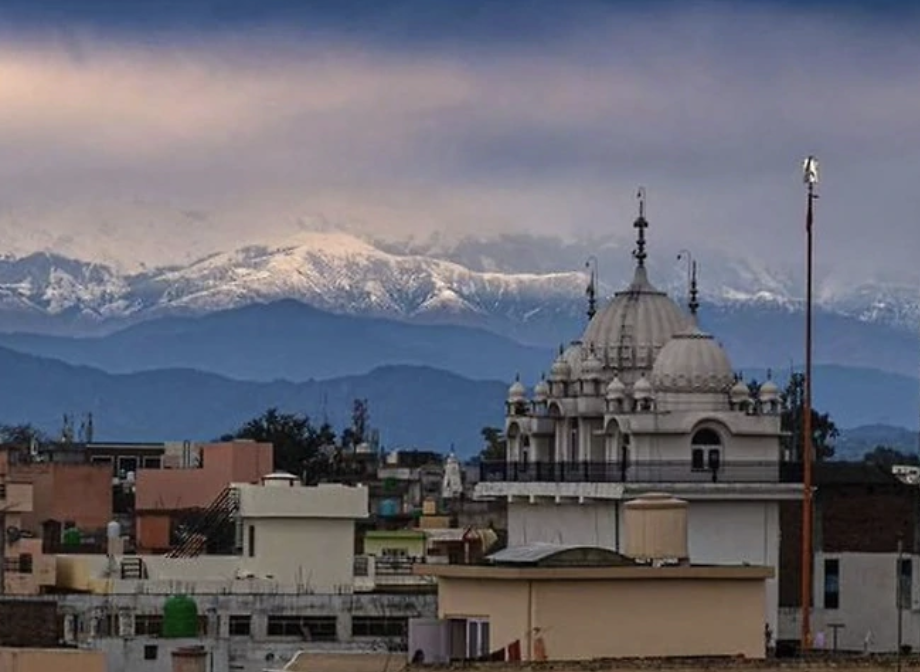
Still, it’s not all bad. There are actually positive stories to be found beneath the mounting rubble of this world-toppling crisis. Glimpses of what the world might be like if we finally decided to get our act together. C02 emissions have taken a drastic downturn, pollution levels are plummeting and the sky is literally clearer for it.

china_trop_2020056

Maps show drastic drop in air pollution after COVID-19.

Screen Shot 2020-04-08 at 16.30.37 The Himalayas are visible for the first time in 30 years as pollution levels in India plummet. 

The word ‘solidarity’ has been mainstreamed within the space of a week or two. Collectivism seems to be growing stronger as people are robbed of social contact and realize how much they depend on one another, and prominent voices from across the political spectrum are calling for unified action on climate change.

Don’t fuck it up
This feels like one of those pivotal moments. With the global population being jolted out of their daily routines and comfort zones, comes fear and anxiety, but it also produces a range of opportunities. The chance to change our common mindset and with it the collective trajectory, which is currently set for unimaginable hardship if business as usual continues. The course we’re on has been altered for a moment in time and we’re all scratching our heads in collective reflection and wonderment. New things – things that seemed far-fetched to most people a month ago – are suddenly viable options. And so, what we do next will have significant implications on how we live in the future. As Indian activist and author Arundhati Roy writes in the Financial Times (of all places):


‘Whatever it is, coronavirus has made the mighty kneel and brought the world to a halt like nothing else could. Our minds are still racing back and forth, longing for a return to “normality”, trying to stitch our future to our past and refusing to acknowledge the rupture. But the rupture exists. And in the midst of this terrible despair, it offers us a chance to rethink the doomsday machine we have built for ourselves. Nothing could be worse than a return to normality.’


As an optimist by choice, I have to believe that this historical event, challenging and grief-riddled as it undoubtedly is, can steer us in a direction that recalibrates our systemics, repurposes the way we organize ourselves, and reimagines how we engage with our natural surroundings. But that’s for you to know and me to find out, I suppose. For now, I guess I’ll just keep going a little cray in the quar. While we’re on that topic, I, for one, hope that the unpredictable whims of the benevolent Simulation Overlords don’t take us too far over the edge.

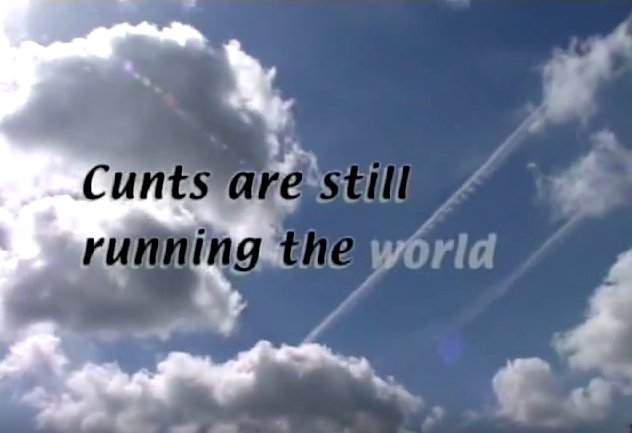
Trumps Are Still Running the World

Dear 2120,

Your faithful old ghost-scribe here to tell you that things just took a severe turn for the worse. Trump pulled out of the Paris Agreement. Inadequate as it was, the timid commitment to keep warming below 1,5 degrees, was all we had at this point. It was our achingly frail global consensus. Experts and prominent political figures are saying that Trump can’t stop the green revolution, which has gained a steady momentum in the corporate sector over the past five years (and you know the world has gone topsy-turvy when Arnold The Terminator schools the leader of the free world on green economy), but I still can’t help thinking that this might be a pivotal moment. The message is deafeningly clear: ‘We don’t give a flying fuck what the experts think.’

Screen Shot 2017-06-02 at 10.59.12 am

The arrogance, nihilism, irresponsibility and sheer stupidity that goes into this decision is mind-bending. Up until now, I have to admit, I thought the administration had some kind of game plan. They did get into office, after all. But it really does seem like there isn’t anyone with even a semblance of common sense or moral direction manning the wheel. In the aftermath of the confounding pull-out and its overwhelmingly dire global repercussions, I find myself agreeing with several Facebook japesters, saying that they ‘wish Fred Trump would have pulled out way back when.’

That said, maybe this is what takes. Maybe this will actually make us snap out of our smug, social media complacency and into some kind of collective action. One can only hope. I’d hate to think that I’m talking to myself here.

From Transgression to Restriction to Sustainable Hedonism

Dear 2120,

I imagine that you’re busy. Busy doing things unfathomable to us, but pedestrian, maybe even tedious to you. Be it communicating techno-telepathically with the entire world all at once; purging yourself, odourlessly, of feces in some wonder machine of the future instead of taking a smelly, old-timey crap; or maybe just cleaning up the steaming pile of crap we left you with. My sincere apologies if  it’s the third, turd-shovelling option. In that case, we failed to get it together for some deranged reason. ‘Together’ being the operative word.

Even so, in the hope that you might be interested in hearing about what went before what is now, I’ve written a message for perusal at your convenience. I’m hoping that it might offer some insight. Maybe even some kind of explanation for whatever you currently find yourself in.

It starts in my formative years, the 1990s. That’s when I got into skateboarding, music, beer, marijuana and girls. Back then, we listened to angry, militant hip hop, abrasive metal, grunge, techno and indie-rock. Sometimes the genres would merge and cross paths, creating bastardized off-shoots like rap-metal.

bring_the_noise_1024

Public Enemy and Anthrax fistbumping in the early 1990s. 

Running through it all was the narrative of what you might call transgressive subversion. Public Enemy and NWA, the voices of black, disenfranchised youth, stuck it to systemic oppression, Rage Against the Machine raged against the machine, metal stuck it to prevailing notions of bourgeois decency, Autechre, Orbital and The Prodigy stuck it to the Criminal Justice Bill and Kurt Cobain stuck it to just about everyone – including, in the end, himself. Telling ‘the man’ to fuck off was what it was about back then. In hindsight, some of it was probably a tad self-righteous and naïve. The youth cultural movements of the 90s purported to speak for the downtrodden, but largely neglected the unfairly stacked challenges faced by developing countries. To a certain degree, it was untamed neoliberalism with a humanitarian sheen – as thoroughly documented by Naomi Klein in her 1999 book ‘No Logo.’

nikeriot

In my twenties, the 00s, awkwardly named the ‘noughties’, it was probably more about transgression than subversion. As the birth of Transgressive Records in 2004 would seem to support.

In the wake of 90s political correctness and identity politics fatigue, the 80s made a big, brazen comeback and with it cascades of electro, punk, synth-freakery and cocaine reentered culture’s cutting-edge. Revivals come around every 20 years where I’m from (I suspect that you might have an astute observation to make about that based on your historical overview) and the 80s in the noughties was, overwhelmingly, about partying hard and ‘not giving a fuck’ in skillfully disheveled, punk-tinged ensembles. About transgressing boundaries and doing things deemed off-limits by your hippie-baby-boomer mother/father. Looking and acting like a douchebag uncle with a filthy little mustache and an ilicit drug habit, was suddenly your ticket to getting laid. This all made sense at the time, believe it or not.
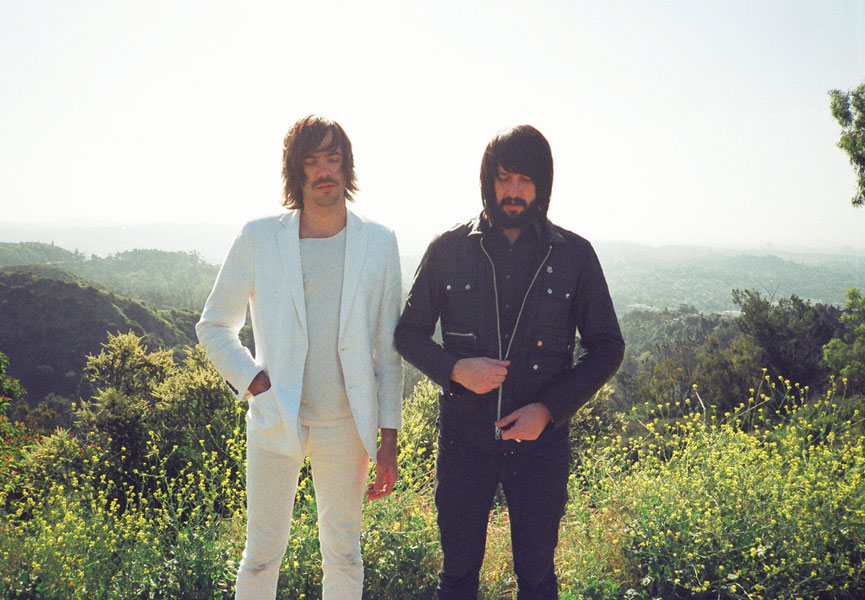
deathfromabove1979

Death from Above 1979 being their very 00s selves. 

On the whole, I think that the unifying theme in the transgressions of the noughties was the quest for freedom. Freedom from constraints, freedom from shame and guilt, freedom from categorization and labels, the freedom to be an arrogant diva and/or a self-centered asshole, the freedom to dress like a confusing mess with a jumbled-up aesthetic somehow existing outside the tyranny of being nailed down to a specific era. That, and not taking things too seriously. There was definitely a playful element to things back then.

In and of itself, there’s nothing wrong with wanting freedom. The trouble with an urgent belief in freedom from everything, including responsibility, is that it impinges on other people’s freedom in unseen an unforeseen ways. It’s just plain antisocial. Admittedly, this went way over my head when I was 25 in 2005.

ulriko1

Photo of a careless me getting ‘hyphy’ circa 2005.

At some point in the late 2000s, what started out as refreshing irreverence in the face of stale, self-righteous sanctimony began to fester and transform into its own kind of stifling bullshit. A wanna-be reckless, heavily orchestrated lifestyle, (which shall remain nameless here mainly because I’m sick of uttering said lifestyle’s deeply problematic label) that so desperately tried to be free and new, but was ultimately snared in by all the unseen reins of the past. In any case, countless blogs and articles dedicated to calling out and mocking the allegedly oblivious, ego-centered cultural elite started popping up left, right and center.
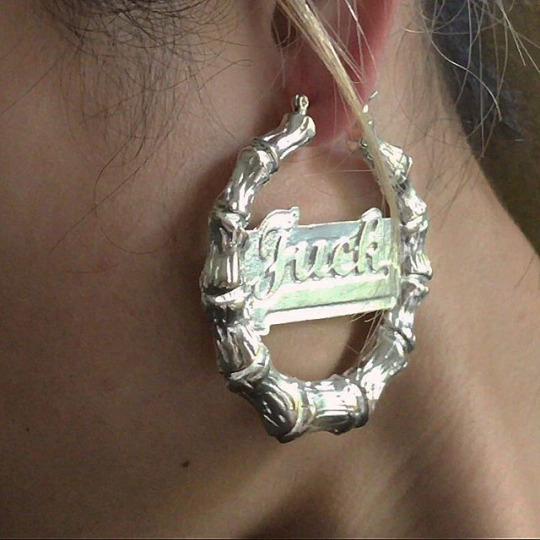
vice2

Broadly speaking, in somewhat simplified terms, I think it was the combination of the global recession of 2008 and the growing, physical realization that we were doing irreversible harm to a planet with finite resources, creeping in gradually through the cultural cracks, which ultimately permeated everything and made mustachioed creatives and fashion-forward designers seem irresponsible and oblivious. Knowing that you’re fucking the planet on an abstract, theoretical level is very different to knowing it physically. When it really gets under your skin, when it seeps into every pore and the all-too-real real possibility of your partaking in the escalating apocalypse intermingles with your molecular structure, it completely knocks the wind out of your sails. To the point of needing an escape route; an exit from the great depression caused by the seemingly impending End of the World. For some people the escape became the identification of a scapegoat. Sure enough, around 2008, creatives became that scapegoat. People needed a vent and the vent was aimed squarely at all the designers, graphic designers, musicians, artists and gallery owners who purportedly failed to care about the important issues of the day (paradoxically, though, a lot of so-called conscientious observers were targeting themselves with their bashing. But that’s another story).

So, to sum it up, we went from the narrative of transgression to the narrative of restriction. Limiting yourself in all aspects of life, living frugally, reflectively and conscientiously while sporting ecologically-grown facial hair was the logical conclusion to the recklessness of the 2000s. It was the responsible, detoxing hangover cure following a decade of being mindlessly drunk on extroverted fun and games. PC and ID politics dusted themselves off and tried again, to paraphrase the great poet Aaliyah, clearing the stage for new and fresh takes on 90s anti-patriarchy, like intersectional feminism, the Black Lives Matter Movement, LGBT rights and innumerable, other worthy, ‘woke’ ways to limit and restrict the damage done by the careless, self-absorbed noughties.

Finitude and finality of resources, the idea that our planet is anything but a boundless reservoir of fossilized energy, finally etched itself indelibly into our collective psyche, creating vertigo-inducing, introverting cerebral wounds that we’re likely still recovering from. Hence all the apathy and failure to act. Adding to that, I think a certain transgressivist individualism, as mapped out by Adam Curtis in several documentaries, is proving incredibly hard to shake. It seems to underpin everything from the person-obsessed art world to the upper echelons of global capital. Negotiating the paradigmatic shift from the cult of individualism to a new kind of collectivism that gets everyone onboard regardless of political orientation is undoubtedly the great challenge of our generation. As the late, great cultural theorist and author of the highly recommendable book Capitalist Realism, Mark Fisher AKA K-punk puts it in an interview on the book:

'The thing is it's nobody's fault, you can say, in a genuine sense, but that is the problem - because there is no agent 
capable of acting. There's no agent at the moment that's capable of taking responsibility for a 
problem on the scale of the environmental catastrophe that we're facing. Instead, it's contracted out 
to us as individuals as if we could do anything about it by simply putting plastic in the right bin. That 
won't solve the environmental catastrophe that we're up against. The only thing that can solve it is 
the production of an agent capable of acting. But of course nothing like that has ever existed 
throughout human history until now - which doesn't mean it can't exist, but that we're in very new 
territory.'

As an incorrigible optimist, I have to believe that we’ll somehow produce this first-time occurrence in the history of the world: a collective agent capable of acting on behalf of the atomized human race. Dropping the ball on the future of the planet isn’t really an option. If this message is to have a recipient, we clearly need to jettison our cynicism, stop our pathological fixation on fictional doomsday scenarios, curb alarmist clickbait headlines, and relinquish a billion bad habits that have colonized our biological harddrives into submission. Moreover, it’s essential that we make doing the right appealing to everyone. Not just people with fancy educations and unlimited surplus energy.

Thankfully, progressive initiatives following that line of thought are in the works. Danish architect Bjarke Ingels has recognized that restriction and limitation aren’t among the most inspiring or sexy virtues in the world. He calls his architecture ‘hedonistic sustainability’ presumably as a way to dispel the notion that sustainable living has to be about tasteless vegetables and acquiring nervous tics about carbon footprints. On the face of it, at least, it seems a progressive philosophy, attempting to reconcile the forces of modernity with the critical necessity of reconfiguring the cannibalizing consumption of late capitalism.

bjarkeingels2
The Hualien Residencies in Taiwan designed by BIG/Bjarke Ingels Group.

Other than attempting to make us an interplanetary species and possibly overdoing the acid, Elon Musk is making sustainability look dynamic and appealing by creating swish, affordable electric cars and nice, solar roof shingles that don’t cost an arm and a leg. It looks like sustainability can actually be good for your bottom line, not to mention your cultural capital, all of which you have to understand is incredibly important here in late capitalism. In the long run, people here in 2017 usually prefer the dynamic and the active to the static and restrictive.

Still, we have long-ass way to go, to use a a contemporary colloquialism. These initiatives are at best small, anomalous ripples in a sea of excrement. Trump was recently elected president and he instilled a cabinet, which largely denies the proven reality of anthropogenic climate change. In turn, reality in the early 21st century is getting increasingly surreal and scary.

If you’re living in a worst case scenario, this message might seem the like the deranged, deeply offensive, frighteningly clueless cries of a 7-year-old, convinced that the world will bend to his petulant whims. On the contrary, if you’re living in a best case scenario, if we made it, and you’re living the fifth generation or so of the internet, you’ll probably just be hopped up on some benign version of Soma, thinking that  I’m old, stuffy and irrelevant.

All things considered, I guess I can live with that. Just know that in a hundred years from 2120, someone will probably think the same about you, old sport.